Showing posts with label causes. Show all posts

Friday, September 19, 2014

The Ada Initiative and 'Citizen Editors'

It might be good for the world, though temporarily stressful for one’s marriage, to edit an anthology together, as Leonard and I discovered when we created and published our speculative fiction anthology Thoughtcrime Experiments together in 2009. Despite the risks, maybe you should become an editor. “Reader” and “writer” and “editor” are tags, not categories. If you love a subject, and you have some money and some time, you can haul under-appreciated work into wider discourse, curate it, and help it sing.  X
I appeared in Sumana Harihareswara’s Thoughtcrime Experiments anthology long before I ever thought of becoming an editor myself (in fact, the anthology was my first pro publication!), but her post today on the Ada Initiative and ideas for citizen editors* resounds even more with my added experience. While I'm not currently planning to publish a science fiction anthology, my work with self-published and indie authors has also made me think more about the responsibilities and potential of indie publishing. 
Harihareswara's post is rich with links to additional information for writers, editors, and fans, and closes with a call to support the Ada Initiative, a program to end harassment and make science fiction and technology communities a pleasure to participate in for all people. It's work that is incredibly important and tragically timely (to the point that I feel far more relieved that I should at not having attended many conventions this year, given the reports I've heard). I'm also reminded of one more initiative I’d like to boost visibility of: the BDG Editor-In-Training Program, which helps amplify the voices of editors who are queer and/or trans people of color by providing training and support in media and editing skills. In the words of Black Girl Dangerous, “Many of us who have the most to contribute to important conversations happening in indie media, including conversations on race, gender, queerness, economic injustice, disability justice, issues affecting youth, etc., have the least amount of access to the training, education and experience needed to be successful in contributing to and leading independent media movements.” 
Sometimes I’m brought up as an example of diversity in sci fi, for my gender, and while I appreciate people being excited for my inclusion (especially given all-too-recent incidents when no women at all were appearing in certain big genre anthologies**) it’s very important to remember I’m a cis, white woman—my challenges are minimal compared to many. 
This post is also fascinating in that I’ve learned today that not only do I share a table of contents with Hugo, Nebula, and World Fantasy Award-winning author Ken Liu (I knew that—I’ve been a low-level but genuine fan since reading ‘Single Bit Error’ in my own copy of Thoughtcrime Experiments), but that he credits his career to the publication that put us on that table of contents! 
*’citizen editor’ is a term I just made up without reference to any external source while trying to concisely compact the ideas of Harihareswara’s idea-rich post—like ‘citizen science’ but perhaps without the hierarchy. Citizen scientists are, after all, still limited by the technology and knowledge they have access to, making them helpful but in somewhat narrow roles of data collection and simple analysis. Citizen editors aren’t limited in that way at all. If you have some knowledge of how writers & writing work, and can figure out how to use Kindle and a POD printer, you have the primary resources to become a citizen editor all the way from acquisition of manuscripts through publishing and publicity.

**I don't think most people visiting my blog are interested in playing devil's advocate, but to make my point very clear, I do not claim that I specifically would be entitled to appear in any of those anthologies, especially not at that (very very early) point in my career. Women were robbed of a position on Mindblowing SF's TOC (and others), but I would not consider myself one of them. All the same, being a young writer at the time, I wasn't precisely discouraged, but was certainly frustrated to see that gender, along with race (if not in any way as straightforward as mustache-twirling misogyny and racism, through good-ol'-boys-club networking and perhaps simple myopia), was a thing that could count against people like me and writers I admired, even in the highest ranks of the field. Part of the reason I wasn't truly discouraged was that such discrimination felt more rarely encountered among the indie publications I still mostly publish with. Which I think goes to support Harihareswara's point. 

Tuesday, August 12, 2014

Editing Gift Cards!


They're here! I've printed off this lovely bunch because I'm offering 10,000 words of line-by-line editing as an auction item at the Plowshare Center of Waukesha's Fashionably Fair Trade fundraiser this September. But gift certificates are also available for any wordcount and any occasion--and can be delivered electronically as well as in hard copy. I can even custom design the gift card for you to print out or email them. 

If you're lost on gift ideas for a writer in your life  (another journal just means they have to start another story to put in it!) consider getting them a manuscript edit, to be redeemed any time.  Email me and we can arrange for a wordcount-based edit (at an estimate of $5/1,000 words) to be done on a piece of the recipient's choice. I will be at my gentlest, yet nonetheless thorough, helping the writer develop their craft and bring their manuscript to the next level. It's a gift that will keep on giving!

Friday, March 21, 2014

It's Fair Trade Friday on this blog, too!

As a child, I was never especially distracted by the weather. Nice days were nice, but I could wait patiently until I got out of class to run around and soak up the sun.

Not so much anymore. It helps that I've learned walking provides necessary fresh air, exercise, and rest for the wordsmith portion of my brain; it also helps that we've just made it through 3 months of snow coming in amounts and at times cruel and absurd enough to awaken anyone's cynicism (I never got angry at weather before this winter). But last week I was outside every day. I discovered the Capital Crescent trail and walked as much of it as I could reach from public transport. I've got blisters now, and I don't regret a thing.

I've also juggling a number of fun projects, when I could focus on them and wasn't distracted by the shiny sunlight.

So in case you've been noting this blog's lack of updates and fearing I was dead: no, rather the opposite. Too alive to slow down and blog, or find something to blog about!

However, when all else fails, I always have my weekly Fair Trade Friday posts from the Amani DC blog to share.

Today I have a particularly nerdy delight to share: Harry Potter fans organizing for social justice! Although I was never quite as into the series as some of my friends, I'm super excited to see this example of the power of narrative to affect real-world change (and also excited at how Potterheads combine with other fandoms, such as The Hunger Games, for other relevant campaigns). 
HPA Chocolate Frogs

A few weeks ago at the Amani blog, I did a feature piece on Celia Grace bridal, running some research on their company and sharing links to their site with my write-up.
And now the Celia Grace blog has linked to my post (“They did an amazing job of capturing the spirit, history, and mission of Celia Grace.") and shared some information on OUR boutique.
It’s like these two Fair Trade fashion companies flirting at each other via bloggers. It makes me blush and giggle like a schoolgirl.

I don't always find blogging easy, but I am glad I do it. 

Monday, February 24, 2014

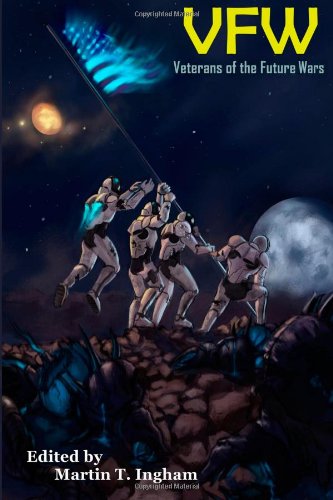
Veterans of Future Wars release

My short story "Ayema's Fleet" has been reprinted in the Veterans of Future Wars anthology from Martinus Publishing. As with the Battlespace anthology "Ayema's Fleet" first appeared in, VFW is for a good cause--10% of proceeds from the anthology go to Disabled American Veterans.


I've done an interview with anthology editor Martin T. Ingham, which can be read here. And the anthology itself is available in print and ebook at Amazon.com and Barnes & Noble.


Tuesday, January 21, 2014

Book Reviews: Hear No Evil, Citizen Science, and The Grey Star

A sort of rapid-fire round of book reviews this week, thanks to Christmas reading!

1. Be the Change: Saving the World Through Citizen Science by Chanda Clarke

Though short (33 PDF pages), this was very readable and informative--it's designed to teach the principles of citizen science/crowdsourced science to people who have never heard of it before. Now, I'd heard the term before and had vaguely positive associations, but couldn't explain it to you if you asked me. When I saw this ebook offered in a LibraryThing giveaway I pounced, because hey, KNOWLEDGE.

18982044

Citizen science consists of research, data-crunching, information gathering, processing, analysis, and funding that is crowdsourced among volunteers, many of whom aren't any sort of expert. Willingness is key. Fittingly, Be the Change is written with an enthusiastic, persuasive tone--sometimes a bit too much so. I felt like I was reading a pamphlet at times, and I suspect one of the major goals of this book is to get people to check out Clarke's website Citizen Science Center.

But it did succeed in making me feel more knowledgeable and more interested in citizen science. This is not only because of my minor obsession with crowdfunding, but possibly because I'm a science fiction fan, or at least so Clarke theorizes when she suggests the popularity of sci-fi shows, movies, books, and games reflects a greater interest in science proper among audiences. I think for me the relationship is more vice-versa--I enjoy the science fiction and fantasy aesthetic, and my interest in science is secondary and meant to help me better hone that enjoyment. It may be a chicken-and-egg problem.

In order of volunteer effort required, Clarke breaks down a number of projects and methods for supporting them, including crowdfunding, distributed computing, web-based science, and apps. Some of this reminds me of Mechanical Turk's "hits" or microtasks--small jobs that require human intelligence (so they can't be automated or computerized), but don't demand much in the way of expertise, and would frankly be a drain on the productivity of a qualified scientist. Enter your ordinary citizen/science fan. To keep people motivated, many of these projects are "gamified," using point systems to provide psychological rewards.

And some of these projects just seem like cool things to be involved with. The Baby Laughter project, which collects "field reports" of babies giggling in the wild to refine scientist's understanding of cognitive development, sounds adorable. And the Human Memone project, which collects information about health and memes, is both fascinating and kind of punny. Although I can't quite determine what their working definition of "meme" is, and if I have to fill out a survey of every meme I've ever seen on Tumblr or my Facebook feed I'd be very old before I finished.

Links:
Amazon.com 
Goodreads 


2. Hear No Evil by Terry Persun
A prize from the LibraryThing early reviewer's program, one I'm ridiculously late in reviewing. It's just that I don't feel like I have much to say.

Hear No Evil

After the ship they're piloting over a newly colonized planet explodes, Brandon and Palmer find out they're part of a broader conspiracy to take over the planet.  Along with the native colonists, and with the dubious assistance of a mysterious alien race aliens, they decide to fight back.

This is a story I feel like I should have loved: space opera with an element of mystery, a genuinely interesting alien race (telepaths who appear deceptively, disturbingly human--a psychological Uncanny Valley), a love subplot that isn't strained and includes a well-rounded female character. The problems surrounding a struggling space colony, especially one on a planet already inhabited by an intelligent species, have a lot of potential. But in the end, I could never really get into it. The politics were perplexing and overlooked in favor of lots of action interspersed by occasional dialogue scenes that never seemed to clear anything up. Sometimes I caught myself skimming for pages on end. I perked up whenever the aliens appeared, but their plotline also didn't feel very strong. I can't even recall how it concluded.

I finally wrote up these halfhearted paragraphs for fear that if I delayed them any longer, I'd forget the plot of the book entirely. It would probably benefit from a rereading, and I might do that now that I have an ereader (reading on a computer screen may have encouraged me to skim, but I've written thousands of words reviewing other ebooks read on a computer before now). But I guess "it just didn't grip me" is a review, too.


Goodreads
Amazon.com 
iTunes
Barnes & Noble


3. The Grey Star by James Bartholomeusz

One last prize from a LibraryThing giveaway. I entered on a whim, because the title seemed interesting and also the author's last name had a Z in it. Put that way, I sound awfully flippant, but the fact is I knew absolutely nothing about this book going in. There was barely any description on the LibraryThing page. The advanced review copy's back cover informed me it was a Young Adult Trade Paperback, 316 pages, release date December 2013, and part of the Seven Stars Trilogy.

17802354

In fact, it is the third book in the genrebusting Seven Starts Trilogy (as I learned upon seeing the title page for "Part V"). But once I started reading, I was lost no longer--plenty of background info is filled in the first few chapters, enough that I was confident of being able to follow. A cosmic war between the Apollonians and Dionysians, a chosen Ubermensch leading a plucky band of young teenagers on their quest to collect 7 shards of the Risa Star. The opening chapter, though, managed to be evocative while resisting the urge to infodump too much, instead offering us an enticing conversation between a fox with "only" two tails, and a hooded figure coping with the fallout of his Face-Heel Turn.

Actually, a number of characters in this story underwent a Face-Heel turn. The revelation of what happened to Ubermensch Jake's best friend Alex was fairly predictable. But then came the revelation of the true nature of the many-tailed fox Inari and the true nature of the Risa Star Shards themselves. That was a delightfully unpleasant surprise and added an air of cosmic horror to what had been a fairly standard, though entertaining, quest fantasy. Of course, given the obvious Neichschze references, plus quotes of Yeat's The Second Coming, maybe I should have had my suspicions.

I do wonder what readers of the first two books will feel about this. Betrayed? Did they already have hints strewn before them? This may be a trilogy whose third book is kindest to readers who dive in media res! In any case, I really enjoyed the twist, and finished the book rapidly with a new sense of suspense for the characters and their worlds.

My favorite parts: Alex (despite the fact that both revelations about him failed to completely surprise me. As for the latter, I'd like to compare with other readers to see if I was actually picking up hints, or my tendency to read certain characters as LGBT struck upon a lucky coincidence this time), the Grey Sage (although having the nickname "Sage" myself made me do a double-take a number of times), and Lucy's plotline, which is a great deconstruction of the aftermath of your average portal fantasy. Of course, this entire story is something of a deconstruction. Yet it reconstructs, too, and comes out in the end as something more complex than a war of good against evil, yet is still true to its roots, and left at least this reader highly satisfied.

Because it's an advanced review copy I can't really say much about prose & typos, although "to be" gets overused (yes, after a while you can notice this even in pleasure reading)--but on the other hand, there is a great splash page around the story climax, which was cool to see in a mostly-prose, yet highly visual, story.


Goodreads
Amazon 
Barnes & Noble

Sunday, December 22, 2013

Conflict-free, Fair Trade, and 3D Printed: How Consumer Electronics can be made Ethical and Ecofriendly

As a writer, I'm acutely aware that my chosen profession is not exactly eco-friendly. Many trees have died for my journals and publications--although a handful of books are now being printed on recycled plastic, making them both waterproof and a potential solution to overcrowded landfills--and it seems like even when I move away from hard copies poor planet earth can't win. To say nothing of the conflict minerals that go into phones, computers, and other electronics.

So I was really excited to do the research for this week's Fair Trade Friday post at the Amani DC blog. The subject: ethical consumer electronics. There have been two interesting new developments: first, the Fairphone in Europe comes as close as possible to a fully ethical smartphone, built with conflict-free materials mined and constructed by workers earning living wages and designed to be long-lasting to minimize waste from disposing of old electronics.
Gizmag takes a first look at Fairphone (Photo: Gizmag)

Another way to keep more phones out of landfills comes from Motorola's Ara phone--constructed of puzzle-piece like "Phonebloks," some of which can be created through 3D printing, the Ara is designed for extreme user customization but also virtually eliminates the need to ever buy a new phone. Instead, you can upgrade or replace each Phoneblok as needed or desired--your cracked screen, old battery, or subpar camera can be switched out for a better blok without having to dispose of the entire phone. Plus, the Ara looks pretty awesome.


The Fairphone seems pretty popular in Europe (25,000 phones sold so far--not a lot in the scheme of things, but a nice amount given it's barely been released yet), but the Ara is still in the tinkering stage and it's unclear if it'll really catch on. If it does, though, the potential impact could be amazing, especially if these innovations are scaled up to other electronics besides phones. Laptopbloks, anyone?

Sunday, November 24, 2013

It's Been a Grand Weekend

Especially for Whovians. Also those still mourning the passing of John Fitzgerald Kennedy--now that's a morbid cosmic coincidence. And somewhere between joy and tragedy lie the Hobbit fans, with the Battle of Five Armies also falling on November 23rd (warning: may be spoilers through the wikia link).

For me, it's also been the culmination of several weeks of intense labor, interspersed with perhaps more procrastination than strictly speaking necessary. And also with my awesome part-time internship blogging for Amani DC, including this announcement of our new local job skills training program, a piece I've felt especially proud of. Unfortunately, in blogging for them I'm afraid blogging for myself has sometimes slipped my mind.

I've also found little to blog about, and, again, haven't had a lot of time for it--all because these past weeks have been filled by my last push to finish the Starter Guide for Professional Writers. And, as of this weekend, I've done it!

This is much, much later than I expected or would have preferred to finish it, although there's a reason even for that. As I wrote the second draft, I expanded in a lot of areas, not least to include my lessons from running crowdfunding campaigns and preparing to self-publish through CreateSpace and Smashwords. The Starter Guide is more than twice as long as I planned--90,000 words instead of 40,000! Hopefully this means it will have even more useful information for writers on finishing, editing, publishing, and promoting their stories!

It still needs to undergo a final copyedit and  formatting, but I assume I will be able to release and distribute it not longer after I return from Thanksgiving. I'll be visiting my family after a particularly rough summer, so we'll see how that goes. There are many people back in Wisconsin that I miss--and I'll also be meeting some fellow Whovian friends at the Chicago TARDIS convention the weekend of December 1st. Paul McGann will be there, and so, of course, will Plushie Eighth Doctor (for non-Whovians, that's McGann's character).


(That's the little guy sitting on the shoulder of the woman in the picture. As for that woman, um, I'm not quite sure who she is, but she's wearing a devilishly stylish shirred tunic from One Mango Tree, Fair Trade apparel carried in the Amani DC store. I need to do a fashion post someday, although being ~fashionable is quite the new experience for me.)

Once publishing the Starter Guide is out of the way, I'll be devoting my energy to more systematically approaching my job search. In the meantime, I'm also seeking more freelance editing gigs, and you can find me on Fiverr and Elance. I admit, I'm pretty delighted to score in the top 5% for Creative Writing testers on Elance.

Friday, September 13, 2013

Fair Trade Friday post at the Amani Blog!

From my posts this month, you might assume I had done nothing but read and review books.

You wouldn't be far wrong.

One of my internships has wrapped up, but I'm keeping up with the second--a part-time arrangement with the Fair Trade store Amani DC--for some outside the house occupation during my job search. The status of my job search can best be described as "pending." To be honest, after the crisis in July and the hard work that came with wrapping up my position in August, I'm grateful for a few weeks of relative quiet. I have made some progress in writing, and am currently looking to acquire more clients for my manuscript reviews. 

Anyway, if you want to read a blog post by me that isn't a book review, check out my latest at the Amani DC blog, on recent changes in the world of Fair Trade Jewelry. It was fun to research, even if I did get lost in the Novica galleries.


Friday, August 16, 2013

Say Yes! Women's Crowdfunding Campaign

I am not done with blogging about crowdfunding, it seems. Today my Fair Trade Friday post up at the Amani DC page is dedicated to an awesome new campaign which combines ecofriendly 'upcycling' (recycling in a way that creates a product with greater value than the original) with women's empowerment by supporting refugees in the Austin, Texas area: Open Arms and Blue Avocado's "Say YES!" campaign.

As you might be able to guess, I am also becoming a big fan of the site Moola-Hoop.

Wednesday, August 14, 2013

Anatomy of Successful Crowdfunding (or, How I made 700% of my Kickstarter goal despite a godawful cover image)

What makes a successful crowdfunding project?

Any number of things, I'm sure. That's the good news. A campaign doesn't need to be 100% successful on all fronts to make its funding goal, it just needs to do enough things well enough. But a lot rides on certain key choices you make for your campaign.

In the spirit of inquiry, I've conducted this--is it called a "postmortem" is it's successful beyond my wildest dreams? -No, a friend reminds me the word I'm searching for is "debriefing"--this debriefing, then, of my Kickstarter campaign for The Starter Guide for Professional Writers.

To start with the most important choice: carefully consider the website you select as your crowdfunding platform. For many, including me, this comes down to the perennial question, "Kickstarter or IndieGoGo?"

At first glance, the major difference between the two platforms is that IndieGoGo has a "flexible funding" option, while allows you to keep all funds raised even if the campaign doesn't make its goal. Meanwhile, Kickstater's approach is a more intimidating, high stakes "all-or-nothing" game.

There are more subtle differences as well, such as the nature or end goal of the projects being funded. Kickstarter's focus is narrower: the campaign must fund a specific project created by the campaign runner, and rewards must also be produced by the creator, preferably in conjunction with the creative project fundraising is for. Ongoing programs that are business as usual, without a set end date or outcome, can't receive funding through Kickstarter.

Because of these distinctions, I think my friend Zahara Hecksher is right to suggest IndieGoGo as the better platform for NGO and nonprofit work, but even then not in all cases. Kickstarter campaigns can aim to achieve charitable goals alongside creative ones, and in fact, Zahara and her co-authors' project looks to me like something that would meet Kickstarter's guidelines, if they'd wanted to go that route. A concern is Kickstarter's requirement that projects meet the full funding goal to receive any funding at all. The effort and inconvenience of a crowdfunding campaign falling through for lack of interest is a setback for a creative project, but might spell disaster for a nonprofit many people are relying on.

However, a Kickstarter "all or nothing" funding goal should be the lowest amount needed to get the project done--if the Kickstarter campaign doesn't meet that minimum funding requirement, the project couldn't happen anyway even with the amount it has managed to raise. This presupposes the Kickstarter campaign is the major or even only source of funding the project will get, and certainly can be argued. In contrast, IndieGoGo's Flexible Funding lets the project get all donations, but the campaignrunner pays a higher transaction fee if it fails to meet its goal (and the minimum goal must be at least $500--much higher than a Kickstarter goal is required to be, if Kickstarter in fact has such minimums at all).

A creative and, to my mind at least, reasonable middle ground is practiced by StartSomeGood, a crowdfunding platform specifically for charitable causes.  StartSomeGood campaign runners set a portion of their ultimate goal as a "tipping point." Without reaching the tipping point, the charity couldn't go through with its project. Therefore, if a campaign doesn't raise enough funds to meet the tipping point, no funds are dispersed--so far it's all or nothing. But once the campaign funding reaches its tipping point, it gets to keep all collected donations from there on, even if it doesn't meet its ultimate goal.

Already you can tell the variety of crowdfunding platforms beyond Kickstarter and IndieGoGo: places like StartSomeGood for charitable causes, GoFundMe for more personal fundraising needs (including events, education, and medical expenses), the recently launched platforms Moola-Hoop and NaptimeStartups for women entrepreneurs, and a myriad of sites for Green projects: from  Ioby--"in our back yard"--for local causes to Mosaic and Sunfunder which focus exclusively on investments in solar power.

To choose the right platform for you, things like the mechanics of the site and ease of use are certainly helpful to know, and I'll discuss those in the context of my Kickstarter campaign in a few paragraphs. But the most important question first is: Can this platform attract funders for me?

As a writer, the comparison that comes to mind is booksellers. Say I (or, better yet, my publisher) is trying to find a place to sell my books. We intend to market our butts off to spread the word about them, but ultimately we'll want to put our books somewhere interested readers will come across them even if they never notice our publicity efforts. Sure, some of my fans and all my friends and family will buy my book wherever it's sold, just as your crowdfunding campaign should be able to generate some portion of its funding just through the strength of social connections. But past that point, I certainly hope my book is posted on Amazon!

This doesn't mean ruling out niche funding platforms like Mosaic or Moola-Hoop, though. Because if I'm writing a romance book, I certainly want it on Amazon but I also want it on AllRomanceEbooks. ARE doesn't attract as many readers as Amazon in sheer numbers, but the readers it does attract are far more likely to be interested in my book, because it's a romance and that's what they're there for. Many of the millions browsing Amazon might prefer blood curdling thrillers. Quantity or quality, one way or another your chosen site has to bring in enough people who are interested enough to fund your project.

Of course, generating that interest, once you're in funders' sights, is your job. And so after that introduction on crowdfunding in general, here is my dissection of my actual campaign.

Goal: My goal was to raise enough funds to pay for distribution (including shipping) and formatting costs (including cover art) of my self-published nonfiction book, The Starter Guide for Professional Writers. These things are not extraordinarily expensive, but I am extraordinarily broke and appreciated the chance to have some guaranteed income from the project as I continued with it. Because I was nervous of Kickstarter's all-or-nothing approach, I wanted as modest a goal as possible, and would have done less than $100 if my friend Zahara hadn't encouraged me to try harder. In the end, I made my goal $200--and Zahara "bet" that she'd cover any remaining costs if I didn't reach my goal. Spoiler alert: she never had to pay a cent ; )

Secondary goal: I also hoped my Kickstarter campaign would generate some work for me as a Manuscript Doctor.

Offering reviews of short stories, opening chapters, and novels along with ebook and print copies of the Starter Guide as rewards, I effectively turned my campaign into a "storefront" for my services. This is in contrast to a "patronage" model where my rewards to funders would be more symbolic than substantive (a model I followed with my charitable IndieGoGo campaign to fund microloans at a small Ghanaian NGO). When it comes to a project I'm undertaking for profit, I prefer to offer people value-for-value. However, several funders did feel strongly enough about the work to give much more generously than required for their reward, including one of my personal friends and mentors who gave without choosing any reward at all. Although I'm not comfortable relying purely on a patronage model, I am very grateful for these funders and appreciate what they've helped me accomplish.

(Note: For tax purposes, crowdfunding donations can be considered either income or a nontaxable gift. While not a tax lawyer and not intending to offer any binding advice, I idly muse that the distinction may involve whether the rewards offered to funders are merely symbolic or operate on a "storefront" model.)

Setting up the campaign: I committed a cardinal sin of Kickstarter. I did not have a video for my campaign. This stems from me doing the project entirely on my own, and not being a person with much filmography or video editing talent (or, indeed, any video camera besides my webcam). I didn't have the necessary skills, equipment, or time.

Perhaps I would have done better if I did use a video, but I'm satisfied with the results of this campaign anyway--over 700% satisfied, you might say.

However, even the still image I used as "cover art" for the campaign, while it communicated what I wanted to communicate, was clearly done by a writer and not an artist in my own humble (very humble) opinion:


To reassure you all, one of the expenses my campaign funding will pay for is professional cover art!  The best I can say about this is that it is fairly readable and thematically fitting (several of the books on the shelves, though you can't see it, are my contributor's copies, and the use of Courier font is even meant to reflect the Standard Manuscript Format which most writer's markets require submissions to be in).

But remember what I said about not having to be 100% successful at all things to have a successful campaign! Without much talent at images, and with a project that is based fundamentally on my use of my words, I set about polishing my words as though my life depended on it. Months before launching, I scribbled notes about the campaign in my notebook margins. Then I reshaped those notes into coherent sentences. I typed them up, then reread them onscreen, and then rewrote them. I left the campaign pitch and description of rewards to sit for a few days, then came back and rewrote them once more. And I did a final review as I entered the data into Kickstarter's campaign set-up pages.

Rewards: Given my storefront model, it was very easy for me to tailor my rewards to my prospective audience. There were really only two: the Starter Guide itself and my manuscript critiques.

I offered ebooks at retail value--$5, a early preview deal of the ebook that now retails at $5.99 booksellers like Amazon and iTunes (the final manuscript of the Guide turned out substantially longer than I planned on during the crowdfunding stage). Print copies were $10, which is lower than current retail and includes shipping. Lastly, I offered signed print copies at $15.

My first manuscript critique option, the "First Chapter Review," was listed at $25 and included a free download of the ebook. Kickstarter reports $25 as the most common pledge amount, and it's generally recommended that you have some options less than that, too (like the book copies).

I offered a variety of critiques after that, with funding based on the length of the story, and all including a free copy of the ebook. Here, I've since gained some insight into my audience: critiques could be for short stories, novellas like my own Aqua Vitae, and novelettes (either short novellas or longer short stories depending on who you ask). Nobody took those crits as such. Instead, when they arranged critiques at those levels, what they really wanted was a critique of that number of words. So my novelette critique, meant  for a short story of 16,000 words or so, is actually a critique of a 16,000 word excerpt from a longer story. There was some discussion with another funder about reviewing a short story of 4,000 words as a First Chapter, which we in the end decided against because my approach to whole stories is different from opening chapters (an opening chapter must make me want to keep reading. A complete story must make me glad that I read the entire thing. The second takes more effort to both write and review, though neither is easy).

This is not a complaint. These funders' projects are all exciting and I look forward to working with any portion of them (those I'm not already enjoying working on!). I simply forget, being a big novella fan myself, that many other readers and writers prefer the longer novel form. I might have a complaint about the tendency of new writers to write massive first novels (there's an across the board tendency for stories to be significantly above 100,000 words), but that's for the new writer's sake--extremely long manuscripts from unproven authors have a hard time selling. Editing that extremely long manuscript into something shorter is absolutely doable, of course, and part of what I'm here to help with.

Anyway, between the Starter Guide copies and the manuscript reviews there is a very rough breakdown between "low-level" funding and "Big Ticket" funding. As anticipated, most funders signed on at a modest level, while most overall funding came from Big Ticket items. This is epitomized by the fact that 70% of my funding came from one item, the Hero level Exhaustive Novel Edit. I'd designed this (at $350, though in the end it went for more than that because of the scale of the work the funder and I agreed to undertake) to carry the campaign on its own if need be. It did, although even without it I would have made my $200 goal more than twice over.

Strategy: Crowdfunding campaigns can incorporate some very advanced promotional planning, as in this Sample Promotion Plan from StartSomeGood (in PDF). It pays off. Zahara was part of a team of 7 people who enacted a coordinated plan of media appearances and social media participation--along with more personal outreach, including emails--and raised over $10,000 in 60 days.

I'm an identical twin, and I've been known to refer to my stories' characters as part of my working/writing "team," but last I checked there were not seven of me. My promotional plan amounted to lots of scribbled directions in my notebook and daily planner. My planning efforts went mostly towards deciding how to structure the actual campaign, what rewards to offer, and how to phrase my pitch and FAQs. Past that, my social media approach might best be described as "organic."

I made posts to my blog and Facebook after meeting my goal (which happened while I was in a plane home from Vegas...for a funeral), as I approached stretch goals, and as I neared the close of funding. Some of my updates were shared by friends, and this produced a couple of referrals, but the vast majority of my traffic came from people who found me while browsing Kickstarter. Drive-by traffic--the "crowd" of crowdfunding--was vital to this campaign, delivering at least 18 pledges, including some of my most substantial.

In fact, this is worth digressing on: remember how earlier I encouraged you to decide your crowdfunding platform based on the traffic it attracts? Very little is more frustrating to me, as a creative type, an admirer of entrepreneurship, and a passionate supporter of various causes, than to see a crowdfunding campaign crash and burn because someone overlooked a crucial component. I'm especially frustrated when the platforms themselves are the ones to drop the ball. Why load my book on NotAmazonBookseller dot com when I can sell it out of the trunk of my car at flea markets with the same amount of publicity support?

GoFundMe seems to run on a model where the campaigners attract most of the traffic (I say this as someone who has come to GoFundMe with some frequency, but only by following a fundraiser's referral--I never go just to browse). But it tends to raise money for small-scale, personal causes. In general, I want the platform to be attracting some traffic for me.

I've recently discovered a crowdfunding platform with awesome potential, centered around helping women entrepreneurs (who get a disproportionately tiny amount of investment for their startups). This platform not only does crowdfunding but also wants to offer advice and coaching to the women who build campaigns there. They are so new that they haven't yet put any campaigns up on the site, so I've signed up to receive updates. That's fine. But--

They are so new that their website does not appear on the first page of Google results when I search for them--or more precisely, it does, but the site will not allow Google to display its content among the results. That's currently what happens with my old Livejournal when you search my name--because I don't want you to check out my outdated Livejournal, I want you to be here! Presumably Naptime Startups wants me to be on their website, but they do a poor job directing me there.

The next Google result is their Youtube channel. They have a video explaining what they do--Kickstarter would be proud--but when I, not in the mood for a video, clicked their account profile to find their website link, their "About" section was blank. No link. They give the URL in the last frame of their 2-minute video. It's not clickable. I am lazy and do not wish to type out URLs for the websites I visit. Alas, in this case I had to--because I cared enough to bother. An eager potential funder had to jump through far more hoops than she cared to in order to visit this site. This is especially troubling because this platform has employed experts for the purpose of coaching their entrepreneurs in marketing--and their competitor in crowdfunding for women, Moola-Hoop, is doing social media right. Moola-Hoop's YouTube account links to their website. It also isn't their first result, their website is--and their Google search results include much more detail about their mission and method.

Okay, I'll have mercy on Naptime Startups (after all, I have signed up for updates once they start funding, and I do want them to succeed), and on you. Here's their website link: http://www.naptimestartups.com/.  And the end of my digression, hopefully with my point well made.

Let's look at the origins of my funders, drive-by and otherwise.

Demographics: During the first days of my campaign I was surprised but delighted at the strength of support from the D.C. area. People who found me after browsing projects by location were generous and interested donors--many of the funders who choose manuscript reviews came from within the D.C. Metro area. Is this because DC has an especially strong literary community? Or are my particular funders especially dedicated to supporting their community, including through crowdfunding? Or were they just browsing local listings out of curiosity, and my campaign description caught their eye? I would assume some combination, although it's worth noting that my most generous funders were people who had already made many contributions to Kickstarter campaigns in the past. As my campaign succeeded based on "drive-by traffic" already present on Kickstarter, this doesn't surprise me. I think it stresses the importance of having a well written description and a clear, attractive pitch (including images) to draw in people who won't necessarily be familiar with you.

The same goes for another segment: I received 3 pledges from users browsing the Nonfiction project listings, including my biggest pledge. I'm not certain how many people do or would search Kickstarter specifically for a guidebook for new writers, although I made sure to feature "writers" and "publish" in my pitch and description to make my campaign easy to find. None of Kickstarter's currently trending #tags seemed relevant, but I would certainly check out trending tags before launching a new project in case there was a serendipitous fit.

From social networks, I received 2 pledges from Facebook referrals, 2 through Twitter, and 3 more through other forms of referral traffic, which I think may include the Absolute Write forums where I frequent, and where I linked to my campaign in my signature. These 7 people included some I knew by name, some who I was recommended to by people who knew me by name, and at least one funder who isn't even from the same country. Word of mouth paid off nicely, if not on the staggering scale of some Kickstarter campaigns.

By far the biggest group of funders was my "Last-minute supporters," who appeared in the final 30 hours. Two pledges came in response to Kickstarter's 48-hour email (which reminded people who had starred my project as of interest that it was about to close), and another 10 came from users browsing the Ending Soon list on the site. Anyone with a struggling campaign should find this encouraging. I should note that all of these last minute pledges were at moderate levels, rather than Big Ticket manuscript critiques. But that hardly matters, given these were all complete strangers believing in my project enough to buy into it! These pledges on their own might have been enough to turn the tide if I was only $100 or so from my goal.

An unanswered question is whether people were more willing to pledge because both my goal and my "stretch goal" had already been met--they were jumping aboard an already sure thing, which must appeal to the more risk-adverse crowd. I say this as someone risk-adverse myself. I do know the IndieGoGo campaign launched by Zahara's group met its funding goal near or on the final day, but it was being funded by well over a hundred people and under a flexible funding model; in short, the guarantee was there for them, too.

What helped me the most? Aside from the fact that Kickstarter and my campaign description were producing traffic, what helped the most in converting that traffic into pledges--and substantial pledges--was the messaging system.

Whether or not I would describe myself as approachable (like many writers, I am shy; like many shy people, I am quite friendly once you show gentle interest in me), the fact remains that I am not infrequently approached by people on the various writing forums, websites, and social networks I belong to--seeking advice about writing and publishing, mostly. It's part of why I decided to write the Starter Guide. That said, Kickstarter was no exception. Several funders, including my 2 largest contributors, contacted me first though messages to clarify rewards. In both cases the reward as stated didn't quite fit their needs, so we proposed, counter-proposed, and even haggled a bit until we were each offering something the other was happy to accept. These talks with funders were invaluable in giving me perspective on what my audience wanted and helping them get what they wanted. I also love Kickstarter's robust message system for the way it and the fulfillment surveys help me keep in contact with funders.  IndieGoGo is not nearly so good at collecting contact information, and it doesn't have a site-based message system either--meaning, if you enter the wrong email address as an IndieGoGo funder, the campaign runner might not be able to contact you afterwards (gulp!). With Kickstarter there's no such risk of disappearing through the cracks; my funders and I can find each other anytime we like.

With the help of funders major and moderate, my campaign neared $1,000, and I decided to add a Stretch Goal: something additional I could offer or accomplish with the extra money. My stretch goal reflects the "storefront" nature of my campaign: I went on sale. Basically, with $1,000 I would have enough financial breathing room to "pay myself" and offer my services as a manuscript doctor for 50% off to Kickstarter funders. This hopefully encouraged more people to sign on, and rewarded those who supported me whether or not they had a manuscript to review at the time.

Part of the reason we made our stretch goal as early as we did (it would have been met with those last-minute supporters in any event) was because I started one of the manuscript critiques a bit early. I sent my Hero funder the first few chapters of her story with my comments, we had a 2-hour phone talk about them, and she was happy enough that she upped her pledge by arranging me to review more of her work. Kickstarter recommends you not fulfill any pledges until funding is dispersed, but in this case it paid off. We already trusted each other thanks to our messages and email exchanges. And, with my Kickstarter linking directly to this blog, she knew where I lived.

Since the campaign raised over $1,500 I'm thinking I should add a "stretch goal" after the fact, probably another sort discount to my campaign funders. Perhaps people ordering print books will also get a chance to download the ebook, and those ordering the ebook might get a discount if they decide to buy a print copy.

After the campaign ended, Kickstarter promptly deposited the collected funds in my Amazon Payments account. For the record, I still prefer IndieGoGo's model (and Kickstarter's model for UK and Canadian campaigns) of depositing funds into your bank account rather than using Amazon as a middleman, and I had some frustration with my Payments setup because of an odd looping glitch. But the glitch was cleared up after two or three distraught emails to tech support, and the swift deposit even outweighs the convenience of IndieGoGo's direct payment, which still takes more than a week to process--when I raised money for microloans using IndieGoGo, I had to borrow several hundred dollars from myself in order to have the cash on hand before leaving for Ghana.


Outcomes:
Link: The completed campaign for The Starter Guide for Professional Writers
Links to the published book can be found here
Total funding: $1585
Number of backers: 31
Ebook orders: 15
Print copies (including signed): 10
Manuscript reviews: 5 (each also included a copy of the book, including a signed, dedicated print copy to my Hero funder)

Where do I intend to put that funding? Well, I'm currently negotiating professionally done cover art. I also have some funding set aside to pay for an expanded distribution plan of the print book through CreateSpace*, as well as some reserved for printing and shipping the books as part of Kickstarter pledge fulfillment. Lastly, while I am not a big believer in paid advertising in general, this campaign has produced enough that I may be willing to experiment with ads--I'm currently considering FaceBook and Ralan.com.

*As I worked on this, CreateSpace changed their terms to offer expanded distribution for free. A pleasant surprise!

Lessons learned:
  • Set your goal modestly. Get funded quickly! Stop worrying about all-or-nothing funding! Then move on to your stretch goals!
  • Have some 'guarantees' on hand before launching your campaign. It's just embarrassing to go through all the trouble of setting up a campaign page only to raise $5, especially if it's an "all-or-nothing" site model (yes, I have seen campaigns that only raised $5, particularly on less-trafficked crowdfunding sites). I had my bet with Zahara, whose belief in me paid off. In the end she didn't have to pay up--wise woman!  As my campaign neared the $1,000 stretch goal, but also the end of the funding period, my Hero funder and I had a tacit agreement that she would step up with the rest of the funds if no one else did. I stress, though, that the latter case wasn't a "bet" but rather a fortuitous arrangement--we'd already agreed that I would take on another of her stories provided we both liked each other's work. And we did. 
Lessons not yet learned:
In a job interview recently, I brought up my crowdfunding experience and my interviewer asked me what one thing I wished I could achieve better results at. The consistent challenge, for me--let's leave video production aside--is generating word of mouth without becoming obnoxious to my followers (or fans, or supporters, or whatever the term for my audience may be in a given forum). With a few exceptions, I haven't managed to create a project or project description enticing enough to get people shouting about it from the rooftops. Perhaps it's a secret sauce. Perhaps there is no secret sauce. Figuring that "Ask not and you shall never receive," I even closed at least one update with an explicit (hopefully polite) call to action for funders to spread the word about the project, but without much result. Perhaps none of us had friends that would be interested in a writer's how-to guide? Writing can, after all, be a lonely job...yet on the other hand writers tend to congregate together.

The real reason I want to know how to generate word of mouth is because I'd like to achieve a rapid growth in scale--after all, doesn't everyone on Kickstarter want our campaign to be the next Choose-Your-Own-Adventure-Hamlet? As an aside, one of my friends funded that campaign and she's shared some choice quotes from the book ("To Be or Not To Be: That Is the Adventure") with me--it is wonderful and hilarious! And look, Ryan North just generated another instance of word of mouth advertising...

Additional Outcomes:
As I hoped, this Kickstarter generated several leads for manuscript critique jobs. Not only have I established a track record of pleased clients, but my campaign description also lead to someone contacting me after the funding period was over to ask about a query review.

Lastly, doing this campaign has given me more solid experience in crowdfunding, not to mention a wealth of numbers to crunch. Some of this information is going back into the Starter Guide (which after all wouldn't be complete without a section on crowdfunding for self-published books!), and some is being shared in reports like this one.

~*~

I hope this proves useful. Feel free to comment with further questions, your own observations, thought experiments, or perhaps a defense of Naptime Startups' social media approach (they're new, of course, and may even have fixed the problem by the time this post goes live. For their sake I do hope so). You may also point out my hypocrisy in bemoaning new authors' overlong manuscripts while producing a blog post of multiple thousands of words.

Friday, July 26, 2013

Reward in Daily Science Fiction's Kickstarter! Also, Newsletters.

Daily Science Fiction is hosting a Kickstarter Campaign to pay authors for their short fiction published for the next six months, September 2013-March 2014.

Among rewards including omnibus anthologies, gourmet chocolate, and a crocheted Cthulhu, you can also sign up for a critique from Yours Truly of a short story (they say up to 5,000 words, but I wouldn't complain about longer, either)! See the details for Daily Science Fiction's Fall 2013 campaign here.

On the topic of Kickstarter campaigns and critiques, the campaign for the Starter Guide for Professional Writers has breezed past its original goal--made it more than 4x over, in fact--and is just $130 shy of the Stretch Goal. If the campaign raises $1,000, I'll have enough financial leeway to offer a half-off deal on any manuscript critiques to all my Kickstarter funders. There's a little less than a week yet to get it on that.

A last piece of news: if you check out my 'Contact' page on the right sidebar, you'll now see an embedded MailChimp form allowing you to sign up for email alerts on the publication of my short stories, books, or just life in general.

Plans for the weekend: Well, I've spent the past week touring subleases in DC, and there are one or two I really like and am following up on. Fingers crossed! And then it's on to the job search in August and September!

Tuesday, July 23, 2013

Fair Trade Blogger Bragging

As a college sophomore, I first realized I was interested in international advocacy. A great goal but initially hard to accomplish in a small, friendly town smack dab in the middle of the North American continent.

Except I was lucky, because I went to school in Waukesha, home of the Plowshare Center--an organization that hosts educational forums on social, economic, and environmental justice issues globally, and also runs Wisconsin's first Fair Trade store. They welcomed me on board and for my last year in Wisconsin I helped set up events, staff the booth of Fair Trade products that popped up at Fair Trade Fairs (say that ten times fast) and the Waukesha Farmer's market on weekends, and spent three memorable days repainting the inside of the store the most gorgeous shade of blue.


I was also entrusted to help stock the books for sale in the Learning Center, at last achieving my dream of running a tiny bookstore (after a fashion).

The Plowshare  ladies, as I called them to my friends and family (despite the men who are very much a part of  the center, too) were wildly supportive of my writing (they probably knocked Aqua Vitae up several thousand Amazon ranks the day they discovered I wrote a book ;D) and asked me to write some articles for the biannual newsletter. Those articles now have their own page on Plowshare's newly redesigned website!


This summer, I'm now working with another Fair Trade and peacebuilding organization--Amani, which has five centers run by women throughout Eastern Africa and a retail storefront in the Mount Pleasant neighborhood of Washington, D.C. There I've been helping at pop-up shops, scheduling more offsites at DC festivals (we're especially excited about the Green Festival in September), and writing some of the posts on the Amani DC blog.

So even if you're not always hearing from me on this blog, I reassure you I am still blogging! And now you know where else to find me (and if you're looking for a place to pick up gifts, jewelry, or some adorable kid's toys, you now know 2 places to look--Amani even has an online store for anyone not currently near its stores in Washington, Kenya, Rwanda, Liberia, Uganda, or Burundi).

Monday, June 17, 2013

List: Everything That Can Go Wrong (a Mix-n-Match Adventure)

Storytelling is problem solving--to have a plot, you need a problem for your characters to confront. Then the plot needs a reason behind it, and you have to make clear what's at stake if the problem isn't solved, while having some idea how your characters are going to solve it.

Over the weekend I started brainstorming problems-stakes-causes-and-solutions with a particular series in mind (another one!? Yes, another one). But as I went on I realized this list might serve as a more general resource. It does betray my particular interests as a speculative fiction fan and also my studies in international politics, economics, and development--but then, I think those need to be featured in more fiction anyway! This list is not exhaustive and I'd love to see others adding to it, as well as sharing it around with your own ideas.

These problems are all stated rather generally, and can be used in combination with each other (you'll probably see ways solutions will lead right back to problems). Some should clearly be used with sensitivity, and some have been done a lot, but there's always room for fresh and thoughtful iterations.


Threats (to your character--the stakes):
Death
Maiming
Other violence, assault
Abuse
Capture/imprisonment
Loss of free will
Loss of identity
Isolation
Loss of purpose or direction
Separation from loved person, place, or object
Grief
Illness
Exile, being very very lost and never able to return home
Failure at a crucial project
Abandoned dreams
Unmet potential
Loss or damage of a precious possession
Losing to a rival
Humiliation
Making the wrong decision--loss of opportunity, trust, confidence
Disappointing a loved one, losing regard or approval

Problems (society-wide, usually affecting many people but perhaps including your character):
I've tried to divide these into broad sections, but there remains a great deal of overlap
Political, Social, or Cultural
Oppression (legal, political, de facto) and cultural, linguistic, or legal barriers because of sex, race, religion, loyalties
--resistance to the above
Violence
--civil war
--uprising or rebellion
--invasion
--coup, power seizure
--police violence, abuse
Collateral damage of violence, disaster
Violence threatened (unrest, breaking up of diplomatic relations)
Crime
Government corruption or incompetence
Taxation (excessive, unequal or unjust)
Prejudice
Distrust
Betrayal (large-scale treason or interpersonal)
Enslavement
Colonialism, Imperialism
Unjust laws, obstruction of justice
Broken-down systems, infrastructure
Terrorism
Anarchy
Loss of cultural value--burned books, censorship, destroyed art
Education and childcare--orphans, abuse, homelessness
Migration, exile
Immigration, stigma, culture shock

Economic
Poverty
Inequality
Financial collapse
--Including of an individual business
--- because of boycott, blockade, mismanagement, sabotage
Corrupt corporations
Talented figure languishes in unjust obscurity
Shortages, scarcity of vital resource

Scientific
Unfortunate natural phenomenon/disaster (meteor strike, heath death of the universe)
Experiment gone awry (Frankenstein)
Discovery, revelation of things which should not exist (mystery or danger)
Experiment, invesitagion, or expedition is potentially worthwhile, but extremely dangerous

Environmental
Threats to environments--deforestation, desertification
--especially threat to beloved or sacred environment (ex. the Shire)
Water--droughts, floods, pollution
Pollution in general, trash or dangerous wastes (ex radioactive fallout)
Species extinction
Creature threats (everything from invasive species to monsters)
Loss of a staple crop, animal
Loss of fertility of the land
An inhospitable environment--from Mordor to the Haunted Woods

Health
Epidemic
Individual illness
Famine or starvation (interrelates closely to economic, environmental problems)
Disability, maiming
Fertility or infertility
Injury
Mental health issues: from depression to amnesia to trauma

Spiritual
Haunting
Curse
Threatening supernatural entities
--Malicious (Demonic or vengeful entities)
--Indifferent but threatening to humankind by their very nature (Lovecraftian entities, TV Tropes' 'starfish aliens')


Reasons/causes of the threats and problems:
Miscommunication
Deliberate lies
Mismanagement through incompetence
Unsustainable system or situation continues too long
Lack of planning
Ignorance of crucial information
Malice, mismanagement through malice or sabotage
Perverse incentives
Corruption
Opposing incentives between equally worthy parties
-Between two people, tragically star-crossed
-Between two factions: power struggle
Distrust between two sides that should work together
Jealousy or rivalry
Soulless bureaucracy
Unintended consequences/externalities
Cosmic Evil--or Cosmic Good
Chance, luck, or fate
Zealotry
Apathy
Security issues/fear
Sadism (of the non-sexy kind)
The death drive/will to nothingness

Solutions:
Divine intervention
Communication and collaboration
--Calling upon allies
Finding a satisfactory deal
--Truce
Character makes a sacrifice or trade-off
Technology (a new invention or new application of existing solution)
--Science saves the day
--Return to the Old Ways saves the day
Market-based solutions (why do these never appear in fiction?)
Banding together to institute a new world order (to balance market-based solutions, I offer a socialist revolution)
Public relations, Inspiring Speeches
Education or revelation
Compassion, hearts softening, the power of love and/or forgiveness
Crisis reveals corruption or sparks revolution
Characters 'dodge a bullet', escaping through sheer dumb luck (can be quite effective in horror stories, comedies or as lead-up to a final confrontation where luck won't be on their side)
Shouldering responsibility
Averting a mistake just before it's committed
Violence, or the threat of violence (against people or objects)
--by protagonist
---utilizing a special weapon or clever technique
---sabotage a diabolical plan before it goes through
--or by a greater threat (pursuing shark is swallowed by an even bigger fish)
Nonviolent resistance, defiance
A trickster solves the problem through manipulation, deceit
Use of disguises, hiding to avert or escape consequences
Feat of Strength
Money or wealth--access to adequate resources solves the problem
"Robin Hood" (vigilante justice)
Leadership--the rightful king, or free and fair elections
Heroic gesture inspires love, confidence, proves character's worthiness
Legislation
Litigation
Specific character's choice or judgement is upheld (the cute dog has to decide who he belongs to, the Gods are appealed to, the judge hands down her ruling at the end of an episode of Law & Order)
Evidence is uncovered to prove a character's argument or point
Evacuation or rescue--escaping danger by running, finding a place of refuge
Deliver a cure or solution that already exists elsewhere (Balto, in the movie of the same name, bringing medicine through icebound wilderness)
Deliver a warning
Though doomed, accept or transcend one's fate (the famous sci-fi story Cold Equations, and pretty much any Victor Hugo protagonist). This may or may not have any effect on the broader world.


Friday, June 7, 2013

Print Books that are *Good* for the Planet

Being surrounded by the printed word (and intending to remain so my entire life--much as I enjoy ebooks, I like to keep paper copies for backup), I remain acutely conscious that it's called "dead tree"s for a reason. Also, ever since my trip to Ghana I've had a horror of plastic. It's bad enough seeing litter at the side of the road in the US, but I saw bags and discarded packaging piling up in places I never would have expected--water canals, forest, even the borders of cemeteries--and on a staggering scale. The thing is, Americans produce far more of the stuff than Ghana does, we just cram ours in landfills where it can't be seen...for now...

So I was ecstatic to discover it is possible with current technology to make books out of recycled plastic. I know of only one book made this way so far--Cradle to Cradle by Michael Braungart--by I live in hope that the method may catch on. 

Simon and Schuster also has a series of children's books printed on recycled materials.

I'm disappointed that the only recycled books I can find so far are explicitly on environmental topics. The innovation runs the risk of remaining inbred, while I think if it works it should be used where it counts--in all genres, fiction and nonfiction. Especially since plastic books, being waterproof, can be read in the bathtub. And I don't know about you, but I'm much more likely to read sweet romances or can't-put-it-down thrillers in the bathtub than proposals for environmental policy, however well-presented.

Sunday, May 26, 2013

WisCon 37--A Partial Review

I was certain I wouldn't make it to WisCon this year, coming as it did right before my moving trip to Washington, D.C. But with some last-minute crunch and a willingness to run around disoriented (I've learned these will get you far in life, or at least lead me very far afield), I made it for at least the weekend and Friday evening.

Friday:
After hurriedly packing for DC, I stuffed my backpack with my immediate needs for one weekend and set out to brave the Memorial Day weekend traffic. And then Madison's one-way streets. This harrowing experience concluded in time for me to make it to dinner with my sister and some lovely strangers she met on the Internet. Between weekend festivities and the convention, every restaurant in central Madison was packed. Still, the 45 minutes before harried waitresses brought our food gave us time to go through our pocket pamphlets and circle likely-looking panels. This process is one of anticipation mixed with frustration--there's always 2 or 3 different panels going on at the same time that I want to see. And there's a limit to how much running around disoriented even I can do.

The first after-dinner panel we attended was "Cyborg Identities," a discussion of Donna Haraway's theory that cyborgs transcend science fiction and have potential for feminism and social theory--given the omnipresence of technology and constructed reality means that we are all cyborgs. I'm paraphrasing from what I gathered, as I haven't actually read Haraway (Megan, the grad student, made our panel decision there ;D). Still, it left me with some take-away thoughts on how reality is constructed--"there's no such thing as nature," if nature means a state where humans do not alter our environment through our interactions with it--and a glimmer of understanding about polyrythms as the panel was lead in an impromptu performance by panelist Andrea Hairston. I am not particularly good at managing even a monorythm, but it was interesting to know more complex patterns are possible.

We dropped by the QUILTBAG TARDIS party, but turned in early after a long day. Megan wanted to prepare for her reading and to be a panelist on Saturday, and I saw a morning panel that looked appealing.


Saturday
Woke up bright and early, hoping I could get lunch before the panel on 'Digital Death' that I dearly wanted to attend. I was in luck, as right outside the hotel doors I discovered a farmer's market, including multiple booths selling bakery items. Cinnamon raisin bagels provided me with nourishment to face the next few panels.

Digital death: Worrying about the privacy of your online information while you're alive is bad enough, but what do you do when you die? Who inherits your ebooks? How technologically savvy does your digital executor need to be? Are you better off just waiting for a grad student of the future to crack the encryption on your hard drive (much joking about what that student may find there--including disappointment that it's only 2D), or perhaps creating a "dead man's switch" to automatically revert your password to 'password1234' when you, presumably dead, fail to log in after a year? Takeaways to remember: Katherine Mankiller's story of the parents of a friend whose discovered, upon that friend's untimely death, the slash fanfiction on her LiveJournal (they made peace with that side of her, prompting the slogan "We love our dead slash-writing daughter!"); the importance of periodically reviewing your will and any listing you have of active accounts and passwords; the impact of changes in format ("Plain text is your friend," and maybe pdf if it's kept simple), and "loooove your data". Also sue people if you really want to do a favor to your future family genealogists; it's a great way to get your information recorded and preserved.

Women in Power: This one seemed to fly by far too quickly, before the panelists could really sink their teeth into issues like "what is our working definition of power?" and "Do we recognize power when it's coming from someone other than the recognized head of a community or association?" We did learn about a number of remarkable historical and modern women, from Wu Zetian (first female emperor of China) to a modern Chinese scientist who single-handedly fought an AIDS epidemic in her province. Also discussed was the importance of media attention, documentation, and the use of awards and public recognition to turn the personal power of an individual into the communal power of a movement.

I met up with Megan after the morning panels to grab lunch in the con suite (the sweet onion relish, which must come from a local Wisconsin farmer or his/her grandmother, is to die for; and for some reason all the LonCon fortune cookies we opened recommended stores by Iain M. Banks) and explored the dealers room and art show. Despite being too broke to buy much of anything--except a copy of Dr. Who Magazine with Paul McGann on the cover, modeling the Eighth Doctor's new black leather peacoat look--I made grabby hands and high-pitched yearning noises at books, jewelry, paintings, felt creatures, and a miniature clay figurine of Jon Snow and his white wolf puppy. I haven't even read the books or watched Game of Thrones.

Editing for Writers--this after-lunch panel was packed, probably to the joy of panelists who remarked "There is not enough good editing going on." Being almost obsessive in my pursuit of melodious prose, I can only agree. However, the main problems are less stylistic than failures of clarity--or, as one panelist put it, "Is this clear? And is this funny to anybody but you?". Thus the importance of beta readers and professional editors, and the importance of listening to and communicating with your editor. However, the main flaw of beginning editors (and betas!) is tactlessness--being too blunt about the failures of a text. Sadly, I can testify to the truth of that myself (I and my friends have gotten way better since the first meeting of our high school writing club). Another observation true in my experience is that many new writers develop bad habits as a result of lax schooling--basically, teachers are so happy to find students who enjoy writing and have a grasp of grammar and structure that they never push us to try better. But again, that's what editors are for.

I attended this panel for more than one reason, given my freelance editing jobs. It was not exactly encouraging to hear one woman ask for advice on becoming an editor only to be pressed to keep writing instead--"You can make it rich writing!" Then again, these are also editorial positions that include wading through slush piles, which I have only heard horror stories about. Panelists did mention that developmental edits can be particularly useful for writers who have what they feel is a solid manuscript which keeps getting rejections for no reason they can discern. Developmental edits and copy edits are both essential for authors considering self-publishing--otherwise, the publisher will supply a copy edit. Sometimes a copy edit from Hell where all the flavorful local dialect your characters utter is corrected, but that's why communication is important! Personally, I think it's also appropriate to hire an editor when you have a manuscript which needs attention that beta readers can't give it (either because you can't find a beta in your genre, or want something more in-depth than most volunteers can offer) before being submitted for publication.

It's Actually Quite Hard to Rip a Bodice Part 2: The panel on historical accuracy in fiction was as much of a riot as it was last year! Refreshingly, there was a greater range of panelists this year--guest of honor Jo Walton said her method of research was less directed than "suddenly writes something and realizes random recreational reading of the past decade was leading up to it", which sounds more my style than "50% background research before story, 10% during, 40% after" because with my luck the 40% after will be what proves everything I wrote could not possibly have happened (in this world, at least). I'm more likely to look at real-world historical research for inspiration than to let it tell me what I can or can't do (*stops foot like petulant teenager, shakes fist at History*). All the same, I'm perfectly happy to hear what people who do research exhaustively write and discover. Discoveries include things as weird as the "Swiss army knives" carried by the Roman legions, and the fact that ancient Greeks and others told the future by examining the liver because they believe the liver is the seat of the mind. "Because it's triangular," Walton assured us. This somehow led to her wondering whether they ever told the future by the placenta (apparently you have to have seen one to get this; I have not and will take it on faith). They never did, so she can write that original idea into a story sometime...the payoff for intensive research, I guess.
Oh, and they've tried ripping bodices. From what I remember from the panel last year, bodices are sewn together in a way that resists tearing quite remarkably. Sorry.

Help, Gender Essentialism Is Everywhere!: I attended this panel on how writers can avoid gender essentialism to give support to my first-time panelist sister, missing out on a discussion of Large House vs Small Press vs Self-Publishing and, perhaps even more distressing, "Realistic and Unrealistic Sex in Fiction."
I jest.
Well, a little.
I did attend to provide moral support, but this was an intensely interesting panel that I would gladly have attended anyway (even to the point of missing out the other two? Well, that's what the internet's for! By which I mean the Absolute Write Water Cooler forum has plenty of discussion of publishing options--what did you think I meant?). The panelists discussed their own efforts to include sexualities outside the gender binary, what methods were successful, and what happens when reviewers get confused. Luckily, there seems to be a healthy number of short fiction markets that are enthusiastic about representing non-binary identities, though this may be more difficult in longer works with New York houses--none of us are exactly sure. My question about managing and countering stereotypes for characters who lie on multiple identities prompted one of my favorite quotes of the convention, from Keffy R.M. Kehrli: "Be careful when playing at intersections; you may get hit by a truck!" By which he meant not that it isn't worth doing, just that it needs to be done sensitively and with care. The air of the panel was overall encouraging: representing non-binary and/or trans* characters isn't to be done lightly, but it's also done far too rarely and many editors and readers are eager and supportive of writers willing to try.

After grabbing dinner (and an ARC of Sam Sykes' The Skybound Sea, which I was literally unable to put down--I tried, but blasphemous monstrosities were rising from the ocean and the prose sang in my ears), Megan and I grabbed seats somewhat in view of the stage for the Tiptree Auction. Last year we were on the far side of the ballroom, but really, wherever you're sitting the auction is as good or better than a night with the stand up comedian of your choice. From the opening bids on a paperback copy of the 1971 classic The Feminists--our sacred text went for almost $50; not bad considering I think the cover said 35 cents--to an Alice Sheldon pillow, decorated rocket ship tiles, original Lynda Berry illustrations, more pulp paperbacks featuring buxom 'hoydens' and sheer pastel spacesuits (I'd have bid on A Woman in Space but it was already over $30, which given my budget seemed a bit much even for such a juicy morsel), a Space Babe engraved hip flask, a robot-decorated bag featuring the damn cutest baby robot ever, and the shirt off Ellen Klages' back. Also an Ellen Klages doll, which I'm sure we never knew we needed before. And a bottle of Lysol, which I'm sure was never ever never needed for its advertised purpose. Why we need feminism, indeed (well, that and in order to round up all the men for breeding chattel. I read it in a paperback, it must be true).

We popped out of the auction long enough to see Lauren Jankowski read from her first novel, Sere from the Green, at the Broad Universe reading, but then we came back because we were having just too much fun. We left once the auction started winding down.

Sunday
No farmer's market, but I did have to jog across the Madison Memorial Day Marathon to get to the Concourse. Not quite certain what to do, I stood on the curb and applauded runners approaching the finish line until I saw a clear space.

Another early morning panel for me, this one on "Intimate vs Remote Gods". Panelists ran the gamut from a Lutheran minister to a content atheist, so lots of interesting discussion made it worthwhile. Also one of the panelists recommended C.S. Friedman's Coldfire Trilogy, and I savor the proof that I am not the only human being to read and enjoy it (logically the fansites and fanfiction suggest I'm not, but I never run into fellow fans in-person). I also need to check out the Dark Faith anthologies, which kept providing intriguing examples.

Race and Class in Urban Planning--though the topic has some applicability to science fiction and fantasy, this panel was mostly about real life: school closures in Chicago, "affordable housing" in San Francisco, gentrification everywhere and enough hipster artists and "urban pioneers" to make you want to call pest control. By which I mean hipster urban pioneers were discussed; if any actually attended the panel they kept it well hidden (wisely). Audible dismay passed through the room when we learned that classrooms in Chicago public schools are considered "underutilized" if they contain less than 32 students. My parochial school class was treated as unmanageable in the second grade for having 31 kids. Which wasn't inaccurate. Developers still only pay lip service to consulting communities before going ahead with projects that can destroy neighborhoods--except when they run into committed citizens ("granny power" as one panelist described what happens when the retired and unemployed in a community go to work lobbying for its interests) who can command media attention. This is the sort of fascinating conflict that should be appearing more in fiction.

Megan and I compared notes and realized we each technically meet the threshold for the Mid-Career Writers lunch roundtable: we've both been publishing short fiction since 2008 or earlier. In any event, we didn't get thrown out. New writers have a lot of resources to draw on, which is great, but what happens for the rest of your professional life? A group of eight or nine of us introduced ourselves, described what was going on and particular challenges faced at this point in our careers, and brainstormed solutions. This is the sort of meeting I'd like to attend more often, although still being on the very new end of the mid-career I spent most of the time listening.

My last event of the day was the Outer Alliance Reading, with Megan along with 6 other writers reading excerpts, short stories, and poetry. I don't usually read Megan's fiction for some reason, maybe lack of time or the feeling that I'll be asked to beta for her again one day (I don't think I'm afraid of being influenced by her; our styles have gone in very different directions), but ohh boy, I had goosebumps at her reading. Other stories were more lighthearted. Especially fun were Cliff Winnig's "The Call of the Sky" (in When the Hero Comes Home 2), with clone families and ensuing identity crises that were just complicated enough to be refreshing rather than confusing, and Sunny Moraine's snappy, elderly seer confronting the wastrel playboy of her space-nomadic tribe in Line and Orbit. In my post on using bookmarks for promotion I mentioned that they are useful more as a reference for individual readers than as a sales tool, but Moraine made good use of them for both--I grabbed one after her reading convinced me her story is something I'd really enjoy.

I drove home after the OA reading, to finish packing and get some rest before setting out tomorrow. This is my last blog post from Wisconsin in who knows how long. At least you can be a fantasy fan & writer from anywhere!