Showing posts with label book reviews. Show all posts

Tuesday, January 21, 2014

Book Reviews: Hear No Evil, Citizen Science, and The Grey Star

A sort of rapid-fire round of book reviews this week, thanks to Christmas reading!

1. Be the Change: Saving the World Through Citizen Science by Chanda Clarke

Though short (33 PDF pages), this was very readable and informative--it's designed to teach the principles of citizen science/crowdsourced science to people who have never heard of it before. Now, I'd heard the term before and had vaguely positive associations, but couldn't explain it to you if you asked me. When I saw this ebook offered in a LibraryThing giveaway I pounced, because hey, KNOWLEDGE.

18982044

Citizen science consists of research, data-crunching, information gathering, processing, analysis, and funding that is crowdsourced among volunteers, many of whom aren't any sort of expert. Willingness is key. Fittingly, Be the Change is written with an enthusiastic, persuasive tone--sometimes a bit too much so. I felt like I was reading a pamphlet at times, and I suspect one of the major goals of this book is to get people to check out Clarke's website Citizen Science Center.

But it did succeed in making me feel more knowledgeable and more interested in citizen science. This is not only because of my minor obsession with crowdfunding, but possibly because I'm a science fiction fan, or at least so Clarke theorizes when she suggests the popularity of sci-fi shows, movies, books, and games reflects a greater interest in science proper among audiences. I think for me the relationship is more vice-versa--I enjoy the science fiction and fantasy aesthetic, and my interest in science is secondary and meant to help me better hone that enjoyment. It may be a chicken-and-egg problem.

In order of volunteer effort required, Clarke breaks down a number of projects and methods for supporting them, including crowdfunding, distributed computing, web-based science, and apps. Some of this reminds me of Mechanical Turk's "hits" or microtasks--small jobs that require human intelligence (so they can't be automated or computerized), but don't demand much in the way of expertise, and would frankly be a drain on the productivity of a qualified scientist. Enter your ordinary citizen/science fan. To keep people motivated, many of these projects are "gamified," using point systems to provide psychological rewards.

And some of these projects just seem like cool things to be involved with. The Baby Laughter project, which collects "field reports" of babies giggling in the wild to refine scientist's understanding of cognitive development, sounds adorable. And the Human Memone project, which collects information about health and memes, is both fascinating and kind of punny. Although I can't quite determine what their working definition of "meme" is, and if I have to fill out a survey of every meme I've ever seen on Tumblr or my Facebook feed I'd be very old before I finished.

Links:
Amazon.com 
Goodreads 


2. Hear No Evil by Terry Persun
A prize from the LibraryThing early reviewer's program, one I'm ridiculously late in reviewing. It's just that I don't feel like I have much to say.

Hear No Evil

After the ship they're piloting over a newly colonized planet explodes, Brandon and Palmer find out they're part of a broader conspiracy to take over the planet.  Along with the native colonists, and with the dubious assistance of a mysterious alien race aliens, they decide to fight back.

This is a story I feel like I should have loved: space opera with an element of mystery, a genuinely interesting alien race (telepaths who appear deceptively, disturbingly human--a psychological Uncanny Valley), a love subplot that isn't strained and includes a well-rounded female character. The problems surrounding a struggling space colony, especially one on a planet already inhabited by an intelligent species, have a lot of potential. But in the end, I could never really get into it. The politics were perplexing and overlooked in favor of lots of action interspersed by occasional dialogue scenes that never seemed to clear anything up. Sometimes I caught myself skimming for pages on end. I perked up whenever the aliens appeared, but their plotline also didn't feel very strong. I can't even recall how it concluded.

I finally wrote up these halfhearted paragraphs for fear that if I delayed them any longer, I'd forget the plot of the book entirely. It would probably benefit from a rereading, and I might do that now that I have an ereader (reading on a computer screen may have encouraged me to skim, but I've written thousands of words reviewing other ebooks read on a computer before now). But I guess "it just didn't grip me" is a review, too.


Goodreads
Amazon.com 
iTunes
Barnes & Noble


3. The Grey Star by James Bartholomeusz

One last prize from a LibraryThing giveaway. I entered on a whim, because the title seemed interesting and also the author's last name had a Z in it. Put that way, I sound awfully flippant, but the fact is I knew absolutely nothing about this book going in. There was barely any description on the LibraryThing page. The advanced review copy's back cover informed me it was a Young Adult Trade Paperback, 316 pages, release date December 2013, and part of the Seven Stars Trilogy.

17802354

In fact, it is the third book in the genrebusting Seven Starts Trilogy (as I learned upon seeing the title page for "Part V"). But once I started reading, I was lost no longer--plenty of background info is filled in the first few chapters, enough that I was confident of being able to follow. A cosmic war between the Apollonians and Dionysians, a chosen Ubermensch leading a plucky band of young teenagers on their quest to collect 7 shards of the Risa Star. The opening chapter, though, managed to be evocative while resisting the urge to infodump too much, instead offering us an enticing conversation between a fox with "only" two tails, and a hooded figure coping with the fallout of his Face-Heel Turn.

Actually, a number of characters in this story underwent a Face-Heel turn. The revelation of what happened to Ubermensch Jake's best friend Alex was fairly predictable. But then came the revelation of the true nature of the many-tailed fox Inari and the true nature of the Risa Star Shards themselves. That was a delightfully unpleasant surprise and added an air of cosmic horror to what had been a fairly standard, though entertaining, quest fantasy. Of course, given the obvious Neichschze references, plus quotes of Yeat's The Second Coming, maybe I should have had my suspicions.

I do wonder what readers of the first two books will feel about this. Betrayed? Did they already have hints strewn before them? This may be a trilogy whose third book is kindest to readers who dive in media res! In any case, I really enjoyed the twist, and finished the book rapidly with a new sense of suspense for the characters and their worlds.

My favorite parts: Alex (despite the fact that both revelations about him failed to completely surprise me. As for the latter, I'd like to compare with other readers to see if I was actually picking up hints, or my tendency to read certain characters as LGBT struck upon a lucky coincidence this time), the Grey Sage (although having the nickname "Sage" myself made me do a double-take a number of times), and Lucy's plotline, which is a great deconstruction of the aftermath of your average portal fantasy. Of course, this entire story is something of a deconstruction. Yet it reconstructs, too, and comes out in the end as something more complex than a war of good against evil, yet is still true to its roots, and left at least this reader highly satisfied.

Because it's an advanced review copy I can't really say much about prose & typos, although "to be" gets overused (yes, after a while you can notice this even in pleasure reading)--but on the other hand, there is a great splash page around the story climax, which was cool to see in a mostly-prose, yet highly visual, story.


Goodreads
Amazon 
Barnes & Noble

Tuesday, November 12, 2013

Review: "Collegium Sorcerorum: Thaddeus of Beewicke" by Louis Sauvain

Another prize from the LibraryThing giveaways program, this one even came with a courteous letter from the author himself. I'm always one to be impressed by presentation, and the presentation of this book was fine indeed: I was especially impressed by the dozen or so illustrations by Sean Bodley scattered throughout the text. The back matter was also quite impressive: 40 pages of Dramatis Personae (not as excessive as it first appears if these characters continue to play a part in this 9-book planned series) and another 10 pages of glossary that, while not necessary to understand most of the book, will prove helpful if you need to brush up on your Latin.

The full title at the least should prepare you for the Latin and the epic scale. Although my favorite bit is Beewicke. It's just adorable. Don't tell Thaddeus, though--he hails from the village of Beewicke, appropriately renowed for its honey, and he is highly sick of hearing about it (a running gag that just managed to not annoy the reader as much as it does Thad).

Collegium Sorcerorum: Thaddeus of Beewicke

For all its epic promise, though, this first story of the saga is smaller in scale. Its focus lies mainly on young Thaddeus, a boy who shows promise in magic; his new teacher Master Silvestrus, and his fellow apprentices Anders (a likeable bookworm) and Rolland (a redheaded thief who has quite a bit of character development to undergo, and, with the help of his travelling companions and a few amusing hijinks, does). Plus the talking mule, Asullus. The mere fact of a talking animal doesn't bother me much, and Asullus actually has plenty of sound advice for the new wizards, but his Scottish (mulish?) accent is transcribed, and that becomes painful after hundreds of pages (and he does talk for pages upon pages of this 500-page book). The Redwall series did the same thing, but being children's books they were more concise.

There's also a steady stream of other characters--again, see the 40 page Dramatis Personae. At once I liked the young courtesan Ethne, whose affectionate but not passionate relationship with her patron was sympathetically drawn and who is revealed to have both a kind heart and a good head on her shoulders. I didn't quite understand her attraction to the much younger Thaddeus, who does little but gape at her from the moment they're introduced (to be fair, he's recovering after a bandit attack). Bella the dog was almost sinister in her ability to enchant everyone around--trust me, this works quite well in context. The characters who were least fleshed out, honestly, were the 3 female apprentices and their teacher, who the travelling students and Silvestrus encounter in the second half of the novel. Three boys, three girls--they're inevitably paired off, but though the dynamics of the groups as a whole play out well, the individual young ladies were never very fleshed out. This is especially a problem as Thad seems to have chosen one for his life partner, and she gives Thaddeus a gift that surprises everyone and suggests she has intelligence and powers beyond the norm--but it's never really explained. Perhaps in book two.

For all I was occasionally surprised or baffled, not much of this story felt like a surprise. The plot exchanges a firm handshake with genre conventions and takes them along on the journey. A prophecy is in play, although this topic is lightly lampshaded (playing with a trope by admitting it's there, and yes, it is a trope, but let's make use of it anyway--the term is from TV Tropes, which I will not link you to because you will never emerge and I'll feel bad). Our thief is even a redhead. While tension arises from temporary problems--like the attack from Rolland's fellow thieves--these problems are quickly cleared away within a chapter. Like many journey stories, it moves linearly: start at Beewicke, end at the Collegium Sorcerorum. On the way Thaddeus has met many people and learned many things, and the fact that the things he's learned haven't proven relevant in this story suggests they'll be crucial in the sequels. But I'm just taking that on faith. Payoff does come in the fast-moving final chapters, which among other things explain Ethne's motive for getting so close to Thad (I would read a novel completely about her, just saying) as well as fleshing out most of the other female characters (except the three students) in one fell swoop. Proper epic scale is very nearly reached. But honestly, I wonder if this isn't a series better begun on Book 2, with the relatively staid Thaddeus of Beewicke serving as a sort of prologue.

Compared to other epic fantasy novelists like Tad Williams or Patrick Rothfuss, Sauvain's great girth of spine derives less from busyness (Williams has stuffed so many side quests into a book that I've actually become furious with him) and more longwindedness. I dare say's and As I was saying's and With not a moment to spare's abound. And sometimes characters are downright redundant:

"...that does not mean I have a liking for yanking and overgrown boy half a mille passe because I'm enjoying the experience!"

My high school English teacher used to give her students an M&M for every word they cut form their essays. The habit has gotten deep in me; I was wondering if have a liking for or because I'm enjoying the experience would earn me more candy-coated chocolately treats.

Some of the garrulousness is clearly meant to make the dialogue more realistically historically flavored. Speaking of history, although there is plenty of Latin (which adds an appropriate level of authority and epicness to the proceedings, without hampering the understanding of any reader either already versed in the language or willing to look back in the glossary), this clearly takes place in a secondary world rather than the actual European Dark Ages.

There is one last topic I'd like to address: sorcery being connected to sexual intimacy. I was a little nervous when I read this on the back cover copy, because it sounds like a trashy porn setup (as opposed to an intellecutal and tasteful porn setup--ahem, ahem) and/or give me flashbacks to the reverse system in Andre Norton's Witch World, where you could conveniently disempower an enemy sorceress by assaulting her. I have...issues with Norton's worldbuilding choices. However, the Collegium Sorcerorum system is far more thoughtful, including offering a loophole system for female wizards to make use of (if, among other things, they'd like to put off pregnancy). A little tough, still, for ugly or asexual male wizards. Not tough at all for Thaddeus, though. Given his womanizing-as-a-teenager tendencies I appreciated the nuanced writing of most female characters. They may fall into tropes, but no more and no worse than the male ones, and the sexism of several male characters is called out in ways more playful than anvilicious. Thaddeus never White Knights or takes credit for simply seeing women as people, and the men who do hold less-than-ideal attitudes are not mustache twirling professional misogynists, just everyday people with a blind spot. A blind spot that may get their egos smacked upside the head, to badly mix my metaphors.

Also, I caught the Hound of the Baskervilles reference on page 303 to Lord Basker who keeps hounds and lives on the moors. Although that's another strong argument against this one taking place in the actual dark ages.


Links:
Goodreads
Amazon (Print)
Kindle 
Barnes & Noble
Alibris 


Wednesday, November 6, 2013

Review: Serving Time by Nadine Ducca

For this review, another thank you is in order to the LibraryThing giveaways program, and of course Nadine Ducca herself for offering the first volume of her Timekeepers trilogy. I'm a winner once again!

18598175


Although I was often confused over what was going on, the original mythological background  of Serving Time was strong from the beginning. The author has clearly spent time developing this mythology and shows it by demonstrating her characters' familiarity with its workings. I found Robert, the wizard who figured out how to blackmail Time, a fascinating character. He didn't play a major part until the end, though, as there is a wide cast of characters scattered across multiple planets, satellites, and outposts. And as for the story's mythology, it's far from comforting. After the Angels meant to guide souls through their many incarnations have fled, the demonic powers, kept barely in line by a frazzled Time, try to pick up the task. Nobody is particularly happy about this. Not Time, who has her own concerns. Nor the demons, who are meant to devour souls, not look after them! And who must contend with the ever-present threat of clerical work.

Things are no more comfortable on the mortal plane, where big businesses now run pretty much everything with no sense of corporate social responsibility. It forms an interesting parallel with the bureaucracy on the mythological plane. Our protagonist's Tristan's opening scene, which shows a day in his life as a hired assassin dogged by robots ready to clean up after his "job," was pulpy goodness worthy of Blade Runner, or perhaps The Fifth Element.

The demands of being a killer for hire have driven Tristan to a breakdown, making him less than useful to his bosses, who sell his contract cheap to another corporation even more lacking in concern for employee welfare. Meanwhile, Tristan's brother Eneld is visited by a demon who gives him a warning: it's his task to look after his brother's soul in this, Tristan's final incarnation before he's damned to the Respository (hell in this setting) as damaged metaphysical goods. Although the brothers may be less than convinced by this vision, they clearly have pressing problems as Tristan is pursued by his new bosses, who he's trying to escape.

The prose and tone of the story varies widely. I admit I have nitpicks--like when the Goddess Time is described as a "fifteen foot" colossus on a limitless plain. The exact number makes her size ever so slightly less impressive (I like to think most mortals won't whip out a yardstick on their first confrontation with a deity). But the dialogue is plausible and mostly snappy. There are also points where the prose becomes playfully visible-"It was on the verge of hyperventilating, if soul dew could ventilate in any way." Fun and fitting with the bizarro tone. And yet in other cases I just couldn't figure out where the author was coming from. What does it mean that Time has strands of hair "like honeyed spiderwebs"? And another thing that puzzles me, and makes me wonder how seriously the science-fiction worldbuilding is being taken: why is Tristan's drug run for his corporate overlords done under cover of an interplanetary shipment of tiramisu? Glad as I am to know we'll still be eating tiramisu centuries from now, wouldn't it be a thousand times faster and cheaper to bake it on-planet? Did nobody find this sort of suspicious?

Speaking of baked goods in the future, fruitcake and Christmas are still going strong, even as the Sagrada Familia cathedral in Barcelona has not only been completed but also fallen into ruin again (I see what Ducca did there, and it amuses me, not least because of the sense of scale it gives). All the homey anachronisms could probably be excused in the end, although I always like to see spec fic writers dream a little weirder. But the tone never quite recovered from the revelation that the highly laid-back population of the Stone Cloud spaceship call themselves "Stoners". I love puns from the likes of Peirs Anthony, but I felt rather offended on behalf of my sense of humor at that one (reminds me of cowboy romance talent Diana Palmer's first venture into sci-fi, where she thought she'd be clever by having the alien race of the Centauri system be named the Cehn-Tahr*). How much danger in Tristan's soul really in, and how much should I fear for him, in a world built with puns?

Puns aside, a sort of wordplay does go into the mythology-building of this story too, at least for fans of Madeline L'Engle. Over the ages, Time has developed quite a few wrinkles, and is displeased twice over when various galactic species start exploiting them for time travel--plus the apparently unforgiveable indignity of being a female deity who does not look like a teenager. I mean, Lucifer certainly isn't worried about his looks. Then again, Lucifer doesn't have the problem of being a gorgeous young woman everyone pictures as a white-bearded Father, so I guess I can cut Time some slack here. Mythological figures being irritated by mortals' mistaken impressions of them is a trope I usually enjoy, but I enjoy them because of the surprise factor; a female character being caught up in her looks is, alas, not much of a surprise. In any event, Time's vanity is assuaged by Robert's offer of a cure, in exchange for perks like power and immortality. But Time has another favorite human: Tristan, who in a past life was Time's good friend Alexia. Perhaps I only dreamed the lesbian subtext between those two, but they were certainly very close--Alexia medicated Time's vanity just as Robert does in the present, but they also went on adventures together literally to hell and back. The sweet girlfriendship plot, and Time's tendency to call Tristan "Alexia" even when he's romancing her, redeemed the otherwise disappointing representation of female characters. I warmed to Eneld only very slowly after his intro shows him in bed with a woman who he calls a slut (granted, logical thinking is never his strong point, but why is this supposed to be attractive in the character who serves as the moral center? Tristan's much more screwed up, in that he actually kills people for a living, but he's very upfront and equal-opportunity in his screwedupness). Jim Kirk spoiled me; I expect the 23rd century to be a touch more progressive, to say nothing of free love.

This story ends on a definite cliffhanger, but its resolution centers more around Robert than Tristan in my mind. This is fine, except Tristan has been the more central character, and winds up nothing but a pawn for the last chapters. His story will be continued in the sequels (Serving Time is the first of the Timekeepers Trilogy). Overall, while this story has an entertaining setup and I appreciate the devil-may-care attitude blending mythology and gritty science fiction, the sometimes corny tone and lackluster character development made it hard to lose myself in. Readers more used to irreverence in their stories (use the "Stoners" pun as a guideline) might even love it. 

Links:
Goodreads
Amazon
iTunes
Kobo
Barnes and Noble

*I discovered the MST3K-style running commentary I made for the first few chapters of Palmer's Morcai Battalion, and if you think I'm snarky now, you should have seen me then. Although since I've become a writer myself I try to nicer to my fellows, I think I was also being defensive of my genre. Nobody's an interloper in sci-fi, I don't want to be a gatekeeper, but neither do I like to see such careless writing. It gives the impression Palmer thinks all sci-fi writers are so careless, or that her publisher thinks all sci-fi readers are heedless of the quality of their reading material. Even as a teenager I was eager to prove them wrong.  

Thursday, October 31, 2013

Review: Heaven's Needle by Liane Merciel

You know how I said The White-Luck Warrior became horror a few pages in?

The White-Luck Warrior would take one look at one page of Heaven's Needle and run away crying.

Which is why, despite it being marketed as high fantasy, Heaven's Needle is my review of choice for Hallow's Eve this year.

(That's a warning, by the way, that the following review will contain disturbing imagery and if you aren't up for that, especially if you're currently eating tasty food, feel free to visit a different webpage).

10912443

The prologue includes a nice grisly bit about people exploding, proving this is going to be far more twisted than previous The River King's Road if nothing else. Of course, we should expect more twistedness, given the Sun Knight Sir Kelland has been kidnapped and imprisoned by the sadomasochistic Thorns, whose magic depends on their worship of the goddess Kliasta through disfigurement and torture. His friend and would-be lover, Bitharn, is on her way to rescue him. But doing so involves deceiving and betraying their own order of paladins serving the sun goddess Celestia. She frees Malentir, a Thornlord imprisoned by the Celestians, in order to have a prisoner exchange.

Meanwhile, Kelland is discovering moral complexities of his own in conversation with the leader of the Thorns, called the Spider. Here the Thorns rise above standard villain fare by revealing discipline and philosophy. For one thing, these vicious clerics are truthbound, which the Spider explains is because "the truth hurts worse" than any lie. It's still interesting that the villains of the previous book are suddenly revealed as...not exactly trustworthy, but more complex than they were at first. The Spider is also deeply in love with her husband (and their relationship has definite consensual BDSM undertones, which is confusing to the chaste Sun Knight but not represented as a sign of their Evilness. Although, alas, I miss the days of R.A. Salvatore's sadistic sorceresses and their captive elves, it was refreshing to see BDSM as a humanizing element to an evil character, rather than Bad People Having Bad Sex). Speaking of confusing the chaste Sun Knight, the Spider further sends Kelland for a spin by teaching him of a Celestian heresy that allows sexual activity within a committed relationship. In short, only casual sex is bad for Celestians. Given Celestia is the moral arbiter of this story's universe, I feel like She's going both too far (celibacy, according to my Catholic upbringing, is the sacrifice of emotional as well as sensual intimacy) and not far enough (what's so wrong with casual sex?).

This is all extremely interesting to me, if the thick paragraph above hadn't tipped you off. Unfortunately, one of my pet peeves from The River Kings' Road carried over--the flashbacks. "Have you heard of this fortress?" Character A asks. Character B has heard of the fortress, and now we the readers will to, in the form of a 2-page flashback/lecture. Then Character B replies to A, "Yes, I've heard of it. <Pithy 1-sentence summary of the lecture that tells us all we really needed to know for the story to move forward.>"

Enjoying this series involves some level of acceptance of the fact that every chapter or so will contain a mini-short-story setting up background information that is perhaps 30-50% relevant. I get some fantasy fans really enjoy the worldbuilding. I usually do, too, but I like it to be subtler and more connected to the action of the story. Especially because there's enough to unpack in this story.

Our villain (or at least one of them), Corban, starts down the road to ruin by trying to democratize magic, which has previously been the realm solely of the gods. Unfortunately, he decides to democratize war magic, as that's where the greatest popular demand is. Even more unfortunately, this magic isn't actually free of the gods after all--it comes from Maol, god of Madness. This is why tracing your supply chain is important, everyone.

That said, the idea of god-free magic is very tantalizing to those of a more agnostic strain of thought, and I feel the theocracy of the Celestian Sun Knights goes unexamined. Especially as Bitharn goes to prove the Celestians are not flawless avatars of the good.

I said about the previous book that this world's Viking-analogues were very close to historic Vikings, but I was incorrect. They turn out to be more misogynistic (not hard, actually, as the Vikings allowed women to own property, divorce, and many other useful rights) and this paves the way for a new character, the gender-role-crossing Sword Maiden Asharre. Asharre is mourning the loss of her sister, a Celestian cleric, when she is given the job of playing bodyguard to two new clerics as they travel to their first assignment.

It doesn't go well.

Kliasta, the goddess of the Thornlords, has driven her followers to pluck out their eyes, disfigure themselves, and devise some really amazing torture devices. Thorns still flock to her in steady numbers. The followers of Baoz, god of war, are the topic of some really horrible visions inflicted on Asharre as she crossed a booby-trapped bridge. Boaz is still pretty popular among solider types, who come to him willingly. But Maol, bloody four-armed Maol, is so wrong that he doesn't have volunteer converts; instead His spirit just sort of comes where it will, inflicting body horror and insanity.

He's taken over the town where our baby clerics and babysitter Asharre are going preaching.

If the scene where a ferret claws out its own guts hasn't proved enough warning, I'll just lay down the line: do not eat, and be careful of drinking, anything at all after page 200. I giggled through MangaMinx's Amnesia playthroughs, and this book was too much for me (not literally too much, but...I'm pretty sure you understand what I mean. If this were a movie I'd be hiding behind the couch). Body horror transformations, torture porn, and scary creatures chasing the protagonists through the night abound. There's also helpings of sexual assault (consider yourselves trigger warned), no child immortality, and pleas from mercy coming from orifices that shouldn't even work as mouths.

To defeat this haunting/manifestation/curse, Kelland and Bitharn find themselves working alongside Kliastans, who are not only safer than the alternative but also more stylish. You know it's bad when I prefer the aesthetic of missing-eyeball body modifications, although for the record, Malentir's thorned bracelets? Stylish.

Aside from the Amnesia games, this book also reminded me of C.S. Friedman's Coldfire trilogy, if only for the surface similarity of sun clerics fighting the powers of darkness against a fantasy-horror background. Coldfire, though, had much more depth and the worldbuilding felt more rigorous--appropriately, as among its mash of genres there was a healthy dose of science fiction. Heaven's Needle seemed to miss the chance for deeper examinations of its premises in places like Celestian theocracy (also, Celestia appears to be the only benevolent deity in this universe). There was a nice bit of mindfuck, a twist I'm not even sure was played straight or not, when Asharre's horrific visions turn out to be helpful in defeating Maol, who uses terror to distract her from a path to salvation. Or maybe it was a double-blind taking advantage of reverse psychology. I'm not certain.

The Celestian plotline inflicts a specific cruelty masterfully in a way Coldfire also achieved and R. Scott Bakker's opus, though brilliant in other ways, hasn't managed: it holds out cosmic virtue alongside cosmic evil, revealing a right path that is neither good nor easy. Given Celestia exists, and Her precepts are good, and Her servants seek to ease suffering, and all this is self-evident, there's no excuse for Asharre, Bitharn, or Kelland to turn away from the frequently gruesome demands of their quest in Her service. In Bakker's universe you (especially as the reader, but as a character to) can toss up your hands at an especially grotesque im/moral scenario and live on in a selfish state of apathy. Perhaps some children have to be sacrificed so you can keep living, but oh well; the universe sucks and once you accept that, things make a sort of sense. Not so here. Serving Celestia may require you to let some children be sacrificed, and that makes it your duty to let them die, and this is a fact that coexists with the goodness of Celestia and, holy heck, my Catholic upbringing didn't prepare me for this (lies, it totally did and I'm drinking it up).

I was hoping for more tie in with The River Kings' Road, which I didn't feel had concluded the stories of all its characters, but Bitharn and Kelland are the only ones who carry over. I think the Thornlady in Road was acting as part of a long-term plot the Thorns had to capture a Sun Knight, all so they can secure Kelland and Bitharn's cooperation against Maol, but I'm not actually sure. Meanwhile,  Brys Tarnell isn't ever gonna get his redemptive arc, is he (which is fine, but then why all the backstory?). I'm not even certain if the series will continue or rest as a duology. If there is a third book coming, I hope it's a bit lighter in tone--maybe fluffy scenes of the Spider and her husband beating each other up and conquering the world. Yes, that would be a great deal cheerier.

Final judgement: I haven't read a really horrifying book in a long time, and it was oddly fun to give in to the occasional urge to whimper Liane Merciel, NO, have mercy!. It was also an interesting book to compare/contrast with The White-Luck Warrior, which I thought was scary at the time but is now regulated to merely grimdark swords and sorcery ("merely" meaning "on an unprecedentedly epic scale," but it didn't touch me in the deeply, emotionally violating sense Heaven's Needle did).

Read it if: you want to prove your toughness, enjoy some twisted dark gods, and, yes, see Kelland and Bitharn get their happy ending--whether or not you feel they deserve it after everything they allowed to happen in this book.

Do not read if: you dislike dead children, have extreme triggers for gore, and never want to picture intestines as a mode of locomotion. Oops, sorry, that mental image is here to stay. I don't see why I should suffer it alone.


Links:
Goodreads
LibraryThing
Amazon
Barnes and Noble
Kobo
iTunes

Monday, October 14, 2013

Review: The White-Luck Warrior by R. Scott Bakker

The White-Luck Warrior by R. Scott Bakker

Fifty pages in, I realized I had come to approach this as a horror story rather than epic fantasy, as if I was reading Stephen King or the Lovecraft Unbound anthology.  I read horror in a much more defensive mode, trying not to get invested in any character's survival, and nodding my head whenever a particularly disturbing (I would say, dryly, "quite effective") scene occurred, making terror an aesthetic observation in hopes of keeping it from striking too deep. Also turning the lights up and drawing my blankets closer.

8723116

In the opening chapters, Bakker succeeds in making forests scary. Maybe if I'd seen the Blair Witch project or played that Slenderman game longer, this would not be news to me, but I grew up among friendly, sunlit trees. The same monumental gloom that pervades the Nonman fortress our intrepid heroes (or greed-driven antiheroes, either way) barely escaped in the last book lives on in the black forest of the Mop. Which is, by the way, overrun with Sranc. A Sranc is to a Nonman what Tolkein's Orcs were to the Elves, blasphemous parodies, except unfortunately for Bakker's characters the Nonmen are already twisted, creepy, and dangerous. The Sranc are even worse--bestial, violent, equal-opportunity rapists, and worst of all omnipresent in stunning profusion.

As if that weren't bad enough, it appears that the vision of Mimara's Judging Eye is in fact reliable. This disappoints me a little for reasons described in my review of the previous book, but also adds layers upon layers of metaphysical horror, as pretty much every character we know appears damned. Bakker's running a risk here of the reader giving up in sheer despair-induced apathy, but for now everything seems confused enough that there's still hope for some sort of emotionally satisfying conclusion for somebody, I suppose. But really there are a handful of characters who, if the series ends with them being dragged to hell, will have me perfectly satisfied if the No-God succeeds in shutting off this world from what has to be the vilest Heaven ever. Perhaps that's going to be the twist ending. If so, you heard it here first.

Speaking of which, I also placed a bet early in the book that Sorwheel was the White-Luck Warrior. This would provide purpose to his ambling subplot, and after all he is clearly subject to some interest from the goddess Yatwer. But was I right? If I was, I couldn't tell you, because of spoilers. Given the White-Luck Warrior appears to exist and move in time quite differently from ordinary people, his identity may be unprovable until the last pages anyway.

The White-Luck Warrior, whoever he is, is sent by the Gods against Anasurimbor Kellhus. Kellhus himself is after the Consult, servants of the No-God--so he is in fact doing something that would be helpful to the Gods, but the Gods themselves can't see this because they're blind to the machinations of the No-God. Thus the Gods have turned against Kellhus because he sees more than they can. Is this a metaphor for Kellhus and the Dunyain vs humankind in general? Quite probably.

Kellhus aside for the moment, if there was one Anasurimbor the White-Luck warrior were to succeed in killing, Kelmomas is very, very high on the list. He's a grating combination of whining five year old (Bakker depicts the whining so well I wonder if he has some of that in his life?) and sociopath about to stab you in the eyeball. I still can't figure out what the kid wants, since his beloved "Mommeeee" Esmenet is a mere mortal besides him, but he's not seeking world domination yet so in the scale of things, he just seems petty and bratty. Yes, it says something about this series that the "petty brat" commits murder via stabbing-in-the-eyeballs. I enjoyed the scene where big brother Inrilatas completely unnerved him, not because I like the grotesquely unhinged Inrilatas so much as I hate Kelmomas. But during a particularly tense scene, Esmenent and her companions spent all their time worrying about innocent little Kelli (to be fair, Esmenet is in fact a mere mortal compared to him and has no idea how bad he is) and completely forgot his much more interesting elder sister, Thelliopia. Thelli reminds me a bit of Luna Lovegood in a darker universe, with a penchant for designing her own clothes (with Luna-esque love for creative and glittery things, and if I'm gravely misremembering Miss Lovegood, my apologies) and also seeing to the truth at the root of all things, because she's an Anasurimbor. She also may be located on the autistic spectrum, although with the Anasurimbor influence it's hard to tell, and the characters wouldn't have the language to identify that anyway. At the least she's much less grating and far more interesting than Kelmomas, plus happens to be one of the few female characters without a history of prostitution. Don't get me wrong, sex workers deserve stories, too. But when I start noticing and perhaps planning a drinking game around how every woman in a story is depicted, that may be a call for change.

Yes, we get some additional prostitute characters, in a way that actually makes sense given the narrative and allows some reflective pathos on Esmenet's part. In justice, we also have the Swayal Sisterhood, who are really really awesome--the sorcery in general in this story has some amazing visuals. Also, Bakker does a solid job illustrating the mostly-male Great Ordeal covering up the threatening realization that women can be powerful enough to work sorcery by hiding it under facade of horniness and dirty jokes. Because when a woman is powerful enough to threaten you, you pretend she's only a prostitute, and presumably this makes you feel better. The Great Ordeal finds itself so enmired in awfulness and Sranc that I can even pity them despite how much this worldbuilding enjoys its casual misogyny.

Our moral compass Achaimian may turn out not to be a moral compass at all--his willingly leading most of the Skin Eater mercenaries to their deaths in pursuit of his Dunyain conspiracy theory perhaps should have tipped me off--but he and Mimara especially start going off the rails while in a Nonman-induced drug haze. There's also the lovely snarl of whether Achaimian, in being against Kellhus, is unconsciously serving the interests of Kellhus' enemies the Consult and the No-God. Mimara even wonders if her Judging Eye is revealing his damnation because he's a sorcerer, or because he's helping bring about the Second Apocalypse. This is a motive/effect snarl I haven't seen in any other novel (leave your suggestions in the comments if you have) and it will keep me with this series even if the grimdark sometimes gets grating.

Although while we're talking about motives, and Mimara, and depictions of women, the scene where Mimara tries to refuse the drug out of her mother's instinct (because having a fetus growing in your automatically awakens maternal instinct, nevermind if your relationship with your own mother is strained because she sold you as a child into abuse so horrible and dehumanizing that you learned not to consider it abusive before you hit puberty)...I did a double-take strong enough to launch the book across the room. Really now?

It's perhaps a bit petty of me to harp on these casual slip-ups, but I guess reading almost 600 pages of such relenting grimdark (drawn on by delectable motive snarls and powerful imagery, my own drug of choice) will make you that much less charitable. It also became harder to deny that sometimes Bakker's gambles with prose get out of hand. I'm pretty certain in one instance things are described as at their "nadir" when they're actually at zenith (although his word choice in general is a masterpiece of the unexpected, so maybe I shouldn't assume). And then he writes of two characters releasing "black-haired grunting" and "high blonde cries," which if it was coming from a friend of mine would be a signal to gently stage an intervention. Perhaps with the help of the Eye of Argon.

The story ends with plenty of juicy cliffhangers, and I realize I have faith that this trilogy will be wrapped up in a more satisfying way than the first. If it takes a trilogy of trilogies to tell the tale of the Second Apocalypse, though, I'll be there the whole way, because reading these books is an experience like no other. Grunts with hair color aside, the epic scale and genuine creepiness become an addictive thrill. I'm always saddened to read the last few pages, while usually I love to gobble books as quickly as possible. Whether I'll be tagging the final book "apocalypses that weren't" hangs in the air. I could almost see Bakker writing an ending where the Consult wins--he's that brutal--and frankly I almost want to see it, because it would be just that awesome on an unparalleled scale. Also, the Gods are dicks and most of my favorite characters are damned anyway, so what do we have to lose?

Links:
Goodreads
Amazon.com
iTunes
Alibris
Kobo
Barnes and Noble


Saturday, October 5, 2013

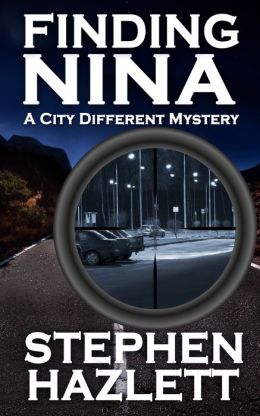
Review: Finding Nina by Stephen Hazlett


Another win from the LibraryThing giveaway program, which I highly recommend if you ever find yourself short of books to review ; ) .

Finding Nina is the concluding volume to Stephen Hazlett's City Different trilogy ("The City Different," an in-story Jeopardy question informs me, is a nickname for Santa Fe). It's been described variously as a mystery, a thriller, and an "edgy romance". It's more a thriller than either of the others--a high-stakes, twisted story of  rivalry and obsession, as small-time criminal Sammy Garza and ex-cop Ray Sanchez, meeting in prison, discover they both know Nina Kelly. Beautiful, clever, but a bit lost, Nina's drifting through a crumbling marriage, just in time to find herself caught in this bizarre love triangle. There isn't really any mystery going on here--we as readers know who's behind everything, even if the characters don't--and while there may be some sick version of a love story here, it does not follow the conventions of a romance. Shakespearean comedy concluding with a marriage this one ain't.

This isn't a bad thing. This story isn't meant to be fluffy or even particularity happy. What it is supposed to do is provide suspense and thrills--the literary equivalent of a roller coaster ride. At times it achieves this, but at times less so.


The main problem with this story, and the reason it's taken me over a month to get around to finishing and reviewing it, is that for a thriller the pacing is very, very slow. It takes almost a hundred pages for the plot to really get going--at first it's just Garza and Sanchez doing a lot of macho posturing at each other, and Nina sort of drifting through with her failing marriage. On a sentence and paragraph level, there's a lot of showing where telling might be quicker and easier. There's such a thing as too much detail. And pleonasms about. There's a line about Nina eating by "spooning yogurt from a container into her mouth."

Dialogue is weakened when padded by "maybes" and reliance on adverbs and vagaries. There is also too much framing language--once a scene is established from Ray's POV, I don't need to be told "Ray was thinking." It made paragraphs unnecessarily long, especially considering this ebook is meant to read onscreen.

Here's an example paragraph to illustrate what I mean:
Ray was thinking that if it had been reported stolen, then Santa Fe police would have a record of it.
Harris could have checked for that, but he apparently hadn’t. Maybe he was slipping. But Ray didn’t say any of that, simply saying,"And?"

This could have be trimmed to:
If it had been reported stolen, the Santa Fe police would have a record. Apparently Harris hadn't checked for that, although he could have. He was slipping. But Ray let it go. "And?"

Small difference, maybe, but I think a noticeable one over the scale of an entire novel. 

Even once the plot gets going, we're slowly walked through the practical minutiae of a kidnapping. At this point, actually, I was interested. The fun of reading crime novels is getting into the head of a criminal and seeing how he does it. In this particular case, our boy Sammy and our girl Nina have a time of things negotiating everything from peeing while blindfolded (perhaps too much detail here) to squabbling over who gets to eat the Hungry Man and who gets the Lean Cuisine, a scene that was so unexpectedly amusing and cute that I forgave the scene of Sammy going grocery shopping. The banality is the point of it. Seeing these small details did help me understand, to some extent, how Garza and Nina got used to each other and how Garza, at least, comes to fall for her. All the same it seemed like one-sided affection to me, while Nina and Ray's relationship seemed built mostly of backstory from the previous 2 novels.

One last note on the level of detail--when you watch a criminal plot his crimes, complete with all the second-guessing, reconsidering, and questioning his sources of information, you become more sympathetic to him but also much less intimidated. When Garza describes his crimes in the first pages, I couldn't help thinking that ringing the doorbell to check that nobody's home before burglarizing the house seems rather 101 level criminology. Watching him debate whether he needs a taser for his kidnapping or just a stun gun, basing his information on TV shows, is like watching a kid playing dress-up. I found his awkwardness almost endearing and so the way he softened around Nina made sense--he didn't seem a bad guy at heart. Then he suddenly takes a turn for the truly dark at the end that surprised me. To be clear, I'm skeptical of any guy who tries to get into a woman's heart while keeping her prisoner, but I wasn't sure the story's logic agreed with me. Garza may well have been a nice guy who made mistakes.

Anyway, that sudden dark turn led to a twist ending which, depending on your feelings for the characters and your expectations, will be either poignant or make this a Shaggy Dog story. Which it is, is up to you, although I'm curious about the reactions of readers who have stuck with these characters for three books.

Wednesday, September 25, 2013

Book Review: Liane Merciel's The River King's Road

This is  exactly the kind of fantasy I love: a potentially epic setting but with "low fantasy" focus on the actual people within it. Peasants have the chance to determine fate for a change. Like Saladin Ahmed, I also want "fewer kings and starship captains, more coach drivers and space waitresses" in my spec fic.

Beyond class diversity, the spec fic genre also needs progress in racial diversity. It's something I try to do in my own writing and also something I consciously keep an eye out for in my reading. I was pleasantly surprised to discover the paladin in The River Kings' Road, Sir Kelland, is from the African-analogue of this fictional universe. Although an orphan raised by Sun Knights, he connects with his heritage by braiding his hair in the fashion of its warriors, and the common folk view his dark skin as a manifestation of the Sun Goddess' favor, making him the "Burnt Knight." He's also the subject of a wants-to-be-but-bound-to-celibacy romantic subplot with his assistant, a woman warrior, and I was happy to see that these two will have a bigger part in the sequel.

I hasten to add that the story itself is less of an essay on class and racial diversity than the paragraphs I've written here--I was just impressed at how, while not groundbreaking, this story is able to quietly model that sort of diversity with a cast of well-rounded characters, albeit in a fairly standard fantasy setting.


Although there are some unique and flavorful additions--the sadomasochistic Thorn witches (and that's sadomasochism in the not fun, safe, sane, and consensual manner), Sir Kelland and his background, and even the River Kings' gleaming Road itself--ultimately the setting is a medieval world, complete with analogues to the Vikings. One nice thing is that it's a medieval world written by an author who clearly did historical research: there's a throwaway line about a family losing its milk cow when their house is burned down, because during winter they keep the livestock indoors with them. Again, there's these down-to-earth details of daily lives and what it's like to be an average person in this world. I hasten to add that these are throwaway lines; the main plot isn't bogged down by trivia.

Which isn't exactly to say doesn't get bogged down.

The plot starts with a bang--technically, with fire and Bloodmist, which is exactly what it sounds like--and the story moves forward steadily, without any wasted scenes. Yet, in the middle particularly, there are a lot of flashbacks to provide background information that rarely rises above standard fantasy fare. Wars, evil wizards, hard-bitten mercenaries, strange curses, and those Viking analogues I mention call the undead they fight Skraelings, which is an actual Viking term (meaning "wretch," and applied by them to Native Americans. Specifically the Native Americans who drove them out of Newfoundland. I highly doubt Merciel intends anything racially loaded by the term; that's just interesting trivia I want to bog my review down with).

In contrast to my parenthetical comment above, the characters' flashbacks are generally germane, and frequently help to develop the backstory and personality of individuals. Sometimes I wonder whether the background information could be more gracefully presented, but on the whole it is a fast-paced story as the worldbuilding gets fleshed out. All the same, aspects of the world still feel a bit thrown together--the Thorn Witches, despite some genuinely creepy body modifications, are in many ways a generic evil sorcerers empire to the east with exotic naming conventions, while the Western European main setting has a mixture of names that feel English and French--which makes parts of it feel more constructed than inhabited. Ang'arta especially--I do not know how that country works, and it does not feel like a real place. To be fair, none of the characters have actually been there yet, mostly because in true evil empire fashion it's a place few people go to and survive.

Even if the evil empire which never appears onscreen could be better realized (and when you put it like that, it's obvious), the villainous characters themselves are as well-rounded as the good guys. There does seem to be more character development on their part, with redemptive arcs or at least tragic ones. In fact, I wound up feeling more sympathy for the most decent of the villains than the most antiheroic of the heroes--and I think that's a feature, not a bug. There are enough genuinely kind people for me to care about and root for, like the peasant mother Odosse and Sir Kelland, who are respectively trying to survive and keep two babes in arms alive while fleeing a Thorn Witch through border territory that might at any moment erupt into war, and launching an investigation into a massacre that might wind up triggering said war. Unlike the typical epic fantasy where we're supposed to be cheered at the prospect of a nice war to get the heart pounding and the lungs inflated, here war is shown as terrible as it generally is when you're, say, one of the people who might drop dead when the Bloodmist is unleashed.

Of a fairly large cast, one of the least interesting characters happens to be the one we start off with--Brys Tarnell, the brilliantly green-eyed swordsman featured on the cover, and pretty much a standard antihero. I actually expected more character development from him than I got. He's a perfectly well-rounded standard antihero, with the street smarts to get Odosse and two babies across enemy territory and the occasional sarcastic barb, but he hasn't hit the full swing of his redemptive arc yet (some might find this refreshing). Odosse, though, is instantly sympathetic without being nothing but a victim, despite being a peasant, a young unmarried mother, and unattractive in more than the "Hollywood Homely" sense. She has to make her own choices in this novel, some of them surprising.

The Thorn Witch and her magic, which relies largely on mutilation, is genuinely terrifying, and while I wish we learned more about her motives, it looks like those will come up in the sequel.  All of the backstory dropping and the slow character arcs appear to be in preparation for a much larger story arc--and this book is clearly the first in the series, with much tantalizingly unresolved at the end. I've already ordered the next, Heaven's Needle.

Links:
Goodreads
LibraryThing
Amazon 
Barnes and Noble
Kobo
The Sun Knights would probably approve of you buying a used copy from Better World Books to raise money for literacy programs.


Monday, September 23, 2013

Book Review: "Blood of Kings" by Billy Wong

I received a free ebook copy through a LibraryThing giveaway in exchange for an honest review.

I signed up for the giveaway because I've followed Wong's short fiction casually for years (not least because we've frequently wound up in the same places, such as Firefly in Amber etc etc). While his style is fine for short fiction, where it's of the essence to be concise, I struggled through this novel.


An in media res opening perplexed me, especially because the characters were introduced with so much telling (rather than showing) that I wondered if this was a sequel. Perhaps I should already be familiar with these characters and the curt introductions were only to refresh my memory. Lady Mildred, a knight and rumored daughter of King Arthur, and her Greek squire Ares, were both novel and interesting characters. I found myself liking them despite the awkward introduction, but they're so novel and interesting that it seems a shame to present them so blandly.

Furthermore, the prose remains lax and the tone uneven. Without evocative language, it's hard to feel sense of wonder at the faeries and magic, awe at Mildy's feats of strength, or grief or horror at the many deaths, including some of characters I really hoped would survive. There's plenty going on in this story, including lots of refreshing twists on the original Authurian legends, but it reads more like the detailed outline of a story instead of a finished product.

The voice and dialogue can also get jarringly modern. Surely this is the first time Morgan le Fay has ever been anybody's "Mom." This despite the fact that she has been distant enough from both her children, Mildred and Gawain, that I could buy her being called "Mother" anyway. Overall, a lot of the dialogue just wasn't working for me:
"I'm afraid, Arthur." He sounded it. "I think the fey are out to get me. I've been having these dreams lately..."
This does not sound convincing even as someone just pretending to be Merlin (which it happens to be--and it's awfully modern and casual language even for the impostor's true identity).

It's not that Wong can't do subtler description. Take this bit from Lancelot's introduction:

A bit over forty, golden-haired Lance looked no less than ten years younger, and his dashing persona and immaculate appearance made him the object of many a noble lady's affections. Somewhat oddly, he never responded in more than a courteous way. Though they were best friends, Mildy couldn't help suspecting there might be something queer about his attitude towards women—suspicions heightened after hearing Ares' tales of certain behaviors among the nobility of his land.

Although I want to mentally rewrite the first sentence to Golden-haired Lancelot appeared at least a decade younger than his forty years...that's just nitpicking. More importantly, I see what he did there ("queer" attitude towards women and the Greeks!) without it needing to be spelled out. It shows, in an amusingly coy manner, rather than telling.

Happy as I was to see some LGBT representation (although this isn't the first time Lance had played for the other team--Mordred, Bastard Son comes to mind at once), it actually turns out that Lancelot is sleeping with Queen Guenivere, in one of the few aspects of Arthurian legend that isn't somehow subverted.

I was glad to see some new twists, since a faithful retelling of Arthurian legend seems superfluous at this late date. We've had more than five centuries of that. The first plot twist, of course, is that Mordred has become Mildred. I don't think switching the gender of the protagonist impacted the plot as much as it could have: Mildred faces some derision, overcomes some prejudice, and juggles contrasting visions of proper behavior for a woman, but this is more flavor text than thematic (my distinction is that a theme guides the writer's choices in plot events, characterization, and even setting--it's not just a paragraph or two of characters wondering aloud). She's a warrior first and a woman third. This is fine, too--not every story about a woman needs to be about *being a woman*--but given this story is billed as being about a warrior woman, I wouldn't have minded a little more development of that idea. And there is one line about Mildy refusing to wear a helmet because of "feminine vanity" which made me shake my head.

The plotting is very tight from the beginning, although things get complicated when Nimue appears with her dubious plans, and Mildred briefly gets sidetracked from her Grail quest and growing conflict with her father by falling for Galahad. It doesn't last--and the sudden, brutal, and completely unexpected way that relationship ends makes Mildred's feud with her father completely believable. Moreso because this is Morgan le Fay in one of the most sympathetic representations I've ever seen of her, a victim of rape by her brother. The best we can say for King Arthur is that he didn't know it was his sister at the time. But by being the sort of man who violates a vanquished enemy just because she's female (I'm grateful that, unlike some would-be "grittier" writers, Wong chooses to show this as an exception among the knights, who may be jerks and may be violent but are not all rapists), he's, first, veered very far from the classic ideal of King Arthur, and second, sealed his fate. Mildred's power is rising, and the son of a bitch is going down.

Some people might be disappointed to see Arthur as a bad guy, but it's not like there aren't enough heroic Arthurs out there. Heroic Mordreds are rarer, heroic Mildreds completely unprecedented. So I was eager to watch her confrontation with her father. Unfortunately, it barely lasts a chapter of this 88,000 word book. The actual war is about 2-3 paragraphs, with a little more for the actual confrontation scene. Then the last forth of the story or so documents Mildred's efforts to consolidate her kingdom. Realistic, and potentially gripping, but not in this particular narration. I did like how Ares, the squire, becomes Mildy's loyal and supportive right hand man--not necessarily a love interest, either. I'm sure it could go that way in the future, but they are first and foremost friends.

As I said, this is an 88,000 word novel (hardly short, if not epically long) largely told in summary. This makes it dense and honestly a bit exhausting to read. I'm sure the style itself could be improved without making the story much longer, just by making descriptions more active, action more vivid, and using more period and tone-appropriate word choice. I say "period appropriate" because, although fantasy, this story is in a medieval sort of world, with allusions to Christianity (one of the villains is a religious fanatic who believes the faeries are unholy) and a pretty solid description of siege warfare.

It's not that all epic fantasy needs to be written at R. Scott Bakker (or Seamus Henley, or E.R. Eddison) level diction--I greatly enjoyed Sam Sykes Aeon's Gate, which is written in a manner best described as "nervously chatty." It's modern in attitude--emphasis on attitude--without being jarringly casual about events. Although mentioning Sykes reminds me: in this story, as in The Skybound Sea, some characters have a habit of just not dying. Wong does kill enough people to give the heartstrings a jerk and up the stakes, but other characters are capable of shrugging off some major wounds, even when they aren't being helped by the Holy Grail and/or the healing unicorn Mildred acquires. This frustrated me, as the magical healing almost became superfluous if Mildred did as well without them.

Then again, frustration was a pervading sentiment as I finished this book. I wish I liked Wong's style better, because the concept of his stories such as Iron Bloom look like something I'd enjoy a lot (warrior women, warfare/pacifism conflicts, and a side of romance for leavening). There is an excerpt of Iron Bloom at the back of Blood of Kings, though, enough to confirm that it also contains awkward writing, and it also opens on an attempted rape, which is a perfectly valid conflict but one I had a surfeit of with the Sword and Sorceress anthologies written in the '80s.  If you like to see Arthurian legend creatively remixed, and don't mind some rough pacing and prose, this may be worth checking out.

Links:
GoodReads
LibraryThing
Amazon
Kobo
Barnes & Noble


Saturday, September 21, 2013

Book Review: Judging Eye by R. Scott Bakker (Aspect-Emperor trilogy)

I mentioned this one in my review of The Skybound Sea--where I hoped for the sake of Aeon's Gate fans Skyes goes on to write a sequel trilogy like this.

I cannot remember enjoying a sequel so much in years!

Although the worldbuilding behind what Bakker is now calling The Second Apocalypse is beyond complex, and a lot has happened in the 20 years since the close of the Prince of Nothing trilogy, I still felt able to dive right back into this world. I hadn't realized how much I remembered of this meticulously crafted setting--even though "Sweet Sejenus!" has been my go-to cussword for years. Bakker doesn't waste the reader's time with a long introduction. Instead, we're brought up to speed with key developments in a 2-page letter and then off to the races. Although I should note there is some back-of-the-book matter, some of which should should have been brought to the front, like the Map of the Three Seas I didn't know was there and would have really helped my geographic understanding. Better yet, there is an excellent synopsis of the first series (that doesn't spoil for The Judging Eye itself). This helped me refresh my understanding and also gave added background.


This is still a slower, and in some ways more introspective trilogy than the first--the chapters with the captive prince Sorweel came dangerously near navel gazing. All the same, they offered a view of Aspect-Emperor Kellhus that provided a contrast to the other chapters--to Sorweel, captured as part of the emperor's holy Crusade called the Great Ordeal, Kellhus is an enemy but also near-divine, while the Wizard Achamian knows Kellhus is mortal but trained to be super-humanly intelligent and manipulative. Achamian's goal is to discover the source of that training, so he has a more standard quest fantasy plotline. This is not to say it is dull or even that it's anything like quest fantasies done before. People have objected to the climactic scenes as being a Mines of Moria ripoff, but the Mines of Moria were never so terrifying as the Nonman city ominously vast and all but lost in deep time, where every detail of its craftsmanship reveals an inhuman culture and the suffering of previous generations has caused the very fabric of reality to decay into a Hellmouth (Bakker's word is topos, but I refreshed my Greek and learned that translates to something like "trope." Bakker's characters do not speak Greek, but the relation to TV Tropes almost--if not quite--ruined the scariness for me).

The last plotline follows Kellhus's wife (and Achaimian's ex) Esmenet and the children she's had with the Aspect-Emperor. I would not suggest pregnant women, nor for that matter anyone planning to become pregnant nor anyone who is nursing nor anyone who has feelings on children in general, read these chapters. Since I have no current plans vis-a-vis fertility, I devoured them. Kellhus's kids are possibly even more terrifying than the topos, because they're horror in a human shape--well, the living ones are in a human shape--well, if anything was going to make me doubt Kellhus's human origins it's the children he's conceived that were drowned at birth because they came out wrong. But the fact is, all the kids have come out a bit wrong, and we get to follow evil little Kelmomas as he causes havoc and destruction because...I'm not actually clear on his motivations. The synopsis in the following book, The White-Luck Warrior, tells me he's trying to draw closer to his mother. Poor Esmenet.

Esme is one of the more sympathetic characters, along with Achaimian (and to a lesser extent Sorweel, but it's hard to get a good grip on someone in the depths of an identity crisis), and they're what keeps this story  from devolving into a grimdark bloodfest. The style is grim, but thoughtful. There's a fair bit of flashy prose, some of it purple, but this is done deliberately to achieve an effect a bit like reading epic poetry. I wouldn't suggest anyone set out to mimic Bakker's style--it's a don't try this at home, kids kind of feat--but it was pleasant to read for a change of pace. The magic and supernatural forces in this story are less subtle than in the original trilogy--the sorcerers wield some nice pyrotechnics, divine or posing-as-divine forces begin manifesting in opposition to Kellhus, and the manifestations of the topos are vivid--but continue to raise more questions than they answers.

The Judging Eye of the title, a wild talent of Achaimian and Esmenet's traumatized daughter Mimara, seems to suggest an ultimate hierarchy of good and evil--one at odds with Kellhus' teachings, at that. But I'm personally not convinced morality in this universe isn't relative. My first tip-off was that Mimara's Judging Eye views "good men" as "brighter" and "good women"--now, maybe Bakker has the balls (no pun intended) to weave misogyny into his fiction's very foundations, but I prefer to imagine something more interesting is going on. Perhaps Mimara's vision has been affected by her upbringing, or manipulated by one of the higher powers beginning to make an appearance in the trilogy. Achamian has a moment of feminist realization when he hands off power to Mimara, who's convinced him to offer her some training in sorcery, near the climax-- although the Judging Eye also thinks he's damned as a magician. And on the other side, we have the cult of Yatwer, dark yonic power at its delectably creepiest. This is almost enough for me to stop being disappointed, now that it's been pointed out to me, that Bakker has several parallels with Frank Herbert's Dune Messiah and that means the (also pretty yonic) Bene Gessert have been replaced with the rather male Dunyain. This is a series that would already benefit from having a few more female characters who aren't prostitutes or ex-prostitutes. Again, though, the cult of the goddess Yatwer and her White-Luck warrior promises to develop into something ghastly but fascinating--much like everything else in this series.

Links:
Goodreads
LibraryThing
Amazon
Barnes & Noble
Kobo
Better World Books

Thursday, September 19, 2013

WisCon Rapidfire Book Reviews #4: Aeon's Gate: The Skybound Sea by Sam Sykes


I have a confession to make: I already took one review copy (Edge of Oblivion), but I couldn't resist snagging this one, too. I picked it up and meant to page through it to pass the time before the auction, but then I could not put it down. The opening lines beat out a hypnotic rhythm. Gliding past them, I found myself in an oceanside slum near the home of an eldritch abomination. My inner Cthulhu fan's tentacles twitched pleasantly. I found I liked the characters at once. Unfortunately, the opening was more of a teaser and I didn't see a lot of them afterwards.

There will be some spoilers in this review, but spoilers don't actually decrease your enjoyment of the story. I'll keep them vague, anyway, with just enough detail to articulate what I liked and what nagged me.

Although this was the last book in the trilogy, I felt I was able to keep up with the action easily enough. After all, this book is mostly action--people killing people, narrowly evading being killed by people, people summoning giant monsters, fighting giant monsters, fighting each other over how exactly to go about fighting giant monsters. The background mythology isn't one-dimensional, but the parts that are immediately relevant to the action are presented without slowing the pacing down and without being confusing (anyway, an air of not-fully-explained mystery is a perk in mythology building, especially mythologies including ineffable eldritch abominations).

Where I did start getting lost was the character's motivations. There's some sort of scheme-within-a-scheme going on with at least one of the villain factions--yes, there's more than one. Many more. They're usually able to be distinguished by the color of their skin. Whether it's green or purple, I mean. Actual PoC do appear among the heroes and sympathetic side characters, and Sykes also writes women perfectly well, which is refreshing in this testosterone laden subgenre. They're at least as complex as the male characters, and equally or more kickass, without being at all fanservicey. When fighting they can get downright unsexy. This does not mean they aren't kickass. Bless you, Sykes, for knowing the difference.

Back to that complexity, though--some confusion among the villains, I understand, is a feature rather than a bug, and Sykes seems to intend it that way. Maybe I really am not supposed to know what's going on, or if I'd read the previous 2 books I'd know. I appreciate that Sykes doesn't slow the plot down to spoon-feed these things to us (he has one teaser of a scene where 2 villains discuss their plans in front of a hiding character--the character, though, can't speak their language and missses out on such a great spying opportunity), but at times I wasn't sure whether I was meant to sit back and watch the blood splatter or piece together a puzzle. Maybe I should have done both at the same time?

This confusion reigns despite the villains discussing their plans, the heroes arguing about their plans, and a constant rich stream of inner monologue--which pops up even during action scenes. However, I think in this case seeing the character's thoughts helps. Without knowing who a character is and what they want, even the bloodthirstiest reader can't get that invested in them spearing, hacking, chopping, exploding, and otherwise demolishing other feeling, thinking beings. The main protagonist, Lenk, might genuinely be mentally ill--he brings the possibility up and it isn't dismissed. Although this raises interesting questions like, how does this world define mental illness? Is introducing "schizophrenia" into what is, eldrich abominations and sorcerers aside, a largely medieval fantasy world an anachronism?

This being the last book of the trilogy, I was privileged to see its end...such as it was. Because it wasn't much of an ending--instead we get a bigger revelation, the heroes' troubles are clearly not over, and the world may be in even greater danger no than it ever was. Anyone who had read through the entire series might be disappointed at the lack of resolution, and for all this story was pretty fun (not lighthearted in tone by any means, but clearly meant to be the literary equivalent of a popcorn-noshing action movie), it ends on a depressing note. Not because of character death, either--this is spoilery, but as I read I started to get distracted by how rarely anyone's death or apparent death proved permanent. Instead, there's just this feeling that all the heroes' work was for nothing, they are pawns in a cosmic game they cannot comprehend, and lots of other nihilistic musings.  I'm tempted to draw a comparison with R. Scott Bakker's Prince of Nothing series, which also ends on an obvious hook for its sequel trilogy (which I'm currently reading). However, Prince of Nothing exhibits vast worldbuilding, on such an epic scale that multiple series within it seem inevitable. Sykes has some awesome images in his created world, including the titular Skybound Sea, but on the whole it's a Dungeons and Dragons campaign in writing. Then again, I'd expect plenty of DMs like to end each session with a hook for the next, so maybe that's what he's doing here.

Knowing how this trilogy ends, I'm not sure I'm interested in reading the beginning, but I'll definitely check out what else Sykes has written. And I'll probably wind up snagged again.

Links:
Goodreads
Amazon
Alibris
Kobo 
Barnes and Noble 
Buy a used copy, protect trees & fund literacy programs through Better World Books

Monday, September 9, 2013

WisCon Rapidfire Book Reviews #3: Edge of Oblivion by J.T. Geissinger

15763831

Among the delights of WisCon was the cardboard box of free review copies in the lobby. Diving in among them, I read the back cover copy of this ARC and snagged it, always one to enjoy the occasional romance. I was expecting fantasy in a historical setting, only to find paranormal romance instead. Paranormals aren't usually my thing, but I figured I'd give it a shot.

I sat up late reading it and carried it around the next day to browse in between panels. I did set it down once the panels began, but that is more a testament to the quality of WisCon's panels than the book's inability to hold my attention. There's plenty of suspense, given it starts off with the heroine being sentenced to death for betraying her people--a sentence the hero is meant to carry out, if she isn't able to use the grace period she's been provided to uncover the secret enemy who intends to destroy them all.

This is a very sensuous book--not just in the obvious sense of its steaming sexuality, although there was that, too, but in the sumptuous descriptions of Rome--and it's food (I love it when heroines indulge themselves, and the scene where Morgan has a run for freedom that incorporates going for gelato won my heart over) as the characters explore the city in search for a hidden society that intends to destroy their hidden civilization of shapeshifers. Specifically, these are cat/panther shifters, not werewolves, although similar dynamics seem to prevail--by which I mean, Alpha Male syndrome rears its needy head. I'm not a fan of these particular sorts of dominance dynamics and likely I never will be. Especially when it's Alpha Male syndrome. The women in this story do stand up for themselves--sometimes.

SPOILER for the climax: there is a test for female characters, the "sexy lamp test," which poses the question: Would an attractive lamp have fulfilled the same purpose as the character in this scene? The climax strongly fails the sexy chained-up lamp test. While the heroine gets the chance to exert her genuinely cool shapeshifting and mind-control powers at other points in the story, at the climax she just dangles there. I kept waiting for her to break free and unleash holy hell and...she didn't. That was a strong strike against this book for me.

The hero of this story, for all he's got the dominant vibes, has a crushing backstory as a trained assassin that made me want to get him a warm blanket and hot soup. He has a support structure of sorts from his friends--and then terrible things happen to some of those friends. The heroine, Morgan, has a twisted past based in her rebellion against the genuinely oppressive 'shifter society, obsessed with its own safety to the point of crushing individual freedoms. Secondary characters are well-developed, at least one couple because they're being prepared for starring role in the concluding book of this trilogy. But, despite that and despite a moderately interesting revelation about the villain-behind-the-villain, I don't think I'll read on. Delicious as the description is, and sympathetic as the character's hopes and dreams (as they're caught up in) when it's gilding on some extremely tired gender dynamics I just can't be that engaged. If this was the historical I at first thought it was I might at least excuse it on grounds of time period accuracy. Might. But, no, I really wouldn't have; I'm picky like that, wanting female characters to have agency and male characters to not be domineering assholes (the hero of this story was both, but not at the same time, I'll give him that; and the assholedom is something he's been pushed into and is actively trying to change from. The villain was both at the same time and so gross because of it that I had trouble reading about him, and that makes me only more disappointed that Morgan wasn't able to whup his sorry ass to the curb during the climax).

I haven't yet been converted to paranormal romance. For those of you who are into it, and who don't mind the gender dynamics so much (given how much of this sells like hotcakes I'm clearly more sensitive to it than many), would probably enjoy the travelogue of Rome, the sizzling emotional and sexual tension between the protagonists, and the genuinely sympathetic side characters.

Links:
Goodreads
Amazon.com
Alibris
Barnes & Noble
Buy a used copy, protect trees & fund literacy programs through Better World Books


Wednesday, September 4, 2013

WisCon Rapidfire Book Review #2: A Stranger on Olondria by Sofia Samatar

12814333

Another one of the books I discovered through WisCon--in fact, I discovered Stranger in Olondria through the little sampler pamphlets Small Beer Press handed out out at WisCon 2012. This was daring promotional tactic--because the first 50 pages of this story don't have much of the plot, though they gave a flavor for style. The style intrigued me enough that I was willing to wait for the plot, and wait I did: not only for a full year to see the book in the dealer's room, but then another month or so for my sister, who bought a copy, to finish reading it and bring it to DC when she visited this June.

And then I had the waiting period of rereading the first 50 pages.

Sofia Samatar's prose is lush. Very lush. As lush as the verdant forests of Jennat, where in the evenings spice-scented mists rose and are taken for ghosts by the taro farmers on the slopes above (not an actual quote, but my attempt to mirror the style). Some might say too lush.

I love rich description--I'm currently reading E.R. Eddison--but there comes a point where further detail is only detracting from the story rather than setting the scene. When Jevick is given a mystic book, it doesn't matter to me that the book comes wrapped in "old silks the color of a fallen tooth" (page 158). A small thing, and one that doesn't detract from the story as a whole, but still, let's just say that line exercised my eyebrows.

The lush description builds up a setting that is rather hodgepodge--at first, given the opening, I thought Olondria would be an alternative India or other South Asian setting, but in the end there's bits of everywhere, people wear monocles and skullcaps, sit in parlors and cafes bearing swaths of silk in un-Victorian profusion, eat pears poached in wine and drink chocolate (which to my mind either implies a Columbian Exchange in this alternate universe or just proves there is no North American analogue). This is actually the kind of creatively anachronistic, stylishly rich worldbuilding I love, and it excuses the level of description--when nothing can be taken for granted, a writer should tell the readers enough details to get by. One particular set of details I loved: Jevick frequently quotes other writers from the world of Olondria, which reminded me of more classic writers and their tradition of allusions. It's a great way to immediately add depth to the text, and I should note that Samatar takes a gamble by using actual excerpts from the fictional books, and successfully pulls them off (to show how hard this is generally recognized as being, in the words of Making Light on the Most Interesting Writer in the World: "18: (S)He once wrote a novel whose protagonist was a better writer than him./ 20: And included quotations proving it.")

As a ghost story, its mood is more melancholy than horrific. I want to compare it to The Dream Quest of Unknown Kadath, for the rich tour of the world with a quest at the heart of it (a quest that starts off personal and turns out to have stakes on a much greater scale). However, there is not a hint of H.P. Lovecraft's virulent racism (hopefully this is clear from both the cover and the fact that the book was at WisCon; it lands on the opposite end of the racefail-o-meter). And books are the emotional touchstone instead of cats. You can quote me on that.

Back to the opening: this is a story that begins with the narrator's childhood. Most of the characters introduced on the Spice Islands stay on the Spice Islands, and I don't feel this part ties in well to what happens when Jevick eventually reaches Olondria. They're called back to, but not as strongly integrated as I'd wished. Once you get past that, the story picks up pace and is in the end tightly told--individual descriptions may fail to add to the story (at least it could be argued so) but the actual events unroll with a subtle inevitability. There is little repetition--except for the part where we get a second narrative of a different character growing up in the Spice Islands. Perhaps Jevick's childhood is presented to parallel hers. I'll keep that theory in mind should I sit down to reread A Stranger in Olondria anytime soon. It is the sort of book--poetic, complex, soft-spoken--that benefits, I'm sure, for rereading.

And ultimately, it is a story about reading. Not in a pat moral sense--it's not The Reading Rainbow for grownups (not that anything is wrong with Reading Rainbow!). But with that theme in mind...well, as I said, I'm sure this story benefits from rereading. To do that, you need to read it the first time around. And you should.

Links:
Goodreads
Amazon
Alibris
Barnes and Noble
Buy a used copy, protect trees & fund literacy programs through Better World Books