

I don't know if I'm actually going to make this a weekly post, but I suppose it depends on how much cool and useful stuff I find over the course of the week.
An excellent quote from Antoine de Saint-Exupéry's Airman's Odyssey comes to mind as I revise another article: "Perfection is achieved, not when there is nothing more to add, but when there is nothing left to take away.”
Deleting excess words, trimming a piece down to its essentials, can be a very calming exercise. Although I naturally run long, that only makes me more appreciative of simplicity. A message is most effective when it's been pared down to nothing but its core meaning.
Website: https://www.unfurlough.us/
A sort of jobs board for federal employees, consultants, and others affected by the US Government shutdown. It's struck DC hard (although we had a few good days for retail, as furloughed employees and stranded tourists hit the shops October 2 & 3rd. Even this past weekend at a farmer's market I saw a sign offering 20% discounts to anyone on furlough). Since my part-time work is in consulting, my job search has gotten even stickier than anticipated.
In the meantime, this website has been built by veteran-owned tech firm Blen and the 1776 platform using Drupal open-source software to host 'gig's (temp jobs) and available freelancers' information and resumes. Apparently the whole thing started as a Google Doc!
So if you or anyone you know is affected by the shutdown, consider uploading your resume and taking a look at the gigs.
Software & website: http://www.beelinereader.com/
I read onscreen a lot. You probably do, too. Beeline Reader's software claims to make reading onscreen faster by applying a color gradient to lines of text, allowing the eyes to follow along without skipping or backtracking. You can install the extension to use on your computer, tablet, or smartphone, and use it to read on websites, or you can copy & paste from a document or email to their online Pasteboard. I've read a few chapters of my latest PDF review copy on it, and I don't know if it's gone much faster but if nothing else the novelty of the shaded lines kept me entertained. And I don't remember even once rereading the same line, so it does work as advertised.
Website: http://www.autocrit.com/
The Autocrit Wizard is not a substitute for a skillful human editor, nor indeed for your own wordcraft. However, it is an excellent way to get a quick overlook of some common mistakes in your manuscript. It catches commonly overused words (it, had, see, felt, was/were, that), cliches, use of initial pronouns ("He did..." "She did..."), and sentence length (*coughs, shuffles feet*). Sentence length actually includes a cool visual 'map' of the sentences compared to each other. Lots of long lines in a row signals a problem (*shuffles feet harder*). One thing it doesn't seem to do is catch grammar errors, which is a pity because Microsoft Word's grammar check remains unreliable. As does the grammar of pretty much every writer.
Getting on my soapbox here:
"This is how you write dialogue," she said. "Notice the comma goes on the inside of the quotation marks. Furthermore, the 's' in she is lowercase, because it comes after a comma and not a period." She sighed heavily. "This is a mistake everyone makes at first--it took me a full year of writing to figure it out. But the sooner you memorize this rule, the faster all subsequent revisions of your story will be."
(If it helps, take out the quotation marks. It becomes much clearer that This is how you write dialogue, she said is a full sentence.)
Now, even once we figure that out, there are lots of other problems awaiting us--I continue to use comma splices, in a manner I think is stylistic but quickly proves when another person reads it to be just confusing. And sometimes the only way to figure out how the grammar in your sentence should work (especially when you're doing something stylistically creative) is to have another human being read it. Autocrit will not do that for you. On the other hand, human beings may not be as quick to spot repeated words and almost certainly are not going to count the number of words in each sentence for you. The Wizard is a useful part of a toolkit. Even if you don't run your entire manuscript through it--and even if you stick with the freebie package of basic tools--analyzing a few thousand words of your text should be enough to draw some conclusions of your own.
Subscribe To

 Posts
All Comments
Posts
All Comments
Showing posts with label reviews. Show all posts
Showing posts with label reviews. Show all posts
Thursday, October 10, 2013


Wednesday, September 25, 2013
Book Review: Liane Merciel's The River King's Road
This is exactly the kind of fantasy I love: a potentially epic setting but with "low fantasy" focus on the actual people within it. Peasants have the chance to determine fate for a change. Like Saladin Ahmed, I also want "fewer kings and starship captains, more coach drivers and space waitresses" in my spec fic.
Beyond class diversity, the spec fic genre also needs progress in racial diversity. It's something I try to do in my own writing and also something I consciously keep an eye out for in my reading. I was pleasantly surprised to discover the paladin in The River Kings' Road, Sir Kelland, is from the African-analogue of this fictional universe. Although an orphan raised by Sun Knights, he connects with his heritage by braiding his hair in the fashion of its warriors, and the common folk view his dark skin as a manifestation of the Sun Goddess' favor, making him the "Burnt Knight." He's also the subject of a wants-to-be-but-bound-to-celibacy romantic subplot with his assistant, a woman warrior, and I was happy to see that these two will have a bigger part in the sequel.
I hasten to add that the story itself is less of an essay on class and racial diversity than the paragraphs I've written here--I was just impressed at how, while not groundbreaking, this story is able to quietly model that sort of diversity with a cast of well-rounded characters, albeit in a fairly standard fantasy setting.

Although there are some unique and flavorful additions--the sadomasochistic Thorn witches (and that's sadomasochism in the not fun, safe, sane, and consensual manner), Sir Kelland and his background, and even the River Kings' gleaming Road itself--ultimately the setting is a medieval world, complete with analogues to the Vikings. One nice thing is that it's a medieval world written by an author who clearly did historical research: there's a throwaway line about a family losing its milk cow when their house is burned down, because during winter they keep the livestock indoors with them. Again, there's these down-to-earth details of daily lives and what it's like to be an average person in this world. I hasten to add that these are throwaway lines; the main plot isn't bogged down by trivia.
Which isn't exactly to say doesn't get bogged down.
The plot starts with a bang--technically, with fire and Bloodmist, which is exactly what it sounds like--and the story moves forward steadily, without any wasted scenes. Yet, in the middle particularly, there are a lot of flashbacks to provide background information that rarely rises above standard fantasy fare. Wars, evil wizards, hard-bitten mercenaries, strange curses, and those Viking analogues I mention call the undead they fight Skraelings, which is an actual Viking term (meaning "wretch," and applied by them to Native Americans. Specifically the Native Americans who drove them out of Newfoundland. I highly doubt Merciel intends anything racially loaded by the term; that's just interesting trivia I want to bog my review down with).
In contrast to my parenthetical comment above, the characters' flashbacks are generally germane, and frequently help to develop the backstory and personality of individuals. Sometimes I wonder whether the background information could be more gracefully presented, but on the whole it is a fast-paced story as the worldbuilding gets fleshed out. All the same, aspects of the world still feel a bit thrown together--the Thorn Witches, despite some genuinely creepy body modifications, are in many ways a generic evil sorcerers empire to the east with exotic naming conventions, while the Western European main setting has a mixture of names that feel English and French--which makes parts of it feel more constructed than inhabited. Ang'arta especially--I do not know how that country works, and it does not feel like a real place. To be fair, none of the characters have actually been there yet, mostly because in true evil empire fashion it's a place few people go to and survive.
Even if the evil empire which never appears onscreen could be better realized (and when you put it like that, it's obvious), the villainous characters themselves are as well-rounded as the good guys. There does seem to be more character development on their part, with redemptive arcs or at least tragic ones. In fact, I wound up feeling more sympathy for the most decent of the villains than the most antiheroic of the heroes--and I think that's a feature, not a bug. There are enough genuinely kind people for me to care about and root for, like the peasant mother Odosse and Sir Kelland, who are respectively trying to survive and keep two babes in arms alive while fleeing a Thorn Witch through border territory that might at any moment erupt into war, and launching an investigation into a massacre that might wind up triggering said war. Unlike the typical epic fantasy where we're supposed to be cheered at the prospect of a nice war to get the heart pounding and the lungs inflated, here war is shown as terrible as it generally is when you're, say, one of the people who might drop dead when the Bloodmist is unleashed.
Of a fairly large cast, one of the least interesting characters happens to be the one we start off with--Brys Tarnell, the brilliantly green-eyed swordsman featured on the cover, and pretty much a standard antihero. I actually expected more character development from him than I got. He's a perfectly well-rounded standard antihero, with the street smarts to get Odosse and two babies across enemy territory and the occasional sarcastic barb, but he hasn't hit the full swing of his redemptive arc yet (some might find this refreshing). Odosse, though, is instantly sympathetic without being nothing but a victim, despite being a peasant, a young unmarried mother, and unattractive in more than the "Hollywood Homely" sense. She has to make her own choices in this novel, some of them surprising.
The Thorn Witch and her magic, which relies largely on mutilation, is genuinely terrifying, and while I wish we learned more about her motives, it looks like those will come up in the sequel. All of the backstory dropping and the slow character arcs appear to be in preparation for a much larger story arc--and this book is clearly the first in the series, with much tantalizingly unresolved at the end. I've already ordered the next, Heaven's Needle.
Links:
Goodreads
LibraryThing
Amazon
Barnes and Noble
Kobo
The Sun Knights would probably approve of you buying a used copy from Better World Books to raise money for literacy programs.
Beyond class diversity, the spec fic genre also needs progress in racial diversity. It's something I try to do in my own writing and also something I consciously keep an eye out for in my reading. I was pleasantly surprised to discover the paladin in The River Kings' Road, Sir Kelland, is from the African-analogue of this fictional universe. Although an orphan raised by Sun Knights, he connects with his heritage by braiding his hair in the fashion of its warriors, and the common folk view his dark skin as a manifestation of the Sun Goddess' favor, making him the "Burnt Knight." He's also the subject of a wants-to-be-but-bound-to-celibacy romantic subplot with his assistant, a woman warrior, and I was happy to see that these two will have a bigger part in the sequel.
I hasten to add that the story itself is less of an essay on class and racial diversity than the paragraphs I've written here--I was just impressed at how, while not groundbreaking, this story is able to quietly model that sort of diversity with a cast of well-rounded characters, albeit in a fairly standard fantasy setting.

Although there are some unique and flavorful additions--the sadomasochistic Thorn witches (and that's sadomasochism in the not fun, safe, sane, and consensual manner), Sir Kelland and his background, and even the River Kings' gleaming Road itself--ultimately the setting is a medieval world, complete with analogues to the Vikings. One nice thing is that it's a medieval world written by an author who clearly did historical research: there's a throwaway line about a family losing its milk cow when their house is burned down, because during winter they keep the livestock indoors with them. Again, there's these down-to-earth details of daily lives and what it's like to be an average person in this world. I hasten to add that these are throwaway lines; the main plot isn't bogged down by trivia.
Which isn't exactly to say doesn't get bogged down.
The plot starts with a bang--technically, with fire and Bloodmist, which is exactly what it sounds like--and the story moves forward steadily, without any wasted scenes. Yet, in the middle particularly, there are a lot of flashbacks to provide background information that rarely rises above standard fantasy fare. Wars, evil wizards, hard-bitten mercenaries, strange curses, and those Viking analogues I mention call the undead they fight Skraelings, which is an actual Viking term (meaning "wretch," and applied by them to Native Americans. Specifically the Native Americans who drove them out of Newfoundland. I highly doubt Merciel intends anything racially loaded by the term; that's just interesting trivia I want to bog my review down with).
In contrast to my parenthetical comment above, the characters' flashbacks are generally germane, and frequently help to develop the backstory and personality of individuals. Sometimes I wonder whether the background information could be more gracefully presented, but on the whole it is a fast-paced story as the worldbuilding gets fleshed out. All the same, aspects of the world still feel a bit thrown together--the Thorn Witches, despite some genuinely creepy body modifications, are in many ways a generic evil sorcerers empire to the east with exotic naming conventions, while the Western European main setting has a mixture of names that feel English and French--which makes parts of it feel more constructed than inhabited. Ang'arta especially--I do not know how that country works, and it does not feel like a real place. To be fair, none of the characters have actually been there yet, mostly because in true evil empire fashion it's a place few people go to and survive.
Even if the evil empire which never appears onscreen could be better realized (and when you put it like that, it's obvious), the villainous characters themselves are as well-rounded as the good guys. There does seem to be more character development on their part, with redemptive arcs or at least tragic ones. In fact, I wound up feeling more sympathy for the most decent of the villains than the most antiheroic of the heroes--and I think that's a feature, not a bug. There are enough genuinely kind people for me to care about and root for, like the peasant mother Odosse and Sir Kelland, who are respectively trying to survive and keep two babes in arms alive while fleeing a Thorn Witch through border territory that might at any moment erupt into war, and launching an investigation into a massacre that might wind up triggering said war. Unlike the typical epic fantasy where we're supposed to be cheered at the prospect of a nice war to get the heart pounding and the lungs inflated, here war is shown as terrible as it generally is when you're, say, one of the people who might drop dead when the Bloodmist is unleashed.
Of a fairly large cast, one of the least interesting characters happens to be the one we start off with--Brys Tarnell, the brilliantly green-eyed swordsman featured on the cover, and pretty much a standard antihero. I actually expected more character development from him than I got. He's a perfectly well-rounded standard antihero, with the street smarts to get Odosse and two babies across enemy territory and the occasional sarcastic barb, but he hasn't hit the full swing of his redemptive arc yet (some might find this refreshing). Odosse, though, is instantly sympathetic without being nothing but a victim, despite being a peasant, a young unmarried mother, and unattractive in more than the "Hollywood Homely" sense. She has to make her own choices in this novel, some of them surprising.
The Thorn Witch and her magic, which relies largely on mutilation, is genuinely terrifying, and while I wish we learned more about her motives, it looks like those will come up in the sequel. All of the backstory dropping and the slow character arcs appear to be in preparation for a much larger story arc--and this book is clearly the first in the series, with much tantalizingly unresolved at the end. I've already ordered the next, Heaven's Needle.
Links:
Goodreads
LibraryThing
Amazon
Barnes and Noble
Kobo
The Sun Knights would probably approve of you buying a used copy from Better World Books to raise money for literacy programs.
Thursday, September 19, 2013
WisCon Rapidfire Book Reviews #4: Aeon's Gate: The Skybound Sea by Sam Sykes

I have a confession to make: I already took one review copy (Edge of Oblivion), but I couldn't resist snagging this one, too. I picked it up and meant to page through it to pass the time before the auction, but then I could not put it down. The opening lines beat out a hypnotic rhythm. Gliding past them, I found myself in an oceanside slum near the home of an eldritch abomination. My inner Cthulhu fan's tentacles twitched pleasantly. I found I liked the characters at once. Unfortunately, the opening was more of a teaser and I didn't see a lot of them afterwards.
There will be some spoilers in this review, but spoilers don't actually decrease your enjoyment of the story. I'll keep them vague, anyway, with just enough detail to articulate what I liked and what nagged me.
Although this was the last book in the trilogy, I felt I was able to keep up with the action easily enough. After all, this book is mostly action--people killing people, narrowly evading being killed by people, people summoning giant monsters, fighting giant monsters, fighting each other over how exactly to go about fighting giant monsters. The background mythology isn't one-dimensional, but the parts that are immediately relevant to the action are presented without slowing the pacing down and without being confusing (anyway, an air of not-fully-explained mystery is a perk in mythology building, especially mythologies including ineffable eldritch abominations).
Where I did start getting lost was the character's motivations. There's some sort of scheme-within-a-scheme going on with at least one of the villain factions--yes, there's more than one. Many more. They're usually able to be distinguished by the color of their skin. Whether it's green or purple, I mean. Actual PoC do appear among the heroes and sympathetic side characters, and Sykes also writes women perfectly well, which is refreshing in this testosterone laden subgenre. They're at least as complex as the male characters, and equally or more kickass, without being at all fanservicey. When fighting they can get downright unsexy. This does not mean they aren't kickass. Bless you, Sykes, for knowing the difference.
Back to that complexity, though--some confusion among the villains, I understand, is a feature rather than a bug, and Sykes seems to intend it that way. Maybe I really am not supposed to know what's going on, or if I'd read the previous 2 books I'd know. I appreciate that Sykes doesn't slow the plot down to spoon-feed these things to us (he has one teaser of a scene where 2 villains discuss their plans in front of a hiding character--the character, though, can't speak their language and missses out on such a great spying opportunity), but at times I wasn't sure whether I was meant to sit back and watch the blood splatter or piece together a puzzle. Maybe I should have done both at the same time?
This confusion reigns despite the villains discussing their plans, the heroes arguing about their plans, and a constant rich stream of inner monologue--which pops up even during action scenes. However, I think in this case seeing the character's thoughts helps. Without knowing who a character is and what they want, even the bloodthirstiest reader can't get that invested in them spearing, hacking, chopping, exploding, and otherwise demolishing other feeling, thinking beings. The main protagonist, Lenk, might genuinely be mentally ill--he brings the possibility up and it isn't dismissed. Although this raises interesting questions like, how does this world define mental illness? Is introducing "schizophrenia" into what is, eldrich abominations and sorcerers aside, a largely medieval fantasy world an anachronism?
This being the last book of the trilogy, I was privileged to see its end...such as it was. Because it wasn't much of an ending--instead we get a bigger revelation, the heroes' troubles are clearly not over, and the world may be in even greater danger no than it ever was. Anyone who had read through the entire series might be disappointed at the lack of resolution, and for all this story was pretty fun (not lighthearted in tone by any means, but clearly meant to be the literary equivalent of a popcorn-noshing action movie), it ends on a depressing note. Not because of character death, either--this is spoilery, but as I read I started to get distracted by how rarely anyone's death or apparent death proved permanent. Instead, there's just this feeling that all the heroes' work was for nothing, they are pawns in a cosmic game they cannot comprehend, and lots of other nihilistic musings. I'm tempted to draw a comparison with R. Scott Bakker's Prince of Nothing series, which also ends on an obvious hook for its sequel trilogy (which I'm currently reading). However, Prince of Nothing exhibits vast worldbuilding, on such an epic scale that multiple series within it seem inevitable. Sykes has some awesome images in his created world, including the titular Skybound Sea, but on the whole it's a Dungeons and Dragons campaign in writing. Then again, I'd expect plenty of DMs like to end each session with a hook for the next, so maybe that's what he's doing here.
Knowing how this trilogy ends, I'm not sure I'm interested in reading the beginning, but I'll definitely check out what else Sykes has written. And I'll probably wind up snagged again.
Links:
Goodreads
Amazon
Alibris
Kobo
Barnes and Noble
Buy a used copy, protect trees & fund literacy programs through Better World Books
Monday, September 9, 2013
WisCon Rapidfire Book Reviews #3: Edge of Oblivion by J.T. Geissinger

Among the delights of WisCon was the cardboard box of free review copies in the lobby. Diving in among them, I read the back cover copy of this ARC and snagged it, always one to enjoy the occasional romance. I was expecting fantasy in a historical setting, only to find paranormal romance instead. Paranormals aren't usually my thing, but I figured I'd give it a shot.
I sat up late reading it and carried it around the next day to browse in between panels. I did set it down once the panels began, but that is more a testament to the quality of WisCon's panels than the book's inability to hold my attention. There's plenty of suspense, given it starts off with the heroine being sentenced to death for betraying her people--a sentence the hero is meant to carry out, if she isn't able to use the grace period she's been provided to uncover the secret enemy who intends to destroy them all.
This is a very sensuous book--not just in the obvious sense of its steaming sexuality, although there was that, too, but in the sumptuous descriptions of Rome--and it's food (I love it when heroines indulge themselves, and the scene where Morgan has a run for freedom that incorporates going for gelato won my heart over) as the characters explore the city in search for a hidden society that intends to destroy their hidden civilization of shapeshifers. Specifically, these are cat/panther shifters, not werewolves, although similar dynamics seem to prevail--by which I mean, Alpha Male syndrome rears its needy head. I'm not a fan of these particular sorts of dominance dynamics and likely I never will be. Especially when it's Alpha Male syndrome. The women in this story do stand up for themselves--sometimes.
SPOILER for the climax: there is a test for female characters, the "sexy lamp test," which poses the question: Would an attractive lamp have fulfilled the same purpose as the character in this scene? The climax strongly fails the sexy chained-up lamp test. While the heroine gets the chance to exert her genuinely cool shapeshifting and mind-control powers at other points in the story, at the climax she just dangles there. I kept waiting for her to break free and unleash holy hell and...she didn't. That was a strong strike against this book for me.
The hero of this story, for all he's got the dominant vibes, has a crushing backstory as a trained assassin that made me want to get him a warm blanket and hot soup. He has a support structure of sorts from his friends--and then terrible things happen to some of those friends. The heroine, Morgan, has a twisted past based in her rebellion against the genuinely oppressive 'shifter society, obsessed with its own safety to the point of crushing individual freedoms. Secondary characters are well-developed, at least one couple because they're being prepared for starring role in the concluding book of this trilogy. But, despite that and despite a moderately interesting revelation about the villain-behind-the-villain, I don't think I'll read on. Delicious as the description is, and sympathetic as the character's hopes and dreams (as they're caught up in) when it's gilding on some extremely tired gender dynamics I just can't be that engaged. If this was the historical I at first thought it was I might at least excuse it on grounds of time period accuracy. Might. But, no, I really wouldn't have; I'm picky like that, wanting female characters to have agency and male characters to not be domineering assholes (the hero of this story was both, but not at the same time, I'll give him that; and the assholedom is something he's been pushed into and is actively trying to change from. The villain was both at the same time and so gross because of it that I had trouble reading about him, and that makes me only more disappointed that Morgan wasn't able to whup his sorry ass to the curb during the climax).
I haven't yet been converted to paranormal romance. For those of you who are into it, and who don't mind the gender dynamics so much (given how much of this sells like hotcakes I'm clearly more sensitive to it than many), would probably enjoy the travelogue of Rome, the sizzling emotional and sexual tension between the protagonists, and the genuinely sympathetic side characters.
Links:
Goodreads
Amazon.com
Alibris
Barnes & Noble
Buy a used copy, protect trees & fund literacy programs through Better World Books
Wednesday, September 4, 2013
WisCon Rapidfire Book Review #2: A Stranger on Olondria by Sofia Samatar

Another one of the books I discovered through WisCon--in fact, I discovered Stranger in Olondria through the little sampler pamphlets Small Beer Press handed out out at WisCon 2012. This was daring promotional tactic--because the first 50 pages of this story don't have much of the plot, though they gave a flavor for style. The style intrigued me enough that I was willing to wait for the plot, and wait I did: not only for a full year to see the book in the dealer's room, but then another month or so for my sister, who bought a copy, to finish reading it and bring it to DC when she visited this June.
And then I had the waiting period of rereading the first 50 pages.
Sofia Samatar's prose is lush. Very lush. As lush as the verdant forests of Jennat, where in the evenings spice-scented mists rose and are taken for ghosts by the taro farmers on the slopes above (not an actual quote, but my attempt to mirror the style). Some might say too lush.
I love rich description--I'm currently reading E.R. Eddison
 --but there comes a point where further detail is only detracting from the story rather than setting the scene. When Jevick is given a mystic book, it doesn't matter to me that the book comes wrapped in "old silks the color of a fallen tooth" (page 158). A small thing, and one that doesn't detract from the story as a whole, but still, let's just say that line exercised my eyebrows.
The lush description builds up a setting that is rather hodgepodge--at first, given the opening, I thought Olondria would be an alternative India or other South Asian setting, but in the end there's bits of everywhere, people wear monocles and skullcaps, sit in parlors and cafes bearing swaths of silk in un-Victorian profusion, eat pears poached in wine and drink chocolate (which to my mind either implies a Columbian Exchange in this alternate universe or just proves there is no North American analogue). This is actually the kind of creatively anachronistic, stylishly rich worldbuilding I love, and it excuses the level of description--when nothing can be taken for granted, a writer should tell the readers enough details to get by. One particular set of details I loved: Jevick frequently quotes other writers from the world of Olondria, which reminded me of more classic writers and their tradition of allusions. It's a great way to immediately add depth to the text, and I should note that Samatar takes a gamble by using actual excerpts from the fictional books, and successfully pulls them off (to show how hard this is generally recognized as being, in the words of Making Light on the Most Interesting Writer in the World: "18: (S)He once wrote a novel whose protagonist was a better writer than him./ 20: And included quotations proving it.")
As a ghost story, its mood is more melancholy than horrific. I want to compare it to The Dream Quest of Unknown Kadath, for the rich tour of the world with a quest at the heart of it (a quest that starts off personal and turns out to have stakes on a much greater scale). However, there is not a hint of H.P. Lovecraft's virulent racism (hopefully this is clear from both the cover and the fact that the book was at WisCon; it lands on the opposite end of the racefail-o-meter). And books are the emotional touchstone instead of cats. You can quote me on that.
Back to the opening: this is a story that begins with the narrator's childhood. Most of the characters introduced on the Spice Islands stay on the Spice Islands, and I don't feel this part ties in well to what happens when Jevick eventually reaches Olondria. They're called back to, but not as strongly integrated as I'd wished. Once you get past that, the story picks up pace and is in the end tightly told--individual descriptions may fail to add to the story (at least it could be argued so) but the actual events unroll with a subtle inevitability. There is little repetition--except for the part where we get a second narrative of a different character growing up in the Spice Islands. Perhaps Jevick's childhood is presented to parallel hers. I'll keep that theory in mind should I sit down to reread A Stranger in Olondria anytime soon. It is the sort of book--poetic, complex, soft-spoken--that benefits, I'm sure, for rereading.
And ultimately, it is a story about reading. Not in a pat moral sense--it's not The Reading Rainbow for grownups (not that anything is wrong with Reading Rainbow!). But with that theme in mind...well, as I said, I'm sure this story benefits from rereading. To do that, you need to read it the first time around. And you should.
Links:
Goodreads
Amazon
Alibris
Barnes and Noble
Buy a used copy, protect trees & fund literacy programs through Better World Books
Monday, August 19, 2013
WisCon Rapidfire Book Review #1: Redemption in Indigo by Karen Lord
Life is busy, what with the move, the job search, and the Starter Guide, but it's unfair of me to hold off on these reviews any longer. So: a RAPID FIRE ROUND shall commence, where I give you my thoughts on the books I discovered at WisCon this May in a few hundred words each.

I wasn't able to purchase this book at WisCon proper, but I did see it in the dealer's room and took note of it. I was especially interested in the setting after returning from Ghana. Chinua Achebe had passed away while I was on the same continent, which felt like an eerie coincidence to me--saying it that way sounds a little weird, because North American authors die while I'm sharing a continent with them all the time, but I've only been anywhere in Africa for two and a half weeks of my life, just in time to be there for the death of one of its most well-known authors.
The good thing to come out of this sad event is I got to read the newspaper articles commemorating him (and pointing out that he's not all that widely-read outside of schools), and once I returned to the American University library, I discovered 170+ volumes of the African Writers series that he edited. And I dove in. Once I returned to Wisconsin, I kept my eye out for more books by African writers or with African themes.
While the author, Karen Lord, is from the Carribbean (which of course doesn't mean there are no cultural ties), Redemption in Indigo was inspired by a Senegalese folk tale, and the style strongly mimics an oral storytelling style.
The Booklist review quoted on the cover: "One of those literary works of which it can be said that not a word should be changed," may have unfairly primed me for this story. On the one hand, nothing makes me go "Aw, yeah?" like such an assertion, but on the other hand...Booklist may well be right. This story seems in some ways above criticism. Even when the reader's suspension of disbelief is aroused or the plot takes a dissatisfying turn, Lord's narrator is prepared to get very in-your-face to defend certain artistic decisions. Since this is for humorous effect rather than browbeating the reader into submission, I rather liked it. Or maybe I was just browbeaten.
In more ways than one, Redemption in Indigo is masterfully told, with a light touch and clever awareness of archetypes it plays with. Unlikely coincidences (like the trouble Paama's husband gets himself into, or the denouement of the romance between her sister and a poor poet) become perfectly logical in context, and to say they're silly seems to be missing the point. I've seen at least one disgruntled Goodreads review comparing this story to Paul Coelho's "new agey" writing, but more focused on storytelling than the lesson. I don't think Redemption is supposed to have a lesson at all, and to expect one is to misunderstand it (I also feel like pointing out that Coelho is rarely shelved in the fantasy section, which is where I found Redemption; whether this is a credit to the "Sci Fi Ghetto" I leave for others to debate). It is, above all, a story. This doesn't mean it lacks themes--including the power of choice, the failure of human foresight, the two combining into chaos, plus redemptive arcs (are you surprised?) for several characters, both human and nonhuman (now that surprised me!).
And, insofar as it draws directly on the folklore style Coelho is attempting to recreate, I'd say Redemption got there first.
Short and fast-paced, the story contains a multitude of very likeable characters, and even the less likeable ones--Paama's obsessed husband and her selfish younger sister--grow sympathetic. Also, Redemption in Indigo is the first time I've ever seen a Trickster achetype have such a character arc. I'll say no more about that, to avoid spoilers. But I will say, while Redemption's mythic undertones make it feel like you should be able to predict the outcome, I was genuinely surprised by the ending. One character did seem to appear out of nowhere (or more properly, reappear--he's there at the opening of the story and pretty much forgotten for the next hundred pages), to the point that I half expected him to be one of the supernatural djombi, too. I think that's the only complaint I can make about the story's construction.
While you might be confused at the opening--the setting is modern, in a fictionalized African nation with deep traditional roots, so I was at first unsure of the time period until a character boarded a "five-hour omnibus with nothing more than a small suitcase and a bottle of antinausea, antacid chews" on page 16; and the talking spider is introduced with, as it happens, deliberate nonchalantness--you're well advised to put your trust in Lord and her narrator (if not the talking spider) and watch the story unfold.
Redemption in Indigo on Goodreads
Redemption in Indigo at Amazon
Redemption in Indigo at Barnes & Noble
Redemption in Indigo at Alibris
Buy a used copy, protect trees & fund literacy programs through Better World Books
I wasn't able to purchase this book at WisCon proper, but I did see it in the dealer's room and took note of it. I was especially interested in the setting after returning from Ghana. Chinua Achebe had passed away while I was on the same continent, which felt like an eerie coincidence to me--saying it that way sounds a little weird, because North American authors die while I'm sharing a continent with them all the time, but I've only been anywhere in Africa for two and a half weeks of my life, just in time to be there for the death of one of its most well-known authors.
The good thing to come out of this sad event is I got to read the newspaper articles commemorating him (and pointing out that he's not all that widely-read outside of schools), and once I returned to the American University library, I discovered 170+ volumes of the African Writers series that he edited. And I dove in. Once I returned to Wisconsin, I kept my eye out for more books by African writers or with African themes.
While the author, Karen Lord, is from the Carribbean (which of course doesn't mean there are no cultural ties), Redemption in Indigo was inspired by a Senegalese folk tale, and the style strongly mimics an oral storytelling style.
The Booklist review quoted on the cover: "One of those literary works of which it can be said that not a word should be changed," may have unfairly primed me for this story. On the one hand, nothing makes me go "Aw, yeah?" like such an assertion, but on the other hand...Booklist may well be right. This story seems in some ways above criticism. Even when the reader's suspension of disbelief is aroused or the plot takes a dissatisfying turn, Lord's narrator is prepared to get very in-your-face to defend certain artistic decisions. Since this is for humorous effect rather than browbeating the reader into submission, I rather liked it. Or maybe I was just browbeaten.
In more ways than one, Redemption in Indigo is masterfully told, with a light touch and clever awareness of archetypes it plays with. Unlikely coincidences (like the trouble Paama's husband gets himself into, or the denouement of the romance between her sister and a poor poet) become perfectly logical in context, and to say they're silly seems to be missing the point. I've seen at least one disgruntled Goodreads review comparing this story to Paul Coelho's "new agey" writing, but more focused on storytelling than the lesson. I don't think Redemption is supposed to have a lesson at all, and to expect one is to misunderstand it (I also feel like pointing out that Coelho is rarely shelved in the fantasy section, which is where I found Redemption; whether this is a credit to the "Sci Fi Ghetto" I leave for others to debate). It is, above all, a story. This doesn't mean it lacks themes--including the power of choice, the failure of human foresight, the two combining into chaos, plus redemptive arcs (are you surprised?) for several characters, both human and nonhuman (now that surprised me!).
And, insofar as it draws directly on the folklore style Coelho is attempting to recreate, I'd say Redemption got there first.
Short and fast-paced, the story contains a multitude of very likeable characters, and even the less likeable ones--Paama's obsessed husband and her selfish younger sister--grow sympathetic. Also, Redemption in Indigo is the first time I've ever seen a Trickster achetype have such a character arc. I'll say no more about that, to avoid spoilers. But I will say, while Redemption's mythic undertones make it feel like you should be able to predict the outcome, I was genuinely surprised by the ending. One character did seem to appear out of nowhere (or more properly, reappear--he's there at the opening of the story and pretty much forgotten for the next hundred pages), to the point that I half expected him to be one of the supernatural djombi, too. I think that's the only complaint I can make about the story's construction.
While you might be confused at the opening--the setting is modern, in a fictionalized African nation with deep traditional roots, so I was at first unsure of the time period until a character boarded a "five-hour omnibus with nothing more than a small suitcase and a bottle of antinausea, antacid chews" on page 16; and the talking spider is introduced with, as it happens, deliberate nonchalantness--you're well advised to put your trust in Lord and her narrator (if not the talking spider) and watch the story unfold.
Redemption in Indigo on Goodreads
Redemption in Indigo at Amazon
Redemption in Indigo at Barnes & Noble
Redemption in Indigo at Alibris
Buy a used copy, protect trees & fund literacy programs through Better World Books
Tuesday, August 6, 2013
I propose Arkenberg's Law of Blogging
Arkenberg's Law of Blogging goes thus: The number of blogworthy items occuring in one's life exists in inverse proportion to the amount of time one has to blog, resulting in less blogging the more there is to blog about.
I suppose this could even deserve the name of Arkenberg's Paradox of Blogging.
Unless someone else has observed it first, in which case I am highly embarassed.
So, what's going on in my life that is blogworthy, but I have no time to blog on it?
I suppose this could even deserve the name of Arkenberg's Paradox of Blogging.
Unless someone else has observed it first, in which case I am highly embarassed.
So, what's going on in my life that is blogworthy, but I have no time to blog on it?
- I have found a new apartment and am moving there. As an aside, to anyone considering intern housing at a DC University campus over the summer--don't. Head to Craigslist or Padmapper first. The place you find will be cheaper, quieter, and provide more amenities and probably less construction. (I'm currently bitter because it's unclear whether I'll be able to have my mail forwarded from American University to my new address, and if it isn't then the Swiss Army Knife I had confiscated on my flight home from Vegas will probably never make it back to me. It's a knife with sentimental value, so...yes, bitter feelings right now).
- Really though, Padmapper.com is an awesome site to use when trying to find a place in a particular part of town. I wanted a neighborhood I was fairly familiar with and close to where I work--so spotting it 'on the map' was much more helpful than scrolling through endless Craigslist listings.
- On which note, I might do an entire blog post on Padmapper, complete with screenshots, because it's been a while since I've done a website review (as for Challenge Accepted/GetYeDone) and they are quite fun.
- I also have a blog post planned on my recent Kickstater, which was wildly successful, thanks for asking! I am really thrilled about it, and furthermore, have gone from an IndieGoGo fan to a Kickstarter convert.
- Some of that information is going into the Starter Guide for Professional Writers, which is currently in the editing stage--as it has been for a while. I take a long time to edit and, as you can see, I haven't had as much time to dedicate to the book as I would like. But it's nearing completing and I am arranging for cover art as we speak, hurray!
- During my rare downtime, I finished all the books I picked up at WisCon in May. I'll get a rapidfire round of reviews posted over the coming weeks with my thoughts.
- Reviewing my Facebook photo album from Ghana in a fit of nostaliga, I realized I never actually did the writeup on my experiences traveling abroad. I'm still weighing what I did that was interesting, useful, or otherwise worth writing about (and there are definitely things I want to share!). Because there are also paragraphs in my journal that are just "college student experiences culture shock, not even in a particularily funny way." Suffice to say, I'm well aware that I still know next to nothing about Ghana, so I'm not at all ready to be a tour guide to someone else. But I can share what I did and saw personally, which may be valuable to others and will certainly help me sort my thoughts out.
- Lastly, my job search is underway and bearing some spectacular fruit! The author I've interned for and assisted ("been an assisstant to"; I got a title upgrade this summer ;D) shared my job search statement and her own endorsement of my work with a consulting women's network she belongs to, which has lead to a number of requests for my resume and interviews with some fascinating agencies. Because I got my position as an intern with her in the first place in part because of Aqua Vitae, if I get an offer and accept it (not to get too far ahead of myself) I will have found a job thanks to writing a science fiction novella and getting it published. I can't be the only one to find that awesome, right?
Sunday, June 30, 2013
What's GetYeDone been doing lately? Glad you asked!
You might be a writer if your to do-list goes:
-talk to X about aprt
-Pay credit card balance (!!!)
-Aurmid has never had a family or given her daughters one--there is only the Empire.
Revisions of One Hundred Days are going very well after this most recent Staycation, and as I'm thinking more about the story I keep encountering new insights.
But writer or not, most people have to-do lists, and if you have a to-do list, the odds are it's near unmanageable. Back in March, I first posted my review of the interactive, RPG style to-do list Challenge Accepted.
Since then, I've continued using it with only a bit of a lapse while I was traveling at the end of the semester. While a few complications have come up, the site also shows a lot of promise for growth.
The lapse proved to be less of a problem than I thought--I just return to the site after a week or so and check off all the tasks I've accomplished in my absence. Score! Not only do I sweep up the points (at higher levels you earn more points per task, but also need more points to move on to the next level, in standard video game XP inflation style), but this also means GetYeDone serves as a record for things I plan to do, but forget to write on my paper lists and planner.
GetYeDone also serves as a way to record what I have done, because completed tasks are saved in your account as well. When I added my internship experience to my resume I consulted my GetYeDone to-do list for Therese Arkenberg: Intern to see what my primary jobs and accomplishments were.
The main complication is that, while Challenge Accepted (url: getyedone.com) allows hierarchical lists in the form of tasks within quests within odysseys, a 3-level list is proving inadequate to my needs. I want to further refine my tasks. Partially because it's my nature to enjoy crossing off many small items rather than one big one (although Challenge Accepted gives you great fanfare for completing gigantic 'boss monster' tasks), and partially it's because I try to sort my to-do lists by all my various identities: Therese Arkenberg the intern at FINCA, Therese Arkenberg the assistant of Zahara Heckscher, Therese Arkenberg the science fiction writer, Therese Arkenberg who needs to clean out the fridge. This adds up quickly!
However, speaking of interns, I see Challenge Accepted now has several. It looks like a lot is going on with social media outreach on the blog and FaceBook page, some updates to the party system (I haven't yet joined any parties, but the new 'open party' options look encouraging), and in what was especially interesting to me, and invitation to submit your own ideas for the flavor text 'adventurous happenings'. Which I promptly did.
So what else is left on my to do list after Staycation? A surprising amount! There's the apartment search, the remaining revisions to One Hundred Days (of course it'd take more than a week--but I got more done in that week than I did in years), lots of intern tasks, and completion of the Starter Guide for Professional Writers which also went very well. I gave a presentation over lunch Friday on steps to getting work published, which has generated yet more insights and FAQ-type tidbits to add to the guide.
-talk to X about aprt
-Pay credit card balance (!!!)
-Aurmid has never had a family or given her daughters one--there is only the Empire.
Revisions of One Hundred Days are going very well after this most recent Staycation, and as I'm thinking more about the story I keep encountering new insights.
But writer or not, most people have to-do lists, and if you have a to-do list, the odds are it's near unmanageable. Back in March, I first posted my review of the interactive, RPG style to-do list Challenge Accepted.
Since then, I've continued using it with only a bit of a lapse while I was traveling at the end of the semester. While a few complications have come up, the site also shows a lot of promise for growth.
The lapse proved to be less of a problem than I thought--I just return to the site after a week or so and check off all the tasks I've accomplished in my absence. Score! Not only do I sweep up the points (at higher levels you earn more points per task, but also need more points to move on to the next level, in standard video game XP inflation style), but this also means GetYeDone serves as a record for things I plan to do, but forget to write on my paper lists and planner.
GetYeDone also serves as a way to record what I have done, because completed tasks are saved in your account as well. When I added my internship experience to my resume I consulted my GetYeDone to-do list for Therese Arkenberg: Intern to see what my primary jobs and accomplishments were.
The main complication is that, while Challenge Accepted (url: getyedone.com) allows hierarchical lists in the form of tasks within quests within odysseys, a 3-level list is proving inadequate to my needs. I want to further refine my tasks. Partially because it's my nature to enjoy crossing off many small items rather than one big one (although Challenge Accepted gives you great fanfare for completing gigantic 'boss monster' tasks), and partially it's because I try to sort my to-do lists by all my various identities: Therese Arkenberg the intern at FINCA, Therese Arkenberg the assistant of Zahara Heckscher, Therese Arkenberg the science fiction writer, Therese Arkenberg who needs to clean out the fridge. This adds up quickly!
However, speaking of interns, I see Challenge Accepted now has several. It looks like a lot is going on with social media outreach on the blog and FaceBook page, some updates to the party system (I haven't yet joined any parties, but the new 'open party' options look encouraging), and in what was especially interesting to me, and invitation to submit your own ideas for the flavor text 'adventurous happenings'. Which I promptly did.
So what else is left on my to do list after Staycation? A surprising amount! There's the apartment search, the remaining revisions to One Hundred Days (of course it'd take more than a week--but I got more done in that week than I did in years), lots of intern tasks, and completion of the Starter Guide for Professional Writers which also went very well. I gave a presentation over lunch Friday on steps to getting work published, which has generated yet more insights and FAQ-type tidbits to add to the guide.
Monday, May 13, 2013
The Plants of Middle-Earth: Botany and Sub-Creation by Dinah Hazell

What a charming book!
Like The Unimaginable Mathematics of Borges' Library of Babel, this was a find made in the American University library shelves. It stood out not only for the title (of all things it was sub-creation I was drawn to; the concept is Tolkien's gift to the fantasy genre far more than any number of medieval worlds and elves) but also its soothingly soft green cloth binding with gold letters. Inside, it is gorgeously illustrated with drawings and watercolors of the planets, flowers, and trees discussed. The Unimaginable Mathematics of Borges... is a book you can put on your bookshelf to look intimidatingly smart; The Plants of Middle-Earth belongs on a coffee table or anywhere you'd like a guest to see it, pick it up, and feel welcome.
An unusual mixture of herb lore and literary criticism, Hazell's book traces the significance of the plants featured throughout The Lord of the Rings and Tolkien's related works. The history and myth surrounding plants can guide reader interpretation of the fictional events and cultures they appear in. The brief chapters were a pleasure to browse through on quiet evenings, studying the illustrations and learning the old names, uses, and superstitions of the herbs, flowers, and trees. The prose is simple but has a certain whimsical poetry that shares observations and the occasional new insight (I jotted down the line "roses escape commonality" to share with a friend who I associate with roses yet who is anything but common). I did not find the book particularly challenging or groundbreaking, although it had more texture than an ordinary book on botany and more real-world connections than most literary criticism.
I chose to say 'real-world' in the above paragraph advisedly; The Plants of Middle-Earth is less about the botany unique to Tolkien's creation (though Hazell briefly discusses the possible inspirations of athelas and other fictional plants, including the Ents) and more about those shared with Earth and its own rich botanical traditions. This relates to the point Hazell wants to make about sub-creation: because the herbs, flowers, and trees which inhabit and form Middle Earth are familiar to us, we are willing to accept the otherwise unbelievable things that happen with them as a background. However, this potentially runs the risk of erasing an author's work in creating his (or her) setting by over-reliance on what we know of the primary world. The folk magic that offers insight into the significance of Hobbit women's names is based on the beliefs of medieval England, rather than anything Tolkien writes his Hobbits as believing. What if their superstitions about the Sweet Briar Rose are different? Does that matter, given real-world readers will form their impressions of a character named Eglantine based first and foremost on our own experiences and half-remembered knowledge? On a subject different from botany, Saruman the White's choice of colors may be deceptive or ironic to Western readers familiar with white as the color of purity and goodness and black as the shade for corruption and evil, but I wonder if the turn his character takes would be less shocking to readers from cultures where white is the color of death and funerals.
As with The Unimaginable Mathematics, the target audiences for this work make up a Venn diagram: gardeners, folklorists, and Tolkien fans. Of course, there's quite a bit of overlap (as there is, I suspect, between lovers of vast numbers, arcane mathematics fans, and Borges aficionados). I learned more about botany than Tolkien in reading it, and though it prompted some thinking about the role of environment in fiction and in the real world as well it is not by any means rigorous literary criticism; yet it sticks in my mind as a singularly unusual and enjoyable read.
Find It At: Goodreads Amazon Barnes and Noble Better World Books
Wednesday, May 1, 2013
On IndieGoGo Campaigns
This week, my student team finished mailing out perks to the sponsors of our IndieGoGo campaign, which raised funds for a community-level organization in rural Ghana to extend microloans and scholarships to local women. We were able to deliver $1,290 to Capacity Rural International during our class visit, over $900 of which came through IndieGoGo.
The IndieGoGo campaign actually raised $1,085, but the site takes a fee. Although we knew that going in, there are some other things we discovered over the course of the campaign that would have been helpful to be aware of beforehand. Since I know IndieGoGo (and its sibling rival Kickstarter) are popular crowdfunding platforms, not only for charitable causes but especially for creative ones--and I suspect a lot of this blog's readers are creative types--I'm writing this post to share key points of our experience.
First off, it’s crucially important that you build in lead time for planning your campaign. Kickstarter suggests you spend 2 weeks tinkering with your campaign page before going live. This time can also be used to set up and polish the webpages and social media you’ll be connecting with the page. Breathing room is important, because among other things it lets you take your hands from the keyboard and rest, not to mention allowing those insights in your brain to percolate in case you wake up at 3 am one night having found the perfect way to explain that perk you're offering which involves your Cousin Fran's goat ranch and your personal recipe for caramel swirl cake in such terms that nobody could pass up donating $350 in exchange for it.
If you're wondering what perspective I approach this from, my group's IndieGoGo campagin was set up in 4 hours. We had planned ahead of time--for weeks, actually--and had some idea what perks we'd offer and what sort of narrative we were making, but next thing we knew we had a fundraiser to complete before midterms (and more importantly, our flight to Accra which came right after Sprin g Break) and there was nothing for it but butt-in-chair and go. We set up the campaign and made it live in the same afternon, as soon as our plan was approved by the powers-that-be of our university course. We may have hit the ground running faster, or sooner (even deciding to be less timid about seeking approval from the powers-that-be, who found nothing to sanction in our plan after all) if we'd known about IndieGoGo's dispersal time.
Which is, to say it bluntly, long. In fact, if funding closed on your Indie campaign and you sat down to think of a sequel on Kickstarter, you'd have that Kickstarter alive and--ahem--kicking by the time you saw your IndieGoGo funds. We were leaving for Ghana on the 20th, so I set the fund dispersal for me recieve the funds on the 15th--about as close as I dared cut it with travel preparations. Except I did not recieve the funds on the 15th. IndieGoGo sent the funds on the 15th (despite the weeks elapsing between that date and the time our fundraising had to close) and they arrived in my bank on the 22nd. By which point I was safely in Ghana. I managed by borrowing against myself, which was more stress and inconvience that I'd have hoped. In short, if you want to fund something through IndieGoGo, make sure you won't need the money on short notice, and when they ask you "When you do want the money?" they're not promising they'll give it to you by then.
Also think carefully about how much money you ask for, and remember the impact of IndieGoGo's fees. Deciding to reach for the stars, my group set our fundraising goal at $2,000, figuring with the "Flexible Funding" option that let us keep whatever we collected even if we failed to meet that goal, nothing could go wrong. And it's true, things did work out. But IndieGoGo collects a 9% penalty fee for Flexible Funding campaigns that don't meet their goal. We could have made a more modest attempt of $1,000, met it, and paid only 5% in fees.
Other student groups within our class had other issues, including one group that used a fundraising platform incompatible with PayPal. On the bright side, IndieGoGo allowed donors to give in various ways, and we had a parallel PayPal donations button running. Making things easy for the people who want to give you money is always the best practice.
Images and media for the campaign are crucially important. Though the number of photos we had, which came from previous semesters' visits to the villages, was limited, we were lucky in that we had a wonderful spokeswoman. Her smiling picture spoke a thousand words for us at the top of the page. Longer-running or larger-scale campaigns generally incorporate video, where a more dramatic appeal for the project can be made. I've overlooked this in the past because I personally don't watch a lot of videos (unless it's an IndieGoGo campaign funding, say, an Indie movie), but I do see how it would help draw in interested potential funders.

We linked our IndieGoGo page to Facebook, but not to other sites, deciding in the end that a Twitter account wasn't worth running for the brief duration of our campaign. There was some trouble coordinating between the websites, as different people were in charge of running each. Longer lead time and more explicit planning would have cleared this up. If we'd done videos, linking to YouTube would have been an obvious second move, as would connecting a website if we had one. According to IndieGoGo and Kickstarter's guides, each additional social network connected and each piece of media added increases the odds of a project meeting its funding goal. While the FaceBook account was enough to get our project going and give all of us some experience with coordinating social media and crowdfunding, in a larger campaign I would go all-out. That 2-week lead time is perfect for collecting photos and polishing a short video as well.

The major attraction of IndieGoGo to us was the chance to offer perks, which seemed like a fun way to reward our donors. However, because it did take some effort to acquire and send our main physical perk (a handcrafted gift purchased during our trip in Ghana), we set the giving level to earn it rather high, at $100. I think this encouraged people who already wanted to give to give at a higher level than they might have otherwise, as the $100 level, which I first worried might be too much, proved our most popular.

But it didn't encourage people not already familiar with us to give (at least not many of them--we did have one donor from Australia! Who, if she's reading this--thank you very much! Your perk is on its way! I hope the attached customs form doesn't spoil you for what's inside; the Post Office wanted me to be very specific!).
Finding donors is a struggle for all crowdfunding sites (I think Kickstarter's success rate hovers around 60%), and it's especially difficult for charity causes. I didn't see any charitable campaigns that did particularly well on IndieGoGo, and none of the projects I found when searching 'microfinance' met their goal. In making a bit over 50% we in fact did outstandingly well. Some of the problem is establishing the legitimacy of a cause through the Internet, and another part is the fact IndieGoGo is oriented more towards artistic and inventive projects than redistributive giving (though not to the extent of Kickstarter, which forbids any non-artistic projects). Lastly, and perhaps the greatest challenge of all, is that if people want to crowdfund microfinance they already have an established, legitimate site with a thriving community: Kiva.org. When describing this project I tried to differentiate it from Kiva loans, but competition wasn't really possible. Simple shared interest in microfinance wasn't enough to draw donors to us, and in hindsight it was overconfident of me to think it might, or to expect the campaign to go viral. Just as well it didn't. The perks were very fun to shop for, but you have to be careful to budget money and time to fulfill them, even in small numbers!

Managing the level of information we offered funders was another challenge in hindsight. I wanted to be perfectly clear, brilliantly persuasive, and share my passionate interest in microfinance services with the world. The world listened politely to me but just could not get that excited about the walls of text I threw at it. Looking at the pitch I made before posting my pledge-story, "The Family"...it looks like there's two short stories there, and you had to read through one to get to the other, or even to the PayPal donations box. I fear I may have talked some of my dear audience to death. "Less is more" is a lesson I'm still learning, after years of academic writing and novel writing and the joy I take in shaping a narrative--which a fundraising pitch is. These women begin in poverty and, with a little bit of help from donors and a lot of their own effort, they expand their production, hone their skills, improve their businesses and livelihoods and emerge more empowered and with greater income and resources. A sort of rags-to-riches story without an unbelievable level of glitter. The reality is not always quite so neat, of course (they don't always start in rags, for one thing, nor of course end by dripping with diamonds for another). But when I even tried to engage with the complexities of the issue, both to indulge my interest and to head off any possible criticism I feared might come (none did), it lead to Walls of Text (TM). I would have done well to remember the classic advice to revising authors: Resist the Urge to Explain. You need to explain a little more when making a persuasive statement, to show people how what you're seeking is possible, and microfinance isn't a concept intuitively grasped by everyone, but it doesn't help to strain the reader's patience by writing a master's thesis when they wanted a simple outline.

(Yes, I delivered the money in cash. Our trip took us through many rural areas where ATM machines were not readily available. On the one hand, I got to enjoy physically holding multiple Ben Franklins and realizing this was the amount I'd helped raise for a cause I believed in. On the other, making sure I kept a hold of that envelope through my travels was a bit nerve-wracking).
That said, I am very proud of my team's hard work and our success! $1,290 is very close to our private goal of $1500 (we upped it for the Indie campaign because we figured reaching for the stars couldn't hurt, a position we've since, as I've mentioned, gently adjusted) and enough to fund an entire round of loans to the 50 women in the villages' microfinance project, or to fund 5 youths pursuing vocational training. Ultimately how much goes to loans, and how much goes to scholarships (and if they men of the village wish to rent a tractor for this growing season--under the blanket of 'microfinance, business, and empowerment' we were actually fundraising for a lot of things, only adding to the length of my explanations) will be decided by the leadership of Capacity Rural International itself, based on its knowledge of needs on the ground in the community it serves.
For a creative IndieGoGo project, thinking about the target audience and how to frame the narrative pitch, as well as choice of media to add and what sort of goal to reach for, would be different, but the general pointers about having a long lead time for preparation, linking your websites together and developing them into a coherent campaign, and being careful about finances and timeframe hold true. I really enjoyed the chance to try out a crowdfunding campaign, am glad and grateful at the amount of good it did, and hope I'll have the chance to launch one again someday.
The author I'm interning with, Zahara Heckscher, has just launched a creative Indie campaign of her own for a nonfiction book on international volunteering. To see how they incorporate video and balance a somewhat complicated (even controversial) issue with a clear narrative, check it out here: http://www.indiegogo.com/projects/improving-volunteer-travel-through-education/x/447089
The IndieGoGo campaign actually raised $1,085, but the site takes a fee. Although we knew that going in, there are some other things we discovered over the course of the campaign that would have been helpful to be aware of beforehand. Since I know IndieGoGo (and its sibling rival Kickstarter) are popular crowdfunding platforms, not only for charitable causes but especially for creative ones--and I suspect a lot of this blog's readers are creative types--I'm writing this post to share key points of our experience.
First off, it’s crucially important that you build in lead time for planning your campaign. Kickstarter suggests you spend 2 weeks tinkering with your campaign page before going live. This time can also be used to set up and polish the webpages and social media you’ll be connecting with the page. Breathing room is important, because among other things it lets you take your hands from the keyboard and rest, not to mention allowing those insights in your brain to percolate in case you wake up at 3 am one night having found the perfect way to explain that perk you're offering which involves your Cousin Fran's goat ranch and your personal recipe for caramel swirl cake in such terms that nobody could pass up donating $350 in exchange for it.
If you're wondering what perspective I approach this from, my group's IndieGoGo campagin was set up in 4 hours. We had planned ahead of time--for weeks, actually--and had some idea what perks we'd offer and what sort of narrative we were making, but next thing we knew we had a fundraiser to complete before midterms (and more importantly, our flight to Accra which came right after Sprin g Break) and there was nothing for it but butt-in-chair and go. We set up the campaign and made it live in the same afternon, as soon as our plan was approved by the powers-that-be of our university course. We may have hit the ground running faster, or sooner (even deciding to be less timid about seeking approval from the powers-that-be, who found nothing to sanction in our plan after all) if we'd known about IndieGoGo's dispersal time.
Which is, to say it bluntly, long. In fact, if funding closed on your Indie campaign and you sat down to think of a sequel on Kickstarter, you'd have that Kickstarter alive and--ahem--kicking by the time you saw your IndieGoGo funds. We were leaving for Ghana on the 20th, so I set the fund dispersal for me recieve the funds on the 15th--about as close as I dared cut it with travel preparations. Except I did not recieve the funds on the 15th. IndieGoGo sent the funds on the 15th (despite the weeks elapsing between that date and the time our fundraising had to close) and they arrived in my bank on the 22nd. By which point I was safely in Ghana. I managed by borrowing against myself, which was more stress and inconvience that I'd have hoped. In short, if you want to fund something through IndieGoGo, make sure you won't need the money on short notice, and when they ask you "When you do want the money?" they're not promising they'll give it to you by then.
Also think carefully about how much money you ask for, and remember the impact of IndieGoGo's fees. Deciding to reach for the stars, my group set our fundraising goal at $2,000, figuring with the "Flexible Funding" option that let us keep whatever we collected even if we failed to meet that goal, nothing could go wrong. And it's true, things did work out. But IndieGoGo collects a 9% penalty fee for Flexible Funding campaigns that don't meet their goal. We could have made a more modest attempt of $1,000, met it, and paid only 5% in fees.
Other student groups within our class had other issues, including one group that used a fundraising platform incompatible with PayPal. On the bright side, IndieGoGo allowed donors to give in various ways, and we had a parallel PayPal donations button running. Making things easy for the people who want to give you money is always the best practice.
Images and media for the campaign are crucially important. Though the number of photos we had, which came from previous semesters' visits to the villages, was limited, we were lucky in that we had a wonderful spokeswoman. Her smiling picture spoke a thousand words for us at the top of the page. Longer-running or larger-scale campaigns generally incorporate video, where a more dramatic appeal for the project can be made. I've overlooked this in the past because I personally don't watch a lot of videos (unless it's an IndieGoGo campaign funding, say, an Indie movie), but I do see how it would help draw in interested potential funders.

We linked our IndieGoGo page to Facebook, but not to other sites, deciding in the end that a Twitter account wasn't worth running for the brief duration of our campaign. There was some trouble coordinating between the websites, as different people were in charge of running each. Longer lead time and more explicit planning would have cleared this up. If we'd done videos, linking to YouTube would have been an obvious second move, as would connecting a website if we had one. According to IndieGoGo and Kickstarter's guides, each additional social network connected and each piece of media added increases the odds of a project meeting its funding goal. While the FaceBook account was enough to get our project going and give all of us some experience with coordinating social media and crowdfunding, in a larger campaign I would go all-out. That 2-week lead time is perfect for collecting photos and polishing a short video as well.

The major attraction of IndieGoGo to us was the chance to offer perks, which seemed like a fun way to reward our donors. However, because it did take some effort to acquire and send our main physical perk (a handcrafted gift purchased during our trip in Ghana), we set the giving level to earn it rather high, at $100. I think this encouraged people who already wanted to give to give at a higher level than they might have otherwise, as the $100 level, which I first worried might be too much, proved our most popular.

But it didn't encourage people not already familiar with us to give (at least not many of them--we did have one donor from Australia! Who, if she's reading this--thank you very much! Your perk is on its way! I hope the attached customs form doesn't spoil you for what's inside; the Post Office wanted me to be very specific!).
Finding donors is a struggle for all crowdfunding sites (I think Kickstarter's success rate hovers around 60%), and it's especially difficult for charity causes. I didn't see any charitable campaigns that did particularly well on IndieGoGo, and none of the projects I found when searching 'microfinance' met their goal. In making a bit over 50% we in fact did outstandingly well. Some of the problem is establishing the legitimacy of a cause through the Internet, and another part is the fact IndieGoGo is oriented more towards artistic and inventive projects than redistributive giving (though not to the extent of Kickstarter, which forbids any non-artistic projects). Lastly, and perhaps the greatest challenge of all, is that if people want to crowdfund microfinance they already have an established, legitimate site with a thriving community: Kiva.org. When describing this project I tried to differentiate it from Kiva loans, but competition wasn't really possible. Simple shared interest in microfinance wasn't enough to draw donors to us, and in hindsight it was overconfident of me to think it might, or to expect the campaign to go viral. Just as well it didn't. The perks were very fun to shop for, but you have to be careful to budget money and time to fulfill them, even in small numbers!

Managing the level of information we offered funders was another challenge in hindsight. I wanted to be perfectly clear, brilliantly persuasive, and share my passionate interest in microfinance services with the world. The world listened politely to me but just could not get that excited about the walls of text I threw at it. Looking at the pitch I made before posting my pledge-story, "The Family"...it looks like there's two short stories there, and you had to read through one to get to the other, or even to the PayPal donations box. I fear I may have talked some of my dear audience to death. "Less is more" is a lesson I'm still learning, after years of academic writing and novel writing and the joy I take in shaping a narrative--which a fundraising pitch is. These women begin in poverty and, with a little bit of help from donors and a lot of their own effort, they expand their production, hone their skills, improve their businesses and livelihoods and emerge more empowered and with greater income and resources. A sort of rags-to-riches story without an unbelievable level of glitter. The reality is not always quite so neat, of course (they don't always start in rags, for one thing, nor of course end by dripping with diamonds for another). But when I even tried to engage with the complexities of the issue, both to indulge my interest and to head off any possible criticism I feared might come (none did), it lead to Walls of Text (TM). I would have done well to remember the classic advice to revising authors: Resist the Urge to Explain. You need to explain a little more when making a persuasive statement, to show people how what you're seeking is possible, and microfinance isn't a concept intuitively grasped by everyone, but it doesn't help to strain the reader's patience by writing a master's thesis when they wanted a simple outline.

(Yes, I delivered the money in cash. Our trip took us through many rural areas where ATM machines were not readily available. On the one hand, I got to enjoy physically holding multiple Ben Franklins and realizing this was the amount I'd helped raise for a cause I believed in. On the other, making sure I kept a hold of that envelope through my travels was a bit nerve-wracking).
That said, I am very proud of my team's hard work and our success! $1,290 is very close to our private goal of $1500 (we upped it for the Indie campaign because we figured reaching for the stars couldn't hurt, a position we've since, as I've mentioned, gently adjusted) and enough to fund an entire round of loans to the 50 women in the villages' microfinance project, or to fund 5 youths pursuing vocational training. Ultimately how much goes to loans, and how much goes to scholarships (and if they men of the village wish to rent a tractor for this growing season--under the blanket of 'microfinance, business, and empowerment' we were actually fundraising for a lot of things, only adding to the length of my explanations) will be decided by the leadership of Capacity Rural International itself, based on its knowledge of needs on the ground in the community it serves.
For a creative IndieGoGo project, thinking about the target audience and how to frame the narrative pitch, as well as choice of media to add and what sort of goal to reach for, would be different, but the general pointers about having a long lead time for preparation, linking your websites together and developing them into a coherent campaign, and being careful about finances and timeframe hold true. I really enjoyed the chance to try out a crowdfunding campaign, am glad and grateful at the amount of good it did, and hope I'll have the chance to launch one again someday.
The author I'm interning with, Zahara Heckscher, has just launched a creative Indie campaign of her own for a nonfiction book on international volunteering. To see how they incorporate video and balance a somewhat complicated (even controversial) issue with a clear narrative, check it out here: http://www.indiegogo.com/projects/improving-volunteer-travel-through-education/x/447089
Thursday, March 7, 2013
Challenge Accepted: The RPG-style To-Do List
A few weeks ago, a friend pointed me to GetYeDone.com, an interactive, fantasy game style online to-do list. You start by signing up and preparing a character sheet, complete with race, class, and skills/attributes. Then you launch your quest: whether it's schoolwork, housekeeping, finding a job or managing the workload you already have, now you can get your daily dose of accomplishment!
In each quest you can list a gathering of tasks (quests themselves can be grouped in meta 'odysseys'), and as you check off a task you receive XP based on the difficulty. Since I joined Challenge Accepted about a week ago, I've gotten to level 2 and am nearly at 3. The most XP I got for a single task was 50 points, from a 'mini-boss' setting manuscript edit. Smaller tasks, like submitting a short story or sending an email, earn me 5 points each.
Challenge Accepted is useful for a number of reasons. First, it takes advantage of the effect that makes RPGs so addictive: the buzz of accomplishment you get as you check of boxes and watch numbers rack up, whether those numbers symbolize imaginary gold coins or XP. So far, it's only XP you can earn through Challenge Accepted, which brings up some aspects of it I'll critique in a minute. In its favor, it's fun, the website is easily accessible whenever you go online (I log into it first thing in a tab beside my email and check off what I've finished since last time) and is much more fun than a list in a Google Doc. By keeping a record of completed quests, it also enables you to look back on what you've accomplished--which can be useful when, say, adding an internship experience to one's resume. The hierarchy of odysseys, quests, and tasks makes for easy organization. You can keep track of long-term goals ("Therese's Writing Career" is one of my Odysseys) while breaking them up into small, simple steps ("One Hundred Days" is a quest, and "complete red-ink comments on the paper manuscript" is a particular task).
For some (*ahem*) this may lead to the temptation to tinker, and to waste potentially productive time in giving cutesey names to Quests and adding or deleting tasks. Probably less time is wasted than would be with an actual role-playing-game, however, as there's not all that much to do in Challenge Accepted except create tasks and tick them off when they're finished. I've had some random encounters of sorts, but they're just flavor text that haven't affected my...gameplay, I suppose it's called. One of the options to tinker with is the abilities and attributes used to perform each task. I'm not sure what selecting these does for me. Am I gaining ranks in skills? Are these meant to reflect my real-life progress? Perhaps when I hit level 10 in the game I'll start to feel like a level 10 in real life, too, whatever that means. The fact that I usually choose 'persevering' as my ability may say something about me.
It's disappointing that the rewards of Challenge Accepted aren't more solid. Then again, compared to a traditional to-do list, at least there are the bells and whistles and happy gaming/winning associations. And of course, the real reward in completing tasks is the real-life productivity and accomplishments you enjoy.
If you want to check out the site, do note that the game is called "Challenge Accepted" but the URL is GetYeDone.com. Happy questing!
Edit: Challenge Accepted is a work in development, but you can keep track of new additions and further improvements at their Coming Soon page. I'm looking forward to the email due date alerts!
Another edit: As of July 2013, I am still using GetYeDone, which says something for its usefulness. A few more updates to the site have been done as well.
In each quest you can list a gathering of tasks (quests themselves can be grouped in meta 'odysseys'), and as you check off a task you receive XP based on the difficulty. Since I joined Challenge Accepted about a week ago, I've gotten to level 2 and am nearly at 3. The most XP I got for a single task was 50 points, from a 'mini-boss' setting manuscript edit. Smaller tasks, like submitting a short story or sending an email, earn me 5 points each.
Challenge Accepted is useful for a number of reasons. First, it takes advantage of the effect that makes RPGs so addictive: the buzz of accomplishment you get as you check of boxes and watch numbers rack up, whether those numbers symbolize imaginary gold coins or XP. So far, it's only XP you can earn through Challenge Accepted, which brings up some aspects of it I'll critique in a minute. In its favor, it's fun, the website is easily accessible whenever you go online (I log into it first thing in a tab beside my email and check off what I've finished since last time) and is much more fun than a list in a Google Doc. By keeping a record of completed quests, it also enables you to look back on what you've accomplished--which can be useful when, say, adding an internship experience to one's resume. The hierarchy of odysseys, quests, and tasks makes for easy organization. You can keep track of long-term goals ("Therese's Writing Career" is one of my Odysseys) while breaking them up into small, simple steps ("One Hundred Days" is a quest, and "complete red-ink comments on the paper manuscript" is a particular task).
For some (*ahem*) this may lead to the temptation to tinker, and to waste potentially productive time in giving cutesey names to Quests and adding or deleting tasks. Probably less time is wasted than would be with an actual role-playing-game, however, as there's not all that much to do in Challenge Accepted except create tasks and tick them off when they're finished. I've had some random encounters of sorts, but they're just flavor text that haven't affected my...gameplay, I suppose it's called. One of the options to tinker with is the abilities and attributes used to perform each task. I'm not sure what selecting these does for me. Am I gaining ranks in skills? Are these meant to reflect my real-life progress? Perhaps when I hit level 10 in the game I'll start to feel like a level 10 in real life, too, whatever that means. The fact that I usually choose 'persevering' as my ability may say something about me.
It's disappointing that the rewards of Challenge Accepted aren't more solid. Then again, compared to a traditional to-do list, at least there are the bells and whistles and happy gaming/winning associations. And of course, the real reward in completing tasks is the real-life productivity and accomplishments you enjoy.
If you want to check out the site, do note that the game is called "Challenge Accepted" but the URL is GetYeDone.com. Happy questing!
Edit: Challenge Accepted is a work in development, but you can keep track of new additions and further improvements at their Coming Soon page. I'm looking forward to the email due date alerts!
Another edit: As of July 2013, I am still using GetYeDone, which says something for its usefulness. A few more updates to the site have been done as well.
Wednesday, February 27, 2013
Currently Reading: William Goldbloom Bloch, The Unimaginable Mathematics of Borges' Library of Babel
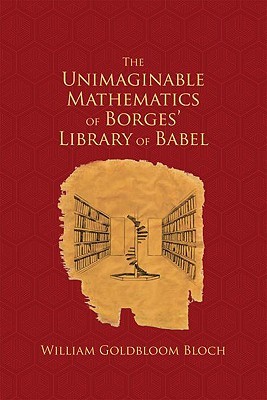
This is a book that, fittingly perhaps, I am reading because I discovered it in the library. The library at American University, that is. Not the Library of Babel.
Although this book could, conceivably, be discovered in the Library of Babel. I wouldn't give much for your chances of finding it, but it's possible.
The central challenge Jorge Luis Borges poses to any writer is that he has, at least on a meta level, surpassed and completed us. Any story we can ever write has already been written about by him. Every conceivable combination of letters, punctuation, and spaces is contained in one of the 410-page volumes that fill his Library of Babel.
As I struggle to revise the second draft of One Hundred Days, I take comfort in the fact that the final version could be found somewhere amid those shelves. That is to say, it is logically possible, therefore it should be only a matter of work and dedication for me to bring it into existence. But then, there on those shelves, librarians could also find a of it abandoned...the opening chapter, with every page thereafter filled with empty lines...or the eye-gougingly horrible first draft, or perhaps worse, the perfect Form of my novel, each word perfect and vivid and pure, in sentences I could not string though I tried a thousand million years. There are versions of my works out there written in a far better way than I could ever write them. And there are all the stories I want to write but can never find the time to (there are also, and this is only somewhat a separate issue, the concluding volumes of Frank Herbert's Dune series but written by Herbert himself as he would have wanted them written. And the Wheel of Time as finished by Robert Jordan. And the novelizations and scripts of the Doctor Who series that ran through the 1990s.) Short stories may exist in collections or on their own, twenty seven pages of text surrounded by emptiness (actually, logically, there are hundreds if not thousands of copies of these, with the spacing of each differing just slightly), or may be continued in multiple largely-empty 410 page volumes. Any work of more than 410 pages would of course come in those separate volumes, which delights connoisseurs of the 18th century. Think of a story, and essay, and expose, a religious text. It's there. It's all there.
The part where this poses a challenge to the writer is that, if we aren't careful when thinking of this, we'll realize that all our work is really just a matter of sorting the same few shapes onto sheets of paper. Nothing a relatively simple algorithm couldn't do, given world enough and time.
I read the short story as a sophomore and it blew my mind. Now William Goldbloom Bloch is blowing my mind all over again--among other things, elaborating upon that 'world enough and time' I suggested in the previous paragraph. Bloch says in his introduction that he originally wanted to be a creative writer, and it shows in his lively, vivid text; text so lively, vivid, and clear that it makes manageable--mostly--the brain-bending topology, graph theory, and combinatorics of these 9 chapters. But it didn't even have to hit the part explaining Klein bottles, 3-manifolds, and the necessities of mirror-reflected forms to dizzy me to the point of exaltation. That comes in the first chapter, where Bloch calculates, relatively simply, the actual number of books in the Library, all possible combinations of 25 symbols onto 410 pages. Each page has 40 lines of 80 letters, so there's room for 1,312,000 symbols in each book. Each symbol slot fits 1 of the 25 options (I should note here the Library of Babel does not contain, so far as we know, Arabic numerals)--
so the total number of books is
[spoilers]
25 to the power of 1,312,000.
All well and good, right? But how big is that?
With some more mathematical jiggery-pokery that would have had him burned at the stake in earlier, more cautious ages, Bloch demonstrates that the known universe of 10^27 cubic meters could only hold, if it consisted of nothing but 410-page books, about 10^84 of them.
I'll leave it to people with calculators handy to figure out how many times the known universe would fit onto the Library of Babel's shelves, then.
And that's only part of chapter one!
In short, if you have the slightest interest in mathematics, Borges, or glimpsing infinity, I'd suggest you track this one down through a library system at once. I don't think there's another book like it in the world. It's such a select taste that I can't in good conscience run about accosting strangers and shouting "BUY IT!!", but it would look excellent on a shelf in your office, den, or waiting room.
(My other favorite revelation comes on page 110, where it turns out that even trained mathematicians can't help reading factorials--such as 12!--as a very excited voice gleefully exclaiming the number. TWELVE!..factorial!)
Relevant Links:
Amazon
Goodreads
LibraryThing
Subscribe to:
Posts (Atom)